
by Olivia den Dulk, PSI Associate, Sydney Harris, PSI Senior Associate, and Scott Cassel, CEO and Founder
Recycling used to be a reliable source of revenue for many US municipalities when China imported 70 percent of the plastics we put in our recycling bins. China and other countries, like Malaysia, paid for post-consumer recyclables that included high levels of contamination, which allowed Americans to generate waste and recycling without giving much thought to where it ended up. But while this system was easy and cheap, it was also unfair to export our environmental problems to vulnerable communities, contaminating their air, land, and water with our trash. In China, for instance, much of the imported contaminated material was difficult to recycle, ending up in landfills or polluting agricultural land and waterways. Due to the sheer volume of incoming waste and recyclables, illegal (unpermitted) waste was not easily tracked and a large amount arrived, exposing children to toxics. China enacted its National Sword Policy in 2018 to restrict imports of most plastics and other post-consumer materials, leaving U.S. municipalities reeling.
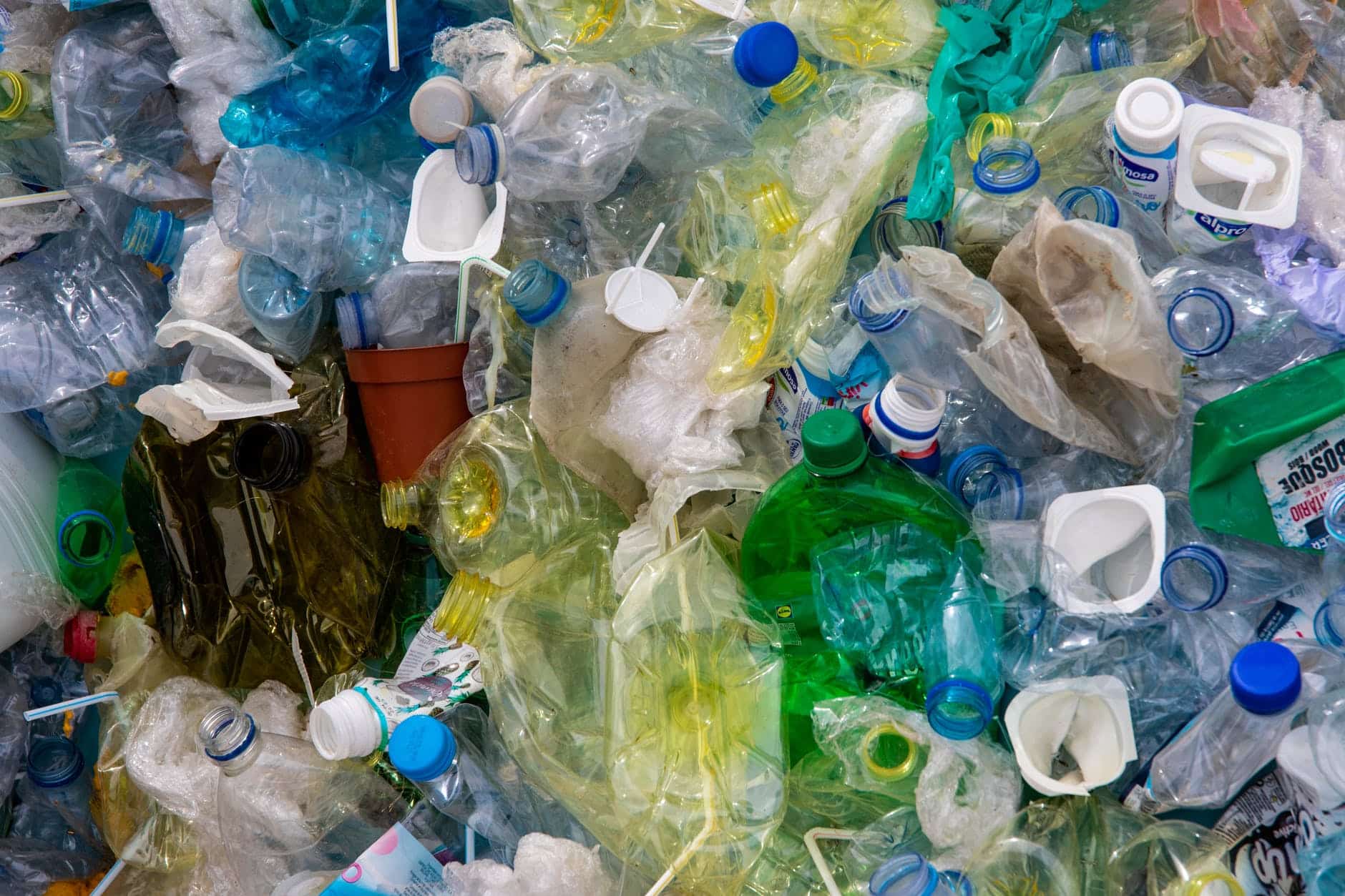
For two years, PSI has been tracking news reports from over 170 US cities and counties affected by China’s import ban. Initially the U.S. and other Western countries looked to other countries as a destination for recyclables, but soon their facilities, too, were overwhelmed with our waste. In Malaysia, the high degree of contamination of the recyclables shipped led to burning the waste, which released toxics into communities. Malaysia, Vietnam, Thailand, and India have all subsequently restricted post-consumer plastics imports.
Widespread Negative Impacts on U.S. Recycling Programs
The impacts on U.S. recycling programs and municipal budgets have been dramatic. One report found that the “China Ban” resulted in a 50 percent decrease in overall revenue for municipalities that sold recyclables due to the sudden lack of viable markets. Another found that the end market value of recyclable materials fell from more than $90 per ton at the beginning of 2017 to around $24 per ton at the end of 2019, as buyers for post-consumer materials grew increasingly scarce.
As post-consumer export restrictions took hold, municipal budgets tightened, taxpayers and ratepayers saw increased fees, and many programs eliminated certain items from collection lists that no longer had viable markets. Over 60 local recycling programs closed entirely.
PSI found that, on average, municipal recycling costs increased by about $900,000 per year, according to the local news reports that we have tracked. This figure varied widely with the size of the municipality, the region, and the program itself. For example, smaller communities like Parkside, PA and Kilgore, TX saw increases of $13,000 per year and $20,000 per year, respectively. By contrast, larger municipalities experienced bigger impacts. Boston, MA saw a $4.8 million increase in recycling costs in 2019. In Philadelphia, costs rose from $5 per ton of collected material to $106 per ton. Many U.S. programs that used to earn a revenue from selling recycling saw that revenue dramatically decrease or disappear, or had to pay processors to take the recyclable materials for the first time, drastically increasing their net recycling costs. Phoenix, AZ and San Diego, CA saw revenues drop $5.6 million per year and $3.4 million per year, respectively.
In states where individual residents (ratepayers) fund recycling programs directly, residents paid on average $1.96 more per month, with increases as high as $5 per month in communities in Massachusetts and Illinois.
PSI’s research also found that the impacts of the China Ban on municipal recycling have been exacerbated by the financial effects of the coronavirus pandemic. Under the pressure of rising recycling costs coupled with the financial strain of the pandemic, several communities report that they are seriously considering closing their recycling programs permanently.
Municipalities in every region are still struggling to find affordable ways to recycle, accepting fewer materials, and raising residents’ rates even though China’s Ban was enacted over two years ago. Where local programs have closed, residents are often left with no choice but to dispose of recyclables in their household trash. In some instances, collected recyclables have ultimately been disposed due to a lack of viable end markets, often to the dismay of residents. But while these negative impacts are concerning, we should not go back to the inequitable global export model we used to rely on. Clearly, something must change.
Creating a More Equitable System
By implementing Extended Producer Responsibility (EPR) for packaging and paper products in the United States, we will shift the financial and managerial burden of recycling away from overburdened municipalities and taxpayers to the companies that produce, sell, and profit from consumer products, and stop burdening poorer countries that did not produce the waste in the first place. Without a healthy domestic economy for recycling, we incur lost economic value, lost jobs, and an enormous cost to human and environmental health. We all stand to benefit in this more equitable system – from enhanced quality and supply of recycled content for packaging and other products, from U.S. jobs in the recycling and manufacturing sectors, and from healthier communities.
As we look ahead to the 2021 legislative session, PSI is working with our members and partners in many states and at the federal level to develop and support effective EPR for packaging bills. Our work is based on our model, a set of recommendations and policy options developed through close collaboration with our members. PSI’s EPR model has been incorporated into the federal Break Free from Plastic Pollution Act, recently introduced by U.S. Senator Tom Udall and U.S. Representative Alan Lowenthal to reduce packaging waste. The model has also influenced the development of EPR legislation for packaging in numerous states, including New York, Vermont, Massachusetts, Maine, Connecticut, Maryland, Washington, Oregon, and California.
We urge you to support emerging bills that use EPR to address the recycling crisis, to consider this approach for your own state, and to engage your company in this process.
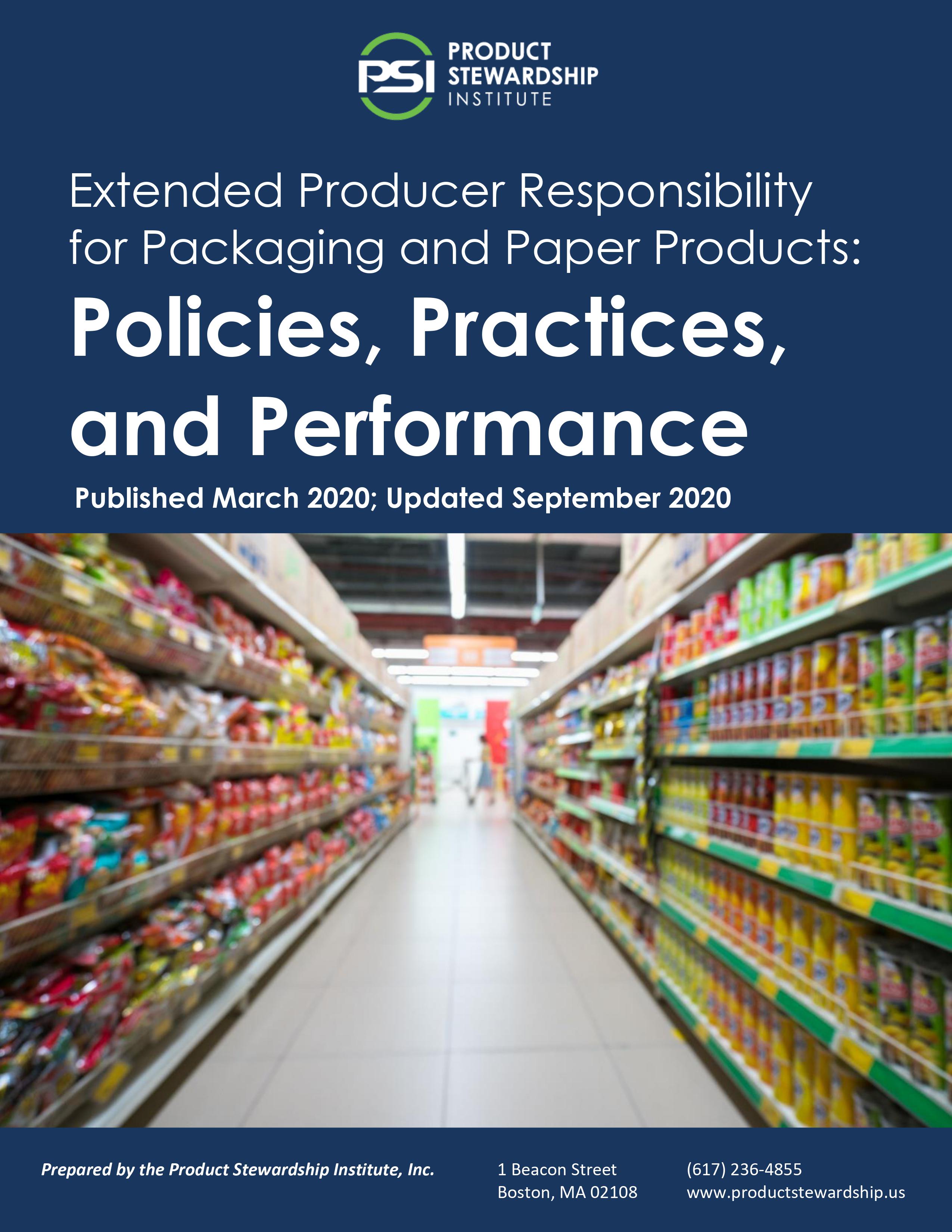
For more information, we have plenty of resources to help. We recently updated and re-released our EPR for Packaging and Paper Products (PPP) report. This report provides guidance on the fundamentals of EPR for PPP and how it can effectively increase packaging recycling and recovery, reduce contamination, and develop markets for difficult-to-recycle materials. It includes the most up-to-date information about four successful Canadian programs, and an in-depth case study of program in British Columbia, the first full producer responsibility program for packaging in North America.
PSI is also working with the Flexible Packaging Association to mediate a set of shared principles of EPR for PPP in the United States, which is the first time industry and government have come together to work substantively on EPR policy for packaging.
The 2018 China Ban was a hard awakening for U.S. municipal recycling programs, and for two years local governments have struggled with the repercussions. Exporting our waste to developing countries is no longer a solution. It is time to put in place modern, equitable recycling systems that are better for both our planet and the financial and physical health of communities both here and abroad.