
by Megan Byers
 Greenport, NY is a charming seaside village on the North Fork of Long Island.
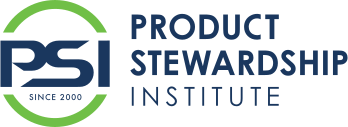
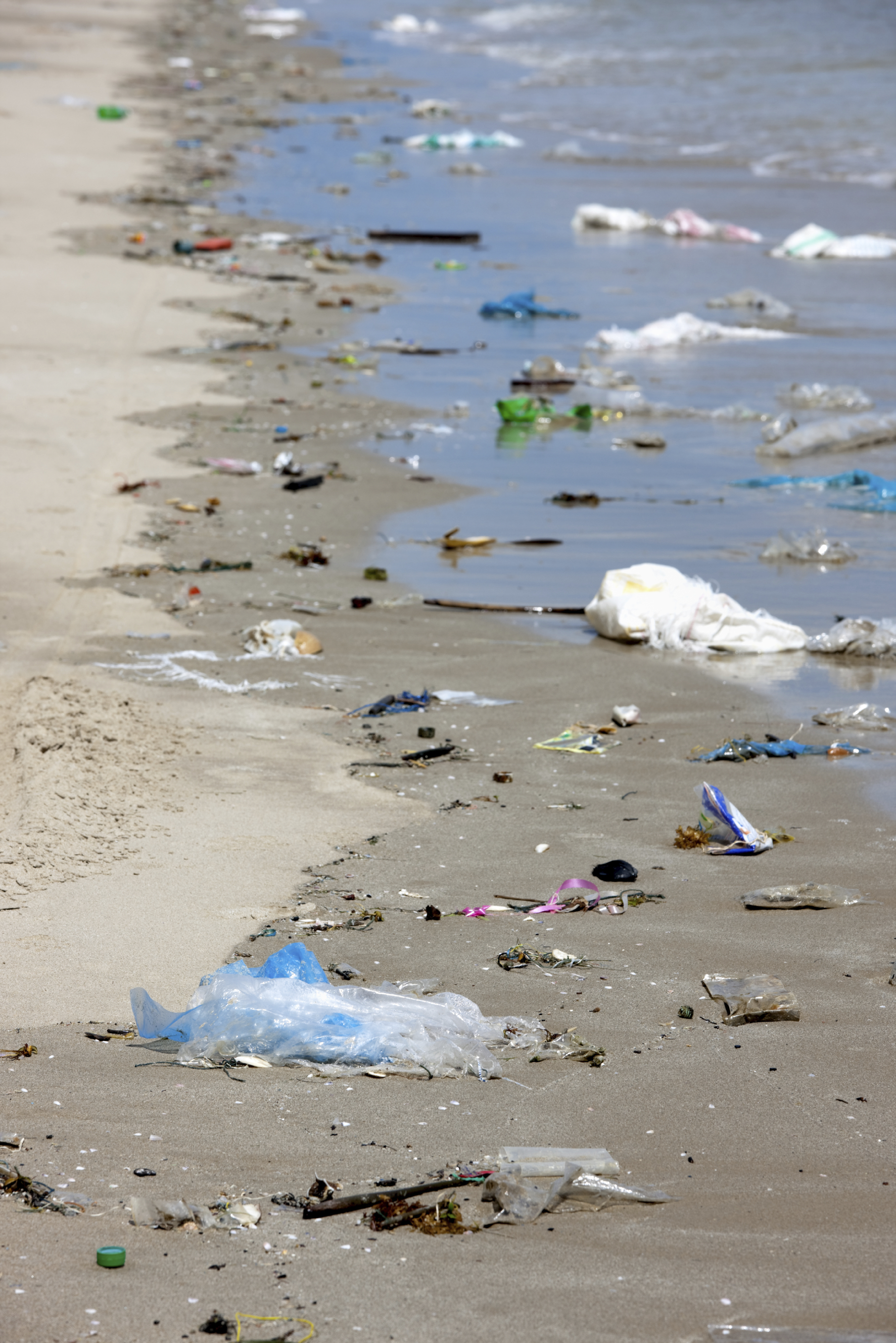
A few weeks ago, my colleague Vivian Fuhrman and I traveled to the North Fork of Long Island to kick off the Product Stewardship Institute (PSI)’s Trash Free Waters project, a voluntary plastics source reduction initiative funded by the U.S. Environmental Protection Agency, Region 2 and administered by the New England Interstate Water Pollution Control Commission. Through this initiative, PSI is partnering with four local eateries in Greenport, New York – Alices’ Fish Market, Bruce & Son, Lucharitos, and Tikal.1 – to help them voluntarily decrease the disposable plastic items (cups, straws, take-out containers, etc.) that end up on Long Island’s beaches.
When we arrived in the North Fork, gratitude and support for the project appeared from some unexpected sources.
Vivian and I first presented the project to the Southold Town Board – an opportunity made possible thanks to Southold’s Solid Waste Coordinator, Jim Bunchuck. Our goal was to lay the groundwork for developing a model municipal plan to reduce marine debris on a community level. During the discussion, the Board offered a creative idea: they suggested we create a “Trash Free Waters” emblem that the businesses can display in their windows or on their menus to market their marine debris reduction efforts.
Later that day, we met the participating businesses in the Greenport School for our kickoff meeting. Thanks to the meeting location, teachers Stephanie Pawlik and Brady Wilkins were able to join us and eagerly volunteered to have their students design the “Trash Free Waters” emblem as part of an environmental unit in class. A local artist, Cindy Roe, later contacted PSI and offered to advise the students and judge the submissions. We are now finalizing a plan for the emblem and connecting these volunteers.
Within the following week , at least three local news sources (SoutholdLOCAL, Suffolk Times, and North Fork Patch) published articles about the project. Thanks to this press, the project received many positive comments on social media – in fact, several individuals even suggested their own ideas for reducing plastic pollution!
This sort of community collaboration is a key aspect of protecting our planet. The support we are finding in Greenport is a reminder that, no matter who you are, everyone has their own unique ability to stand up to protect our waterways.
Regardless of the product focus, multi-stakeholder collaboration is a key tenet of PSI’s approach to product stewardship and has been critical to our success. For instance, to address economic and environmental problems caused by leftover paint, PSI facilitated a national group of state and local governments, paint industry representatives, retailers, recyclers, non-profits, and others. After years of research and discussion, that national group created a model paint stewardship bill that now serves as the basis for nine paint stewardship laws passed in the U.S., resulting in 16 million gallons of paint being diverted from disposal, saving governments and taxpayers over $69 million, and creating over 200 jobs.
Marine debris is a visible problem in coastal communities like Greenport, and now a wide variety of stakeholders are ready to address it. PSI knows that this fortuitous synergy from multiple stakeholder groups will boost the participating eateries’ visibility, value, and connection to the community, and that their voluntary plastics reduction effort may serve as a starting point for community-wide action to reduce marine debris.
As a complement to PSI’s Marine Debris Reduction Toolkit for Colleges & Universities, PSI’s work with the Greenport eateries will culminate in a Marine Debris Reduction Toolkit for Eateries that will help businesses and municipalities across the country reduce their contribution to marine debris.
Megan Byers is the newest addition to the Product Stewardship Institute (PSI) team. She focuses on packaging, tracking legislation, and communications work at PSI, and coordinates several state product stewardship councils. She’s leading PSI’s Trash Free Waters project.
By Scott Cassel, Chief Executive Officer and Founder, Product Stewardship Institute
The Product Stewardship Institute recently passed a policy statement opposing state legislation that preempts local government action to regulate products and packaging. The policy is intended to help defend local government rights to take action to protect the environment. Here’s why we did it.
 Traditionally, recycling and solid waste management in the U.S. are considered local government responsibilities. Since local governments are responsible for managing waste, they should also have the authority to implement policies that support their local priorities.
The American Legislative Exchange Council (ALEC), a conservative think tank with close to 300 corporations and private foundation members, as well as hundreds of state officials, thinks otherwise. ALEC is pushing legislation in states around the U.S. to restrict local governments from banning “auxiliary containers,” including plastic bags, bottles, cups, and polystyrene to-go boxes – bans that would directly cut into manufacturers’ profits, but also reduce external costs on governments, recycling facilities, and the environment. So far, ALEC’s model legislation, or derivations of it, has passed in Arizona, Wisconsin, Indiana, Idaho, and Missouri and has been introduced in another three states (TX, MI, and GA).
ALEC and its members see local bans as unnecessary restrictions on the free market and consumer choice, but local governments have focused on plastic bags and polystyrene for good reason. These products are often used in take-out food service settings and are disposed outside of the home. The materials are lightweight and easily transported by air or water, adding to the global marine pollution crisis. Plastic bags and polystyrene are recyclable, but neither can be collected at the curb with bottles and cans. Plastic bags are typically considered contaminants in material recovery facilities because they get caught in sorting machinery, costing time and money. All in all, these products wreak economic and environmental havoc the moment they leave a retail establishment.
PSI strongly advocates for the right of local governments to enact laws and rules that ensure efficient and environmentally sound materials management. Even so, there are instances in which a well-conceived statewide program is preferable to multiple local regulations. But that trade off – giving up local authority in exchange for statewide action – should not be taken lightly and should be a decision left to local governments. Local autonomy should only be sacrificed for good reason and with proper cause.
In the case of the ALEC bill and its derivatives, local governments are not being asked to forgo bans in favor of a statewide policy or program to resolve issues with these materials. They’re simply being told they can’t take action to reduce the waste they are obligated to manage and pay for. Policy tools are being stripped from the local government tool box, yet the responsibility on local governments is not relieved. As a result, the manufacturers of these problem products can continue to sell single use items, and local governments have no choice but to foot the bill to manage them as waste and litter.
If producers want to avoid bans, they should step up and offer viable solutions for managing these products, or at least commit to working with governments to find them – at either the state or local level. Restricting governments’ ability to act, while offering no viable alternative, only ensures that these products and packaging will yield profits, while our local economies and environment pay the price.
Flying high above the Atlantic on my way home from a week of travels to Canada and Scotland, I pondered how America can be such a powerful world leader in technology, the economy, and the military, but so unenlightened regarding trash. We pride ourselves on innovation, bold risk-taking, fierce independence, and toughness. Yet, we are well behind our Canadian and European comrades regarding strategies to turn our country’s waste problem into an opportunity to recover valuable materials, create recycling jobs, and reduce costs. In fact, our corporations display a fear and trepidation of the future that is downright troubling.
What is so disappointing is that most corporations selling products into the U.S. market are operating within much more sophisticated solid waste programs than we have in the U.S. Although we have made progress in managing some problem wastes (e.g., electronics, mercury thermostats and lighting, and paint), the Canadians and Europeans have us beat in so many product areas, particularly packaging.
In Ottawa, Ontario, I moderated and presented on a panel called “Policy Shaping the Landscape” at the PAC NEXT annual conference that PSIco-sponsored. In front of several hundred corporate powerhouses like Unilever, P&G, Nestle, Walmart, Kraft, and Target, my fellow panelists and I discussed the mix of strategies needed to manage all packaging waste in Canada by 2015 – voluntary industry initiatives, extended producer responsibility (EPR), and other regulations. That same conversation is not yet happening in the U.S. And the U.S. representatives of those same corporate powerhouses are avoiding even having that conversation.

September 28, 2012—Scott Cassel speaks at PAC NEXT in Ottawa, Ontario.
As our first session panelist, Michael Goeres, executive director of the Canadian Council of Ministers of the Environment (CCME), provided the context for Canada’s national focus on packaging. According to Goeres, it started in 1989 with the National Task Force on Packaging. The issue reignited during the debate on packaging EPR that started in 2000. And it resurfaced, yet again, with the 2009 Canada-wide Action Plan for Extended Producer Responsibility and Canada-wide Strategy for Sustainable Packaging,which created a central platform on which to implement EPR laws throughout Canada by 2015. Goeres also discussed CCME’s initiative to work with industry to reduce packaging waste, which culminated in the recent announcement of the Design Guidelines for Sustainable Packaging, a voluntary joint initiative between Éco Entreprises Québec (a PSI Sustaining Partner) and the Sustainable Packaging Coalition.
In contrast to our Canadian counterparts, the U.S. Environmental Protection Agency (EPA) does not consider waste management to be a federal government issue, but rather a state and local government issue. After a request from state and local agency officials to help solve the growing waste problem, the EPA held five meetings on packaging waste between 2010 and 2011 and even released a report. However, it pulled out soon thereafter, leaving regional EPA branches to follow up.

September 28, 2012—PAC NEXT panelists at Chateau Laurier in Ottawa, Ontario.
The next speaker on our panel, John Coyne, is a Unilever vice president and chairman of Stewardship Ontario, the industry-led product stewardship organization that takes pride in its implementation of Ontario’s six-year old Blue Box EPR program. Of the 1,500 businesses represented by Stewardship Ontario, John said: “…we are dedicated to supporting our member companies’ drive to innovate – to contribute to making their businesses, packaging, and products more environmentally sustainable and more readily recyclable. We lead through development and investment.”
Here are a few other things he said:
- “By any measure, the Blue Box is defined and regarded as both a success and a symbol…75 percent of Ontario residents say they consider the Blue Box their primary pro-environment effort …People like it. It makes them feel good about their contribution. More importantly, people use it.
- “By embracing innovation, by harnessing creativity, by building on our achievements and accomplishments, we aim to be a global leader in responsible product stewardship. At all times, we never lose sight of the fact that our primary job is to meet collection and diversion targets and to prevent waste from filling landfills and fouling waterways.”
- “We need to ensure that the success of the Blue Box fuels further innovation – which, in turn, will help make the program even more successful.”
Ironically, many of the same companies that are members of Stewardship Ontario are also members of the U.S-based Grocery Manufacturers Alliance (GMA), which hired the consulting firm SAIC to issue a report last month that criticized the Blue Box EPR program as inefficient and ineffective. Go figure.
The last speaker on my panel, Meegan Armstrong of the British Columbia Ministry of the Environment, touted the province’s commitment to manage, by 2017, all products under an EPR system that promotes private sector initiative and innovation.
As if that three-speaker session was not enough of a contrast with the U.S., next, I spoke on a panel at the Scottish Waste and Resources Conference in Glasgow, Scotland, where my fellow panelists and I discussed the interplay between voluntary and regulatory solutions.
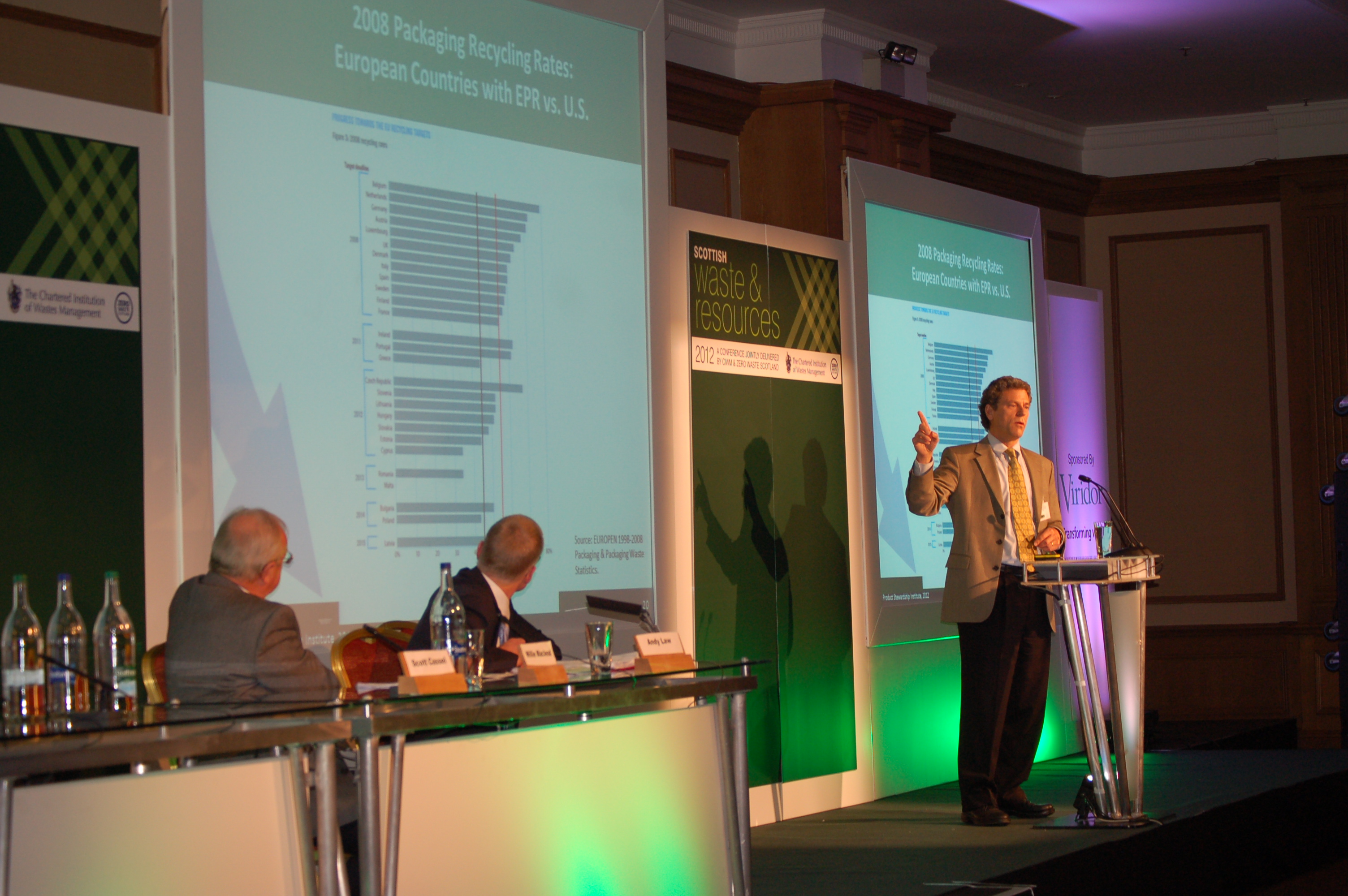
Oct. 3, 2012 — Scott Cassel speaks in Glasgow, Scotland about PSI’s experience forging agreements between stakeholders for both voluntary and regulatory product stewardship programs.
The Scottish government has just introduced packaging regulations that are more aggressive than the existing packaging law in place in the U.K., of which Scotland is a part. However, Zero Waste Scotland, an independent organization funded by the Scottish government, is tasked with implementing the packaging law through both EPR and voluntary solutions. The recycling rate in the U.K. far exceeds that of the U.S., but—to Scotland—that rate is unacceptably low. They want to do more.
America, we have a problem. If our corporations continue to refuse even to have the discussion with other U.S.-based stakeholders about how we are to reduce waste, save taxpayers money, create recycling jobs, and achieve our joint objectives by both voluntary and regulated solutions, then we will have no one to blame but ourselves for wasting economic opportunities.
As Americans, we should be leading in the creation of innovative waste management solutions, as we do in other areas of the economy, rather than burying our future in the rubble of our own fear.
It is widely known that the route to producer responsibility in the U.S. has been markedly different from the route taken in Europe and, to a degree, Canada. In the U.S., issues were prioritized based largely on toxicity. When the Product Stewardship Institute (PSI) held its first national product stewardship forum in 2000, we asked state and local solid waste management officials across the country what they considered their biggest waste management problems. By far, the number one issue was electronics, followed by mercury products and paint. For this reason, in the U.S., we focused on these products as the top issues.
Europe, however, started with Germany’s packaging law in 1990. Over the past 20 years, more than 30 European countries have adopted extended producer responsibility (EPR) programs for packaging. Four Canadian provinces have now enacted packaging EPR laws. And the U.S. is still building the groundwork for action.
Here is how the landscape is shaping up for EPR for packaging in the U.S. Proponents of EPR include, not surprisingly, state and local government agencies that started the U.S. product stewardship movement. However, all governments are interested, not just those in progressive states. The cost of managing waste has become a big issue for government, and they are ready to act. Governments are interested in saving money, but are also concerned about the loss of control over the collection of recyclables from households. PSI has been convening its state and local government members to figure out the type of EPR system they want as a model in the U.S. Other EPR supporters are, also not surprisingly, environmental groups. And that is where the current support for EPR for packaging and printed materials stands at the moment.
There are some exceptions among industry. Nestle Waters North America (NWNA) has stepped out as a major proponent of EPR, and PSI is working with them, among many others. NWNA wants to show that EPR can result in increased supply of recycled materials on par with the rates achieved by beverage deposit laws. This position is not to be confused with the position of others in the beverage industry that developed the EPR packaging bill in Vermont in 2010 that included EPR only if the state’s 40-year old container deposit law was repealed. That strategic misstep has confused many people into believing that EPR is synonymous with a repeal of the bottle bill, and has created great animosity among stakeholders. But it has gotten people talking.
“If success is measured by the achieved recycling levels, then member states with strong producer responsibility systems have successfully increased overall rates.” 2005 European Commission Study on Packaging Waste and Options to Strengthen Prevention and Re-use of Packaging
Consumer packaged goods (CPG) companies have, for the most part, been uninterested in engaging in a discussion about EPR for packaging in the U.S., even though their counterparts are operating under the exact same systems in Europe and Canada. Sierra Fletcher, our Director of Policy and Programs and I spent four meetings over nine months with representatives from P&G, Kraft, Unilever, Colgate-Palmolive, ConAgra, and other CPG companies in meetings held by the U.S. Environmental Protection Agency. These companies, in general, believe that we can increase recycling significantly solely by optimizing the current system. In my ten years of engaging brand owners in EPR, we know that this is a necessary step in the process because the existing system can always be made more efficient, and that reduces cost. But it is always only a stage in the process of moving toward an understanding that EPR, and perhaps other systems, are also needed. Only two CPG companies – Estee Lauder and SC Johnson – have engaged PSI in a real discussion on EPR. Estee Lauder is a big fan. SC Johnson does not believe it is the right solution.
The rest of the stakeholder groups are in learning mode, and this is who PSI is talking to.
End users of glass, plastic, paper, aluminum, and other metals – so called commodities – have started to warm to the idea of learning about EPR. The Association of Post-Consumer Plastics Recyclers invited me to speak at its annual meeting in June. I found an engaged and interested group of plastics recyclers that were desperate for ways to increase the recycling of plastics. They want more supply of high quality recycled plastics at the best possible price. They are looking at all solutions, and their staff and policy committee smartly have begun to learn about EPR and how it can help them. Have they embraced EPR whole-hog? No. But do they think EPR might be part of the solution for more business and more jobs. Absolutely.
Plastics recyclers are leading the commodity groups in understanding that quantity, quality, and price can possibly be achieved by EPR. But aluminum is not far behind. I just got back from a trip to Chicago where the Aluminum Association had its annual meeting. I spoke to aluminum industry executives about what EPR is and isn’t, and how EPR and the bottle bill can live together or apart but that the decision should be up to the brand owner as to how they will meet aggressive performance goals. Aluminum industry representatives asked all the right questions, and we have begun a healthy discussion.
Representatives of glass and paper commodities are still warming to the idea of even having an in-depth discussion about EPR. But PSI is talking to them as well. A key concern of the paper industry is why they should face the potential transactional costs of a shift to EPR when their material is already recycled at a high rate.
We are also having discussions with waste management companies, which view EPR as a potential threat to their business models. These companies have invested in recycling and waste disposal trucks and facilities, and in a business strategy that will need to be flexible to respond to the changes ahead with EPR.
Other groups are pushing the conversation as well. The newly formed PAC-NEXT, based in Canada but working with retailers, CPG companies, and related businesses that operate across North America, has invited PSI to engage with its corporate members with the goal of helping the packaging industry transition toward a world without packaging waste. PSI is co-chairing a PAC-NEXT project to develop best practices for post-consumer material recovery, including EPR, which will lead toward harmonization of programs in North America. And Future 500 out of San Francisco is selectively engaging stakeholders on EPR in the U.S.
Packaging and printed materials is a product area that is much different from others we have tackled in the U.S. – yet at the same time it shares with other products the fact that our traditional waste management system has relied on the patchwork of local and state governments to clean up after us. A solution will not be achieved overnight, but we are starting to build it. There are many stakeholders with multiple interests that need to be melded into a cohesive agreement that is sustainable. These stakeholders are not at the same place in their interest and willingness to develop a model EPR bill in the U.S. But these discussions are taking place, and coalitions are forming.
But the first thing that needs to happen is that people learn the facts, and that is where PSI is spending its time – educating all stakeholders about EPR so that they understand how EPR will result in less waste, more recycling, more jobs for the recycling industry, and lower costs for government. This is all about how good government and the right regulations CREATE jobs. It is time for this reality to be heard loud and clear in America.
Check out the article in Plastics News reporting on my presentation to the plastics recycling industry. Although there are a few factual errors in the article, it will give you a good sense of what I said, and about how EPR can increase material supply and quality, and lower costs.
by Scott Cassel, CEO and Founder of PSI
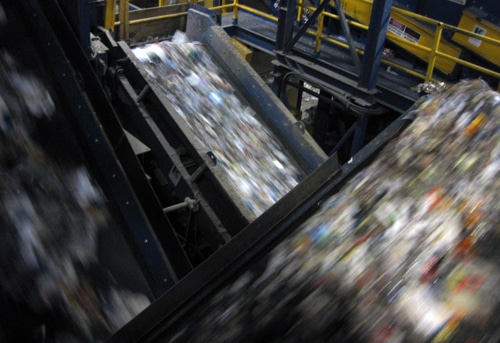
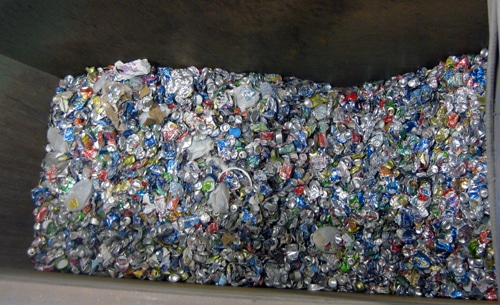
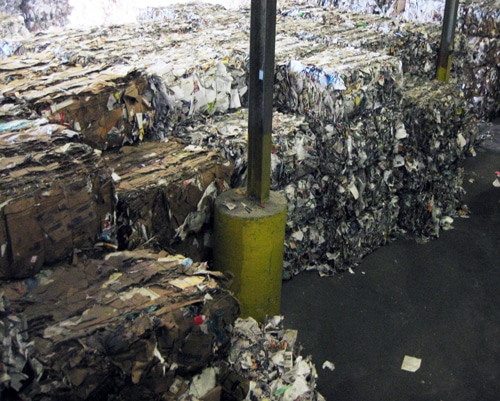
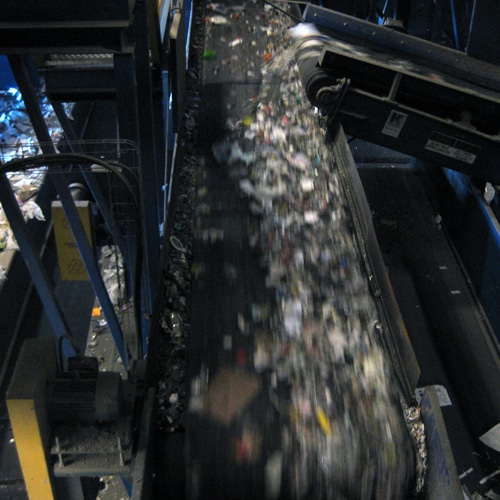
Last week a team from the Product Stewardship Institute took a tour of a materials recovery facility (MRF; pronounced “murph”) operated by Casella Waste Systems in Charlestown, Massachusetts, which recycles material from municipalities in the Boston area. We would like to thank Lisa McMenemy, the Municipal Development Representative at Casella, for being such an informative tour guide and leading us through all the steps of the recycling process. The Charlestown MRF was converted to a single-stream (also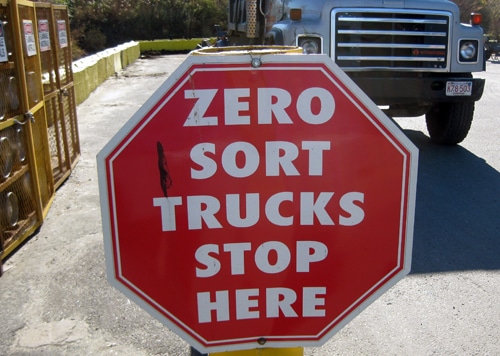
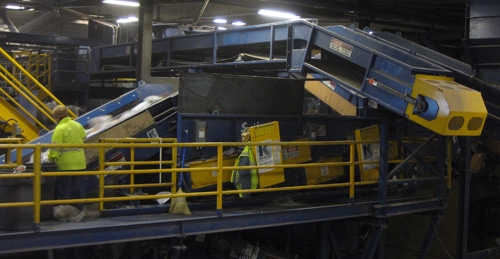
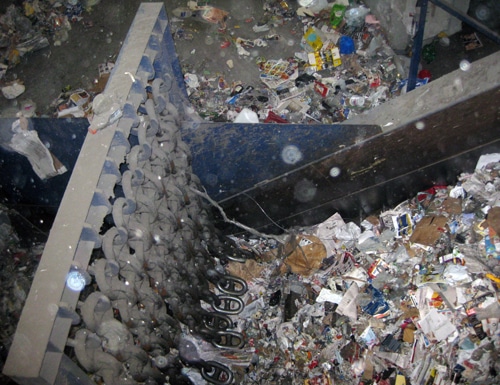
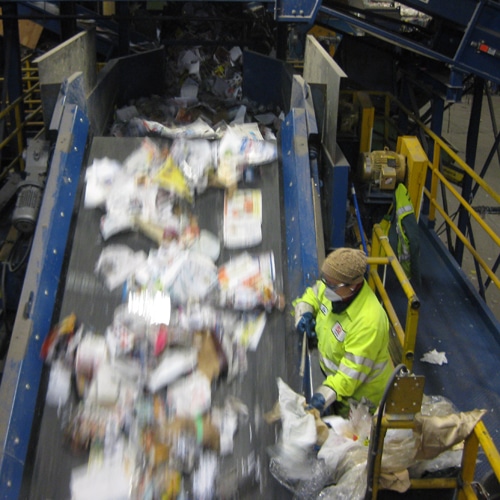
With all the materials spread out along the conveyer belt, the pre-sorting begins. The pre-sort is a labor-intensive step where materials that are not recyclable, or that may damage the equipment, are removed by hand. Plastic bags are by far the biggest contaminant in the recycling process, and are not able to be recycled once they get to the MRF. It is important to remember that even if you have good intentions and wish to recycle your grocery bags, the bags can slip through the pre-sort and end up in bales of other material. If a bale reaches a certain level of contamination, it can be rejected by a mill and must then be reprocessed, which requires additional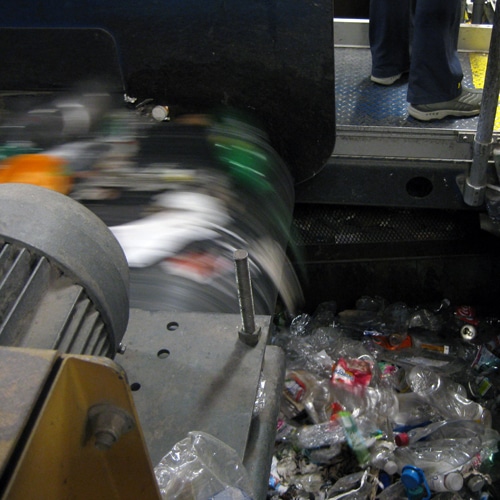
With the pre-sort complete, a series of screens then separates out light paper