
by Scott Cassel, CEO and Founder
We’re thrilled to announce our partnership with LANDBELL GROUP, which delivers chemical stewardship and risk assessment services in the United States and Canada through its consultancy, H2 Compliance. Established as a packaging compliance scheme in Germany in 1995, LANDBELL GROUP has since evolved into a global platform for EPR and regulatory compliance and is now a leading provider of environmental and chemical compliance solutions with local expertise and global presence. With its comprehensive core services – compliance, consulting and software – LANDBELL GROUP helps companies meet their EPR obligations worldwide. The company’s PROs have collected and treated more than 10 million tonnes of waste batteries, electronics, and packaging.
LANDBELL GROUP is a recognised expert for waste portable battery compliance and takeback, having collected and treated over 100,000 tonnes of waste portable batteries; with an established reverse supply chain in over 40 countries, LANDBELL GROUP also has more than 10 years’ experience managing international takeback activities for lithium batteries. The company will present our forthcoming “Powering Up for Battery EPR” webinar, with panelist Martin Tobin, CEO of European Recycling Platform (ERP) in Ireland. ERP, a LANDBELL GROUP company, is the only multi-national organisation operating producer responsibility organisations (PROs) for batteries, packaging and WEEE in 16 countries for over 38,000 companies, and Martin is a key member of LANDBELL GROUP’s global leadership team. ERP is actively involved in the proposed revision of the European Union’s Battery Directive, contributing its experience and expertise to the ongoing discussions.
Recently, LANDBELL GROUP began a takeback program in the USA and Canada for ICT equipment; it also delivers environmental compliance services, such as registration and reporting, to ensure producers meet their extended producer responsibility (EPR) obligations in the relevant US and Canadian states and provinces. With LANDBELL GROUP’s Knowledge Database (KDB), the company offers a web-based regulatory information service, which provides relevant information on EPR globally. The KDB covers more than 180 jurisdictions, including 28 states in the USA, and all Canadian provinces and territories.
In the United States and Canada, H2 Compliance supports North American and pharmaceutical businesses with chemical services, providing technical and strategic support for global chemical control regulations; for example, TSCA and EU REACH, and hazard communication services such as Safety Data Sheets. Last month, the Resource Productivity and Recovery Authority in Ontario, Canada registered H2 Compliance as a producer responsibility organization, which will provide collection, management and administrative services to help producers meet their regulatory obligations under the EEE and Batteries Regulations.
For more information, please visit: www.landbell-group.com
by Rachel Lincoln Sarnoff, Marketing and Communications Director
Nearly 600 stakeholders registered for our recent “Legislators Changing the Game on Packaging EPR” webinar with Colorado State Representative Lisa Cutter, Washington State Senator Mona Das, Maine State Senator Nicole Grohoski, and Maryland State Delegate Sara Love.
Although many questions were addressed during the Q&A, we felt that a few deserved additional follow up. (If you are a PSI Member or Partner and missed the conversation, please click here to view the webinar recording.) Our answers represent PSI’s perspective:
What are the greatest challenges faced by states to implement EPR legislation for packaging – and how can industry stakeholders play a role?
Since the infrastructure for collecting and recycling packaging has evolved over the past 60 years, there is a greater reluctance to change the system. Producers and recyclers are concerned with spending time and money on issues that distract them from their core businesses, and don’t want to lose market share. These businesses need to learn that they can compete the same under EPR as they do under the current system. Other stakeholders, such as environmental groups, are concerned that EPR policies might not meet their expectations for health and environmental protection and see an opportunity to introduce their key interests into EPR bills. State and local governments see great opportunities to save money and reduce their financial and staffing burden but also need to learn that they can still have influence on the recycling system and be confident that it will work better than before.
The greatest challenges to introducing, passing, and implementing packaging any EPR legislation are:
- Lack of understanding of EPR policy across key stakeholder groups – including legislators, but also businesses, NGOs, municipalities, waste management companies, and more.
- Lack of support from diverse stakeholder coalitions – this is critical to passing EPR laws; facilitated processes like PSI’s can be fundamental to ensuring that diverse needs are not only met by the bill, but that all stakeholders are ready to support it.
- Fear of change/reluctance to give up the status quo – there are always some who resist systemic changes like the transition to an EPR system; we believe that robust dialogue is the way forward.
All stakeholders can help by getting involved! If you’re a business, academic institution, environmental nonprofit, or international government leader, you can join PSI as a Partner, engage constructively in bill negotiations, and testify in support of bills before the legislature.
You can also provide information to help support EPR bills. For example, data showing how consumer goods are priced – including all factors from the water and electricity used to make the product to marketing costs to the transportation and fuel required to get it to market – is extremely valuable, as these real costs can then be compared to the costs of EPR fees in order to refute the misleading argument that EPR will raise the cost of consumer goods. This data is especially relevant when it is shared by multinational corporations who have been complying with these laws for over 30 years in Europe and two decades in Canada.
And, of course, companies that manufacture consumer packaged goods or paper products that are covered by EPR programs should commit publicly to reducing their environmental footprint and make good on those commitments.
Do the legislators’ packaging EPR bills and laws require waste prevention?
All of the packaging EPR bills and laws proposed or enacted by our panelists began with robust discussions on waste prevention, as this is the absolute top priority in all states’ sustainable materials management hierarchies.
PSI has monitored this trend in packaging EPR laws and bills – and updated our national policy model accordingly – to include strong incentives for reuse and other waste prevention mechanisms:
- The four packaging EPR laws that were enacted over the past two years all include incentives for reusable packaging formats; three of these laws (in ME, CO, and CA) bake the incentives into the “eco-modulated fee” structure so that producers selling goods in reusable packaging will pay lower fees into the program.
- In Maine, the Department of Environmental Protection will set targets for reuse rates across covered materials through a rulemaking process, which producers will then be required to meet.
- In Oregon, reusable packaging is not covered at all under the program: Producers do not pay fees on reusable packaging until it is disposed of, ideally through recycling. There, producers must also establish a dedicated Waste Prevention and Reuse fund, which will be managed by the state, to provide grants or loans for waste reduction efforts upstream – before recycling or disposal are necessary.
- In California, plastic must be source-reduced by 25% by 2032 – this means that producers must either switch from disposable to reusable/refillable plastics or eliminate unnecessary plastics entirely; this impact will be measured both by weight and by number of items (to prevent lightweighting).
Most packaging EPR bills include similar incentives and requirements for producers to invest in and choose more sustainable packaging – including reducing or eliminating packaging entirely and switching to reusable or refillable formats.
Do you see a future harmonization of laws across states or a federal EPR bill – why or why not?
Through PSI’s experience with EPR in other product areas, we have seen firsthand how national harmonization can streamline and simplify programs. A great example of this is paint where all 11 laws are based on a similar model; a counter-example is electronics, where fragmentation has led to ineffective programs (although we are working to update many of them).
Although PSI has worked with our members and partners to develop a national packaging EPR policy model, which has informed state bills across the country – as well as the federal Break Free From Plastic Pollution Act – we do not yet see full harmonization in this space. The primary drivers for this are lack of industry harmonization – when producers are not on the same page, they cause fragmentation in bill negotiations – and lack of state-to-state recycling harmonization.
Our current recycling system is inconsistent across communities at the local level; as a result, states have wildly divergent on-the-ground realities when it comes to recycling, which changes the types of EPR programs that may be applicable.
For example, Maine is a largely rural state with many small, community-run recycling programs where a municipal reimbursement program made sense, especially with Quebec across the border. California is in a similar situation but on a larger scale – municipalities want to run their programs and receive reimbursement. On the other hand, Colorado has very few municipally-run programs, so a full EPR approach made the most sense for them. As long as discussions continue to occur on a state-by-state basis, EPR programs will continue to be tailored to each state’s unique reality.
But most importantly, the United States lacks a national forum for dialogue on this issue. The field is awash in EPR efforts: Producers, trade groups and associations, and NGOs coalitions all take positions on EPR and engage in legislative efforts, but they are not harmonized, or even coordinated. PSI laid the groundwork for a national forum through our mediated dialogue with governments and the Flexible Packaging Association. But much more is needed: To achieve true harmonization on packaging EPR – especially if the goal is a federal bill – we need everyone to come to the same table.
by Scott Cassel, CEO and Founder
Yesterday, California became the fourth state in the nation to enact a packaging EPR law, which was signed into law by Governor Gavin Newsom. After more than three years of negotiations and the threat of a ballot initiative taxing plastic pollution, California stakeholders successfully negotiated SB54, the Plastic Pollution Prevention and Packaging Producer Responsibility Act, which was sponsored by Senator Ben Allen. The law covers single-use packaging and food serviceware and includes enforceable recycling targets that will increase over time, reaching 65% by 2032.
In keeping with PSI’s packaging EPR model legislation, which was drafted in 2018 and informed similar legislation this year in Colorado and last year in Maine and Oregon, California’s law will create a producer responsibility organization (PRO) to manage the program, with government oversight.
The law also includes specific targets for source reduction, which producers can meet by establishing reuse or refill systems or eliminating single-use packaging and serviceware, and bans expanded polystyrene food serviceware unless it can demonstrate increasingly high recycling rates: from 25% by 2025 to 65% by 2032. It also includes parameters for eco-modulated fees to incentivize the use of more sustainable, recyclable or compostable, renewable, and non-toxic materials.
On the controversial topic of “chemical recycling,” the law leaves open the possibility for advanced plastics-to-plastics technologies but does not allow combustion, incineration, waste-to-energy, or waste-to-fuel production (except for anaerobic digestion) to count as “recycling.” Under the law, CalRecycle will adopt regulations to verify that packaging intended for export meets processing and contamination standards and can prohibit any technologies that produce “significant amounts of hazardous waste.”
The law also requires producers to pay $500 million per year for 10 years, beginning in 2027, into a new California Plastic Pollution Mitigation Fund, which will be managed by the state to restore the environment and mitigate past, present, and future environmental justice and public health impacts created by the manufacturing, litter, or disposal of plastic packaging. Like all packaging EPR laws, producers will be required to internalize the costs of the program and will not be permitted to pass their EPR fees on to consumers as a separate item on receipts or invoices.
Written by the team at Flexible Packaging Association, a PSI Partner, this blog examines a flexible packaging through an EPR lens.
Our global society continues to face environmental challenges that are complex and simply too threatening to ignore. Collectively, we’re responsible for undoing—and preventing more of—the damage that lifetimes of pollution and waste mismanagement have caused to our planet, an almost overwhelming task that can feel far out of our grasp. Several methods have been tried—and ultimately failed— leading many of us to wonder if there’s a better way. California is set to try two right now. First, a product ban on plastic e-commerce packaging (AB2026), which is a band-aid that has been tried before (think, plastic bags and straws) and did not solve the problem. Not only do bans not solve the problem, it leads to other negative environmental consequences; in this case increased greenhouse gas emissions from the transport of heavier e-commerce packaging materials and increased waste from breakage and returns of items that were shipped in alternative packaging types that cannot protect the product. Another is SB54, which would be a holistic extended producer responsibility program, covering all packaging types, investing in the modernization of California’s collection, recycling and composting infrastructure, and enabling circularity for packaging. FPA believes the latter is the solution.
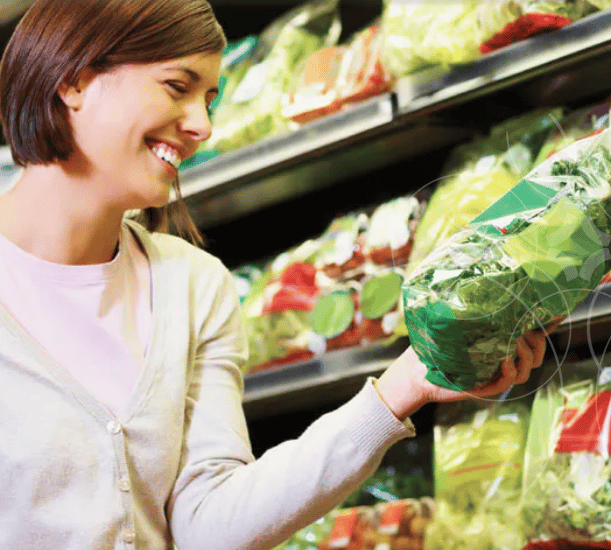
Flexible packaging is more durable, light, and protective than many alternative packaging options, which are the hallmarks of sustainability. Flexible packaging is more resource-efficient than many other packaging options because production requires less water and energy, and production and transportation result in less greenhouse gas (GHG) emissions. While other packaging types may be more readily accepted at recycling centers, they offer fewer protections for consumer products, especially food, while ultimately being more expensive and less sustainable to produce. Flexible packaging helps to extend the shelf life of food products—the number one contributor to landfills and GHG emissions—through protection from sunlight, bacteria, odors, moisture, damage from the transportation process, and more. Additionally, flexible packaging optimizes volume and weight to maximize storage and transportation efficiency while reducing the amount of packaging waste in need of end-of-life management. Increasing efficiency and reducing packaging waste results in source reduction—the most effective, environmentally preferred method of addressing excess waste.
Still, there remains a problem—what do we do with flexible packaging waste? A solution does already exist with an Extended Producer Responsibility (EPR) approach, a policy in which producers’ shoulder some of the financial and operational responsibility to modernize our current recycling and composting systems. A well-crafted EPR system would provide the investment needed to expanded curbside recycling options for families looking to act more sustainably and more packaging material would be collected, processed and available for manufacturers use to incorporate post-consumer recycled content into new packaging. Consumers would also benefit from harmonization of programs across the state and region, instead of the myriad of different local recycling programs that currently exist. Finally, everyone would benefit from fewer carbon emissions and the use of natural resources as we work together to reduce packaging and plastic pollution and preserve our planet for future generations.
Many features of a well-crafted EPR plan are set for inclusion in California’s SB54, which will be debated in the state legislature in the coming weeks. Should SB 54 be signed into law by Governor Newsom, it would represent a significant leap towards responsible, effective plastic waste management while allowing producers and consumers to continue using and not ban an important packaging format—flexible packaging.
This blog represents the views of the Flexible Packaging Association, a Product
Stewardship Institute partner.
by Scott Cassel, CEO and Founder
This past December, the Product Stewardship Institute (PSI) and the Oklahoma Meds and Sharps Disposal Committee (OMSDC) kicked off a six-month pilot program to increase the safe collection and disposal of medical sharps in Oklahoma. Through the program, residents can drop off or mail back used medical sharps at multiple sites throughout the state for free. A few months in, the program is already seeing tremendous progress — a testament to the vital need for more robust infrastructure and education to deal with used syringes, needles, and lancets.
So far, the collection rate at several program sites has exceeded expectations, with Stop Harm on Tulsa Streets (SHOTS) and the City of Stillwater requesting pickup of collected sharps two months ahead of schedule due to an influx of residents safely disposing of their medical sharps. Another sign of the program’s progress is that most sites have distributed almost all at-home containers and will be ordering more soon. SHOTS has also been invited to collect sharps at a household hazardous waste drop-off event on March 5 in Tulsa.
The success of the take-back program is due to effective outreach by site partners and other members of the OMSDC, not to mention media attention. So far, the program has garnered national and local coverage from multiple news sources such as Waste Today, KJRH Channel 2 News Oklahoma, the Tahlequah Daily Press, and the Oklahoma State University Extension. Plus, the Oklahoma Recycling Association highlighted the program in a Facebook Live. The Oklahoma Department of Environmental Quality (DEQ) also recently released a video promoting the program.
The significance of the program is twofold: not only does it provide convenient options for residents, in doing so it also protects public health and the environment. Improper disposal of medical sharps poses severe health and safety risks for families, sanitation workers, hospitality workers, and many others, in addition to polluting local parks, streets, and waterways. Nationwide, 7% of needles are flushed, and an estimated 3 billion sharps enter the municipal solid waste stream each year as trash.
“Most of us don’t have to think about medical sharps,” said Lelande Rehard, PSI’s senior associate for policy and programs. “But if you use sharps, are a frontline recycling/waste employee, work in public health, or coordinate regular litter cleanups, then you understand the importance of tackling this small but difficult material. The safe disposal of medical sharps is an environmental, safety, and social justice issue.”
PSI is already working on plans to expand the take-back program to new sites in the future. In particular, PSI is eager to create sharps collection sites in Native Nations and is pursuing funding to do so. Safe sharps disposal infrastructure in Native Nations is sparse despite the disproportionate number of Native Americans with diabetes — who likely use sharps — compared to white residents.
The current six-month take-back program continues to run now through mid-May 2022 or as long as supplies last. For more information about the program and where to safely dispose of medical sharps, visit bit.ly/OKsharpspilot.
The pilot is supported by a solid waste management grant from the Oklahoma Department of Environmental Quality.
Brendan Adamczyk, Associate for Policy and Programs
One year ago, PSI’s Sydney Harris noticed a troubling trend around the country: states and municipalities were rolling back regulations on single-use plastics due to fears of surface transmission of COVID-19. Wanting to understand the magnitude of this trend, Sydney launched PSI’s COVID-19 Impacts on U.S. Plastics Policy Tracker, chronicling delayed legislation, lifted bag bans and fees, and bans on reusable bags on city, county, and state levels. She also included impacts on bottle deposits, other single-use plastics (such as polystyrene takeout containers), and relevant major news coverage. I joined PSI’s team in June and have worked over the past nine months to keep the tracker up to date.
In the year since, we have learned from health experts across the globe that reusables are just as safe as single-use plastics. The plastics industry promoted the idea that plastics reduce exposure to COVID-19 as early as mid-March 2020, requesting that the U.S. Health and Human Services Department speak out in support of single-use plastics. This is one example in a long history of plastics producers misleading the public about the benefits of plastics and their role in the plastic pollution crisis– a crisis that has only deepened as a result of COVID-19, with consumption of single-use plastics rising by up to 300% while plastic pollution in the oceans continues to climb.
Ongoing Impacts of COVID-19
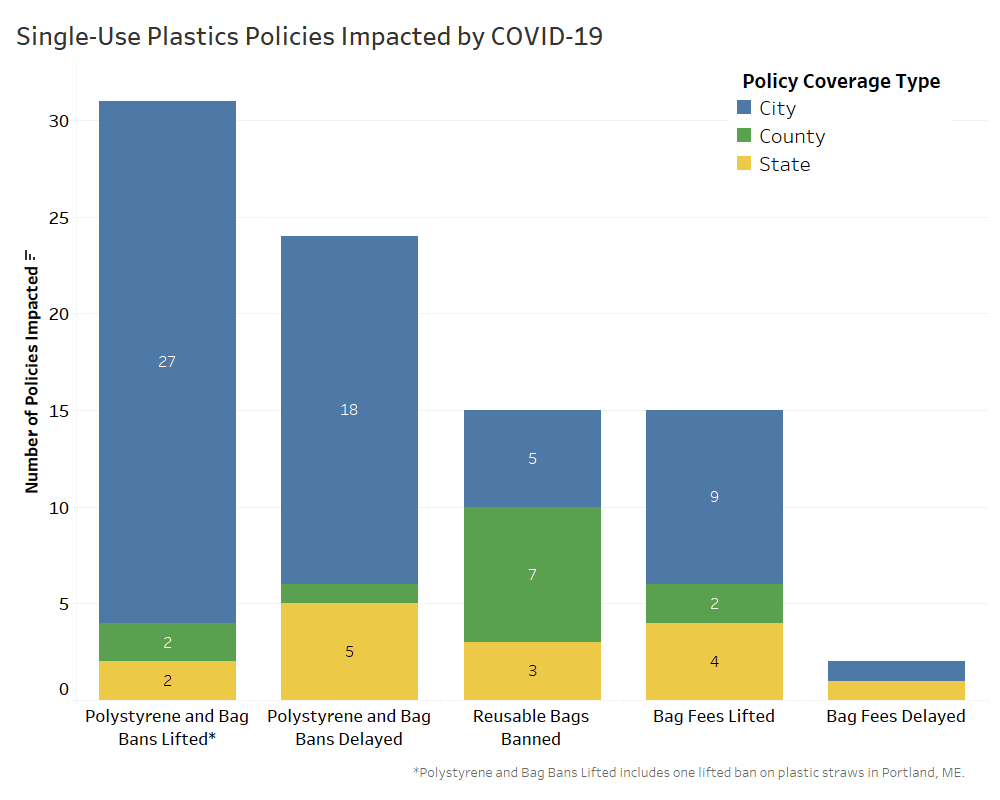
The impacts of COVID-19 on single-use plastics regulations have been severe and spread out across the country, as one can see by looking at the map below. In 2020, nine of the ten states with bottle deposit programs (all states except Hawaii) temporarily suspended collections. Interruptions lasted for months, with the last state (California) resuming collection at the end of August. Beyond these programs, 72 waste-reduction policies were delayed, lifted, or suspended because of the pandemic. On top of this, 16 new policies were enacted that restricted the use of reusable bags and containers. Overall, these 88 policy impacts spanned 23 states and the District of Columbia and are comprised of:
• 21 delayed plastic bag bans or fees;
• 26 lifted plastic bag bans;
• 15 lifted plastic bag fees;
• 16 new policies that barred customers from using reusable bags or takeout containers; and
• 10 suspended or lifted policies banning plastic straws or polystyrene cups and takeout containers.

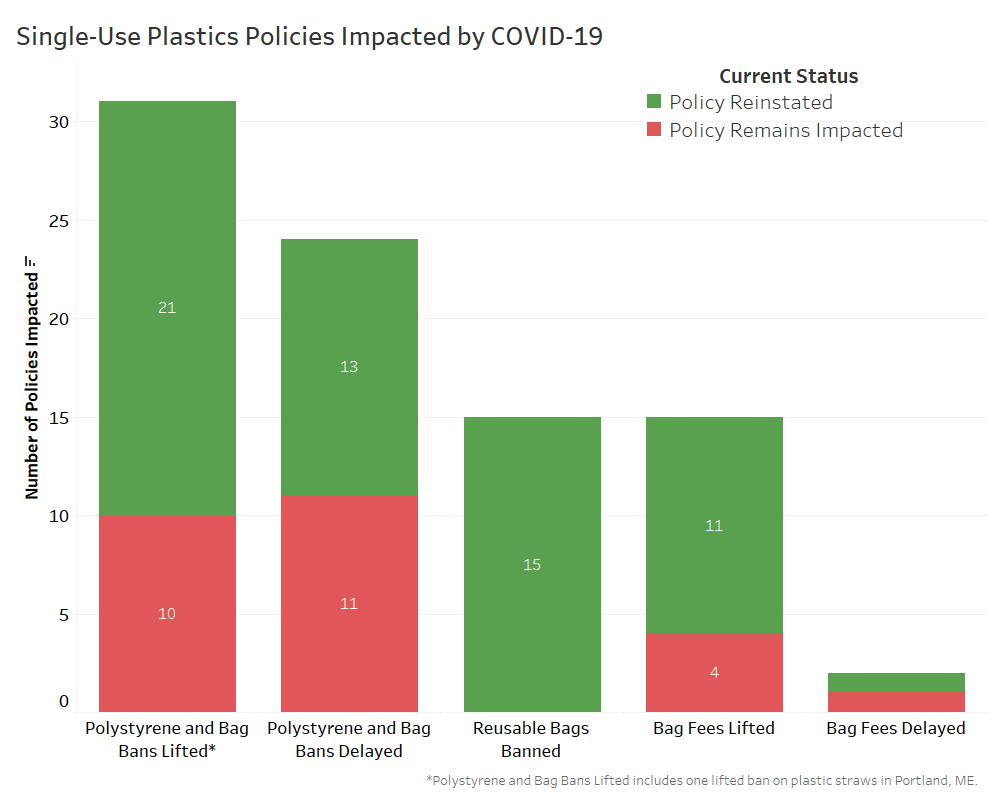
As of today (April 1, 2021), 25 of the 88 policies, or 28 percent, remain affected, all of which are bans or fees on plastic bags that continue to be either delayed in implementation or are still suspended. In addition, eight jurisdictions withdrew previously planned bag or polystyrene ban legislation, most notably Colorado, Maryland, and New Hampshire, all of which pulled bag bans. In part due to the now-debunked myth that reusable bags transmit COVID-19, Ohio and Pennsylvania passed statewide preemption laws that prevent municipalities from banning plastic bags through the middle of 2021. The state of Pennsylvania is currently being sued by a group of municipalities, led by Philadelphia, who want to maintain their ability to ban bags at the local level. The graphs below illustrate how these policies were spread across cities, counties, and states and how many of them continue to be impacted one year after the start of the pandemic.
Even amidst the pandemic, however, it has not all been bad news for plastics regulation. During the past year, six jurisdictions passed bans on plastic bags, including New Jersey’s robust ban on both plastic and paper bags. Additionally, eight previously-passed bans on plastic bags or polystyrene containers took effect despite the pandemic, including bag bans in three states – Delaware, Vermont, and Virginia – as well as a ban on expanded polystyrene in Maryland.
Looking to the Future
In the wake of COVID-19, which also had major impacts on the U.S. recycling system in the beginning of the pandemic and will pose ongoing challenges in the future, it is clear that change is sorely needed. PSI advocates for Extended Producer Responsibility (EPR) legislation that holds producers accountable for their products and packaging by shifting the financial and management burden of recycling from taxpayers and local governments to consumer brands. Globally, EPR for packaging has helped solid waste programs stay resilient in the face of COVID-19, with a study conducted by Éco-Entreprises Québec finding that curbside recycling experienced fewer pandemic-related disruptions in Canadian provinces with EPR than those without. This is true despite Canadian programs facing the same challenges as the U.S. did, including a 30% increase in residential trash volume and employee shortages throughout the pandemic.
In the United States, momentum for EPR legislation for packaging and paper products has greatly increased. At least 13 bills across 10 different states have been introduced or are expected to be introduced in the 2021 legislative session, as well as two bills on the federal level: the CLEAN Future Act, an overarching climate bill that includes EPR elements, and the Break Free from Plastic Pollution Act, a waste reduction bill centered around a packaging EPR model, which was informed directly by PSI’s model and would overhaul the U.S. waste management system.
For now, while some policies and recycling programs remain affected, PSI will be no longer be updating our COVID Impacts Tracker as most of the country has returned their single-use plastic policies to pre-pandemic status. Instead, we are focusing our energy on the EPR bills above. The lessons we have learned over the past year are important. But it is now time to look forward, knowing we have the policy tools to drive genuine change in the U.S. waste management system. EPR for packaging and paper products will stabilize and improve our recycling programs and push our country away from single-use plastics towards a circular economy built on closed-loop recycling. EPR legislation is a policy whose time has come.
by Scott Cassel, CEO and Founder of PSI
The COVID-19 pandemic significantly slowed legislative activity in many states across many product categories, yet packaging bills have been particularly active in the past few months. California AB 1080 and SB 54, which did not pass, would have established a fee on single-use plastics and consumer packaging and required the state agency to evaluate options – including EPR — for potential inclusion in regulations. Another California bill, AB 793, which was signed into law by Governor Gavin Newsom in September mandates that plastic and glass beverage bottles contain minimum thresholds of post-consumer content.

In Colorado, the passage of SB20-055 prompted the State’s Department of Public Health and Environment to launch a legislative and literature review of EPR as a potential solution to the problems posed by packaging. New Jersey and Maryland have also recently taken action to address packaging waste: the New Jersey legislature passed a bill to ban single-use plastic and paper bags and Maryland’s foam food container ban, introduced by Delegate Brooke Lierman, takes effect this fall after initial delays due to COVID-19. At the federal level, Senator Tom Udall (D- NM), co-sponsor of the Break Free From Plastic Pollution Act, which included EPR contributions from PSI, recently introduced the Plastic Pellet Free Waters Act which would prohibit the discharge and pollution of pre-production plastic pellets into the environment.
PSI anticipates the 2021 legislative session will be a busy one for EPR, with bills planned for a range of product areas including paint, carpet, mattresses, and HHW, as well as packaging. In PSI’s online Legislative Library, you can keep tabs on the movement of legislation across U.S. jurisdictions that would establish new EPR programs, amend existing EPR laws, or are related to EPR. Through this Member- and Partner-only resource, maintained by the PSI team on an ongoing basis, you can check a bill’s status, download the most recent bill version, and search for laws and bills by year, jurisdiction, product, or bill type.
PSI is actively advising on bill development and is currently holding government strategy calls for Full Members on multiple products. For more information or to join the calls, contact Brendan Adamczyk.
by Olivia den Dulk, PSI Associate, Sydney Harris, PSI Senior Associate, and Scott Cassel, CEO and Founder
Recycling used to be a reliable source of revenue for many US municipalities when China imported 70 percent of the plastics we put in our recycling bins. China and other countries, like Malaysia, paid for post-consumer recyclables that included high levels of contamination, which allowed Americans to generate waste and recycling without giving much thought to where it ended up. But while this system was easy and cheap, it was also unfair to export our environmental problems to vulnerable communities, contaminating their air, land, and water with our trash. In China, for instance, much of the imported contaminated material was difficult to recycle, ending up in landfills or polluting agricultural land and waterways. Due to the sheer volume of incoming waste and recyclables, illegal (unpermitted) waste was not easily tracked and a large amount arrived, exposing children to toxics. China enacted its National Sword Policy in 2018 to restrict imports of most plastics and other post-consumer materials, leaving U.S. municipalities reeling.
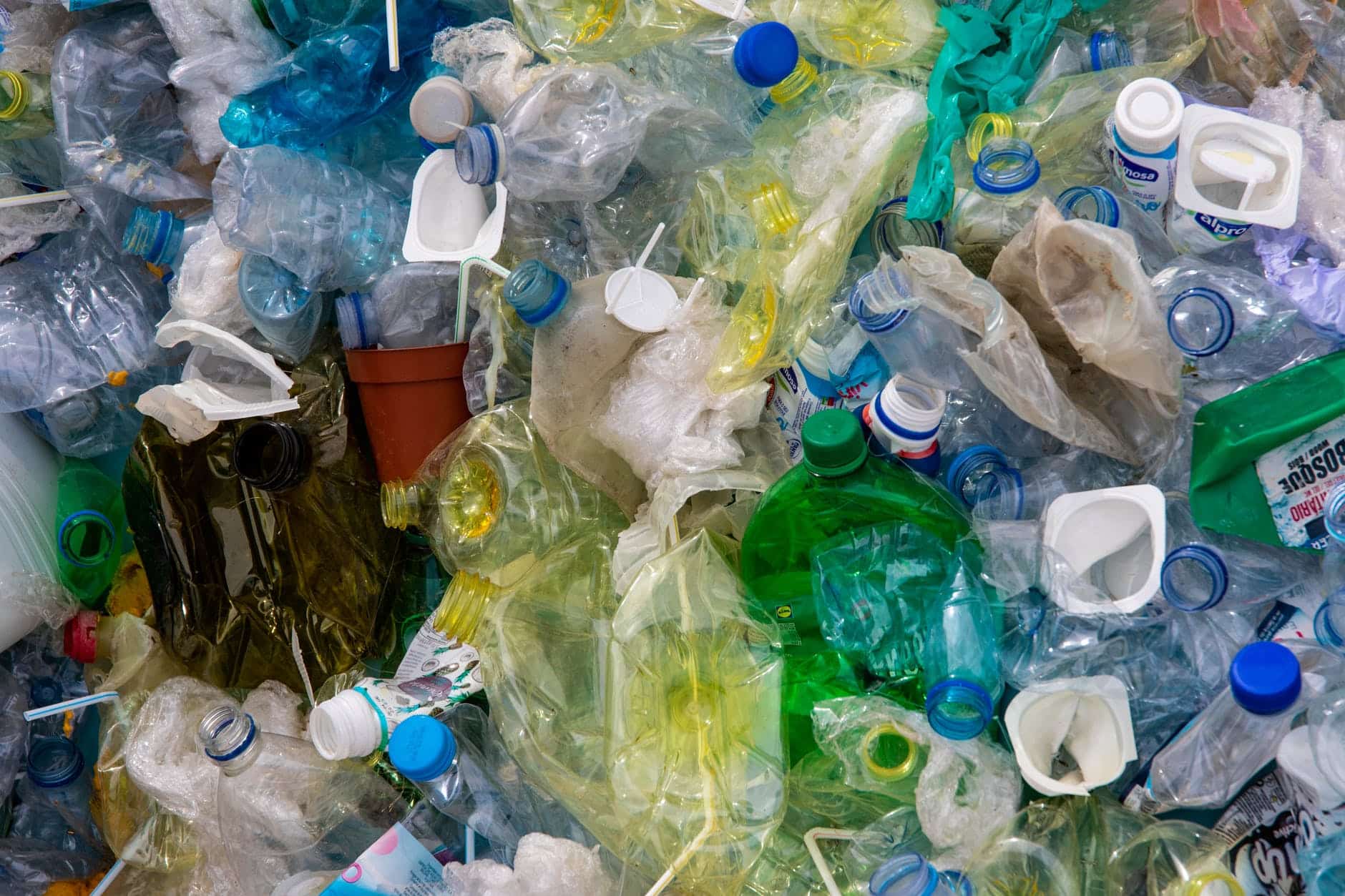
For two years, PSI has been tracking news reports from over 170 US cities and counties affected by China’s import ban. Initially the U.S. and other Western countries looked to other countries as a destination for recyclables, but soon their facilities, too, were overwhelmed with our waste. In Malaysia, the high degree of contamination of the recyclables shipped led to burning the waste, which released toxics into communities. Malaysia, Vietnam, Thailand, and India have all subsequently restricted post-consumer plastics imports.
Widespread Negative Impacts on U.S. Recycling Programs
The impacts on U.S. recycling programs and municipal budgets have been dramatic. One report found that the “China Ban” resulted in a 50 percent decrease in overall revenue for municipalities that sold recyclables due to the sudden lack of viable markets. Another found that the end market value of recyclable materials fell from more than $90 per ton at the beginning of 2017 to around $24 per ton at the end of 2019, as buyers for post-consumer materials grew increasingly scarce.
As post-consumer export restrictions took hold, municipal budgets tightened, taxpayers and ratepayers saw increased fees, and many programs eliminated certain items from collection lists that no longer had viable markets. Over 60 local recycling programs closed entirely.
PSI found that, on average, municipal recycling costs increased by about $900,000 per year, according to the local news reports that we have tracked. This figure varied widely with the size of the municipality, the region, and the program itself. For example, smaller communities like Parkside, PA and Kilgore, TX saw increases of $13,000 per year and $20,000 per year, respectively. By contrast, larger municipalities experienced bigger impacts. Boston, MA saw a $4.8 million increase in recycling costs in 2019. In Philadelphia, costs rose from $5 per ton of collected material to $106 per ton. Many U.S. programs that used to earn a revenue from selling recycling saw that revenue dramatically decrease or disappear, or had to pay processors to take the recyclable materials for the first time, drastically increasing their net recycling costs. Phoenix, AZ and San Diego, CA saw revenues drop $5.6 million per year and $3.4 million per year, respectively.
In states where individual residents (ratepayers) fund recycling programs directly, residents paid on average $1.96 more per month, with increases as high as $5 per month in communities in Massachusetts and Illinois.
PSI’s research also found that the impacts of the China Ban on municipal recycling have been exacerbated by the financial effects of the coronavirus pandemic. Under the pressure of rising recycling costs coupled with the financial strain of the pandemic, several communities report that they are seriously considering closing their recycling programs permanently.
Municipalities in every region are still struggling to find affordable ways to recycle, accepting fewer materials, and raising residents’ rates even though China’s Ban was enacted over two years ago. Where local programs have closed, residents are often left with no choice but to dispose of recyclables in their household trash. In some instances, collected recyclables have ultimately been disposed due to a lack of viable end markets, often to the dismay of residents. But while these negative impacts are concerning, we should not go back to the inequitable global export model we used to rely on. Clearly, something must change.
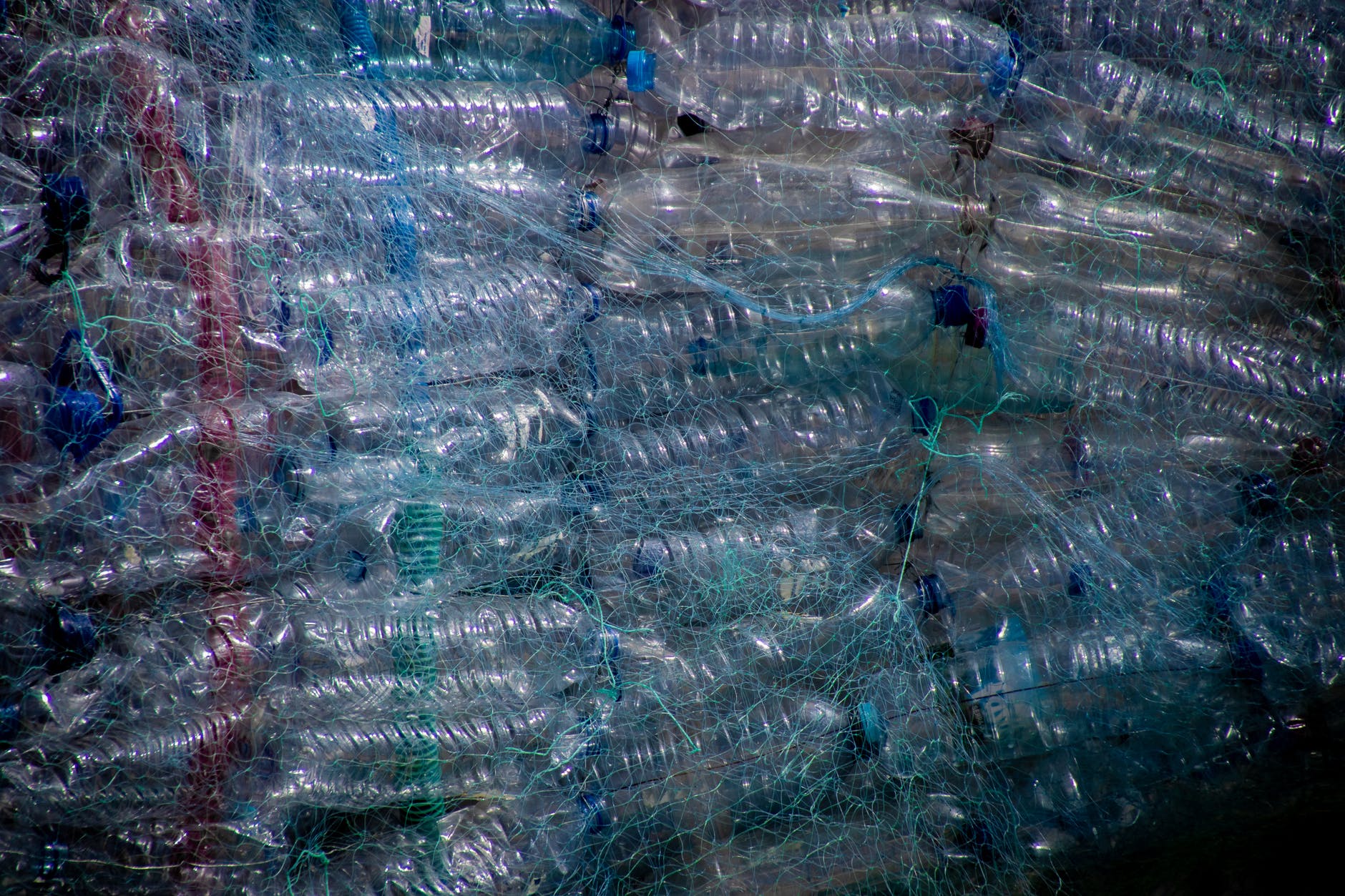
Creating a More Equitable System
By implementing Extended Producer Responsibility (EPR) for packaging and paper products in the United States, we will shift the financial and managerial burden of recycling away from overburdened municipalities and taxpayers to the companies that produce, sell, and profit from consumer products, and stop burdening poorer countries that did not produce the waste in the first place. Without a healthy domestic economy for recycling, we incur lost economic value, lost jobs, and an enormous cost to human and environmental health. We all stand to benefit in this more equitable system – from enhanced quality and supply of recycled content for packaging and other products, from U.S. jobs in the recycling and manufacturing sectors, and from healthier communities.
As we look ahead to the 2021 legislative session, PSI is working with our members and partners in many states and at the federal level to develop and support effective EPR for packaging bills. Our work is based on our model, a set of recommendations and policy options developed through close collaboration with our members. PSI’s EPR model has been incorporated into the federal Break Free from Plastic Pollution Act, recently introduced by U.S. Senator Tom Udall and U.S. Representative Alan Lowenthal to reduce packaging waste. The model has also influenced the development of EPR legislation for packaging in numerous states, including New York, Vermont, Massachusetts, Maine, Connecticut, Maryland, Washington, Oregon, and California.
We urge you to support emerging bills that use EPR to address the recycling crisis, to consider this approach for your own state, and to engage your company in this process.
For more information, we have plenty of resources to help. We recently updated and re-released our EPR for Packaging and Paper Products (PPP) report. This report provides guidance on the fundamentals of EPR for PPP and how it can effectively increase packaging recycling and recovery, reduce contamination, and develop markets for difficult-to-recycle materials. It includes the most up-to-date information about four successful Canadian programs, and an in-depth case study of program in British Columbia, the first full producer responsibility program for packaging in North America.
PSI is also working with the Flexible Packaging Association to mediate a set of shared principles of EPR for PPP in the United States, which is the first time industry and government have come together to work substantively on EPR policy for packaging.
The 2018 China Ban was a hard awakening for U.S. municipal recycling programs, and for two years local governments have struggled with the repercussions. Exporting our waste to developing countries is no longer a solution. It is time to put in place modern, equitable recycling systems that are better for both our planet and the financial and physical health of communities both here and abroad.
By Brendan Adamczyk and Olivia Den Dulk, PSI Associates
In June, PSI examined the initial impacts of COVID-19 on US recycling programs as municipalities suspended services and re-evaluated their budgets. Cities with recycling programs were struggling with the initial impacts of the pandemic. In Miami, FL residents were instructed to mix trash and recycling and in Los Angeles, CA recycling materials were diverted to the landfill. This summer, we continued monitoring the effects of the pandemic on recycling programs and found that while many recycling pick-up and drop-off services have reopened, other impacts continue to present serious challenges for recycling programs. Cities of various sizes across the country have continued to face two key difficulties: First, recycling programs contended with employee shortages as staff tested positive for the novel coronavirus, quarantined because of possible exposure, or stayed home due to the risk that the virus presented. Second, residents disposed of more trash and recycling while spending more time at home.
Philadelphia, PA and Baltimore, MD both exemplified this two-fold problem this summer. Philadelphia residents disposed of 30% more trash during the pandemic and sanitation crews struggled to keep up, especially as some employees tested positive and had to take time off from work. Residents complained of unsightly trash left on the curb for days, and in August some crews had to resort to mixing trash and recycling. Baltimore experienced a 20% increase in trash, and several employees either contracted the virus or quit because of the virus risk. The city was overwhelmed by these compounding problems and announced that recycling pick-up would be suspended for at least a month beginning on August 31.
While several municipalities have reopened their recycling services, PSI expects that COVID-19 will continue to cause employee shortages and increased volumes for months to come as cities face new outbreaks and manage them by implementing lockdowns and restrictions. Budgetary impacts on recycling programs have also persisted since the outbreak of the pandemic. Some cities proposed terminating their curbside recycling programs altogether. Others switched to bi-weekly services. Some municipalities stopped accepting materials, such as cardboard and some plastics. It is clear, and concerning, that these changes will have a lasting impact on programs across the country, particularly as local governments are still grappling with with the budgetary impacts of the 2018 China Sword Policy.
Plastics Policies Rolled Back

Beyond recycling programs, COVID-19 has also had a major impact on plastic pollution policy across the United States. Since March of this year, PSI has been monitoring these changes on the city, county, and state levels in our COVID-19 Impacts on U.S. Plastics Policy tracker, chronicling delayed legislation, lifted bag bans and fees, and bans on reusable bags, as well as impacts on bottle deposits, other single-use plastics (such as polystyrene takeout containers), and relevant major news coverage.
What we have found is troubling: at least 79 policies rolling back restrictions on single-use plastic bags and takeout containers or banning reusable bags were imposed between March and August 2020, spanning 22 states and the District of Columbia. As of September 1, 45 of these policies, or 57%, remain in effect, with more than a dozen guaranteed to extend through the beginning of 2021 – just one of the many policy impacts of COVID-19. The graphics below indicate the impact on plastic bags, the biggest category impacted by recent changes:


It’s clear from this data that a wide swatch of municipalities rescinded or delayed bans on plastic products, with some even banning reusable bags outright, all based on claims that plastic helped reduce exposure to COVID-19. This idea was promoted by the plastics industry in mid-March, when they urged the U.S. Health and Human Services Department to speak out against bans and in support of single-use plastics. However, research soon revealed turning to plastics was not the solution, as a June 2020 statement signed by more than 125 health experts from 18 countries urged retailers, governments, and consumers alike that reusables were just as safe as single-use-plastics. This is the most recent example in a long pattern of the plastic industry placing the burden of systemic problems on individuals and deflecting focus from plastic pollution instead of taking responsibility for their role in the plastic pollution crisis.
What EPR Can Do
While the problem is clear, what is the solution? PSI advocates for Extended Producer Responsibility (EPR) legislation for packaging and paper products that holds producers accountable for their products by shifting the financial and management burden of recycling from taxpayers and local governments to the packaging producers themselves. Around the world, EPR for packaging has helped solid waste programs weather the economic uncertainties of the China National Sword as well as the COVID-19 crisis. For example, a study conducted by Eco-Entreprises Quebec found that in the areas in Canada where EPR has been implemented, curbside recycling experienced fewer disruptions than in provinces without EPR. Furthermore, recycling services in provinces with EPR were far more resilient to the effects of COVID-19 than programs in the United States, despite Canadian programs facing the same challenges as the U.S., including a 30% increase in residential trash volume and employee shortages.
In the United States, at least 10 states will be considering EPR for plastic and packaging products in the upcoming 2021 legislative session, while the Break Free from Plastic Pollution Act, introduced in February 2020 by Sen. Tom Udall (D-NM) and Rep. Alan Lowenthal (D-CA), would implement EPR for packaging and paper products on a national scale, along with a nationwide container deposit requirement, bans on certain single-use plastic products, a carryout bag fee, and standardized labeling for recycling and disposal.
As the nation continues to work through this crisis, we need to aim higher than the status quo – now is the time to adopt EPR legislation for packaging and paper products in the U.S. so that we can stabilize and improve our recycling programs and build their resiliency in the face of any challenges that may lie ahead.
by Scott Cassel, CEO and Founder of PSI
In 2018, PSI published a guide for restaurants and eateries on how to reduce food service waste. Working with four restaurants and many community members in Greenport, New York, we developed concrete tools and steps these businesses could take in order to reduce their use of single-use plastics and other forms of disposable service ware, thereby reducing the amount of marine debris washing up on Long Island’s beaches. The project was such a success that we wanted to do more. In 2019, we received funding from New York Sea Grant to update and expand our Restaurant Guide by working with a group of restaurants in Buffalo, NY.

While Buffalo is not a coastal community like Greenport, it does sit right on the shores of Lake Eerie and is famously connected to Lake Ontario via Niagara Falls. Aquatic debris is common in the Great Lakes, and we were excited to join together with the Buffalo community to tackle the issue upstream. We started by partnering with restaurants, as well as Eerie and Niagara Counties, the City of Buffalo, the Visit Buffalo Niagara center, and local environmental advocates at Citizens’ Campaign for the Environment. Our aim was to develop customized plastic source reduction plans for all of our participating restaurants using the tools we had developed in Greenport, and to expand upon these existing tools with tailor-made materials that businesses could use to inform their customers about the changes they were making.
Unfortunately, our project did not quite go as planned. Early in 2020, the novel coronavirus that causes COVID-19 became a global pandemic and businesses across the U.S. were forced to shut down. All of our participating restaurants in Buffalo were impacted, either closing temporarily or switching to take-out-only business models. Sadly, the switch to take-out required them to use a lot of disposable service ware. As we checked in with our Buffalo partners, our conversations with them about their switch to take-out got us thinking… How could we best support them moving forward to ensure they could remain open and serving their customers safely while operating in a completely new – and much more disposable – world? Thanks to quick responses from NY Sea Grant and the project’s advisory committee, we were able to pivot our work to focus on the impacts of COVID-19 on restaurant waste, focusing our attention on creating resources for our partner restaurants and the broader Buffalo community.

We are proud to present our updated Guide for Restaurants and Eateries: 5 Easy Steps to Reduce Plastic and Benefit your Business. The Guide and accompanying web hub are complete with helpful tips for reducing plastic waste while operating as a take-out/delivery business, and models for safe, sustainable waste reduction in a post-COVID landscape.
Here’s a shout-out to the amazing restaurants we worked with for this project:
- Bob Syracuse, owner of the Pizza Plant Italian Pub in Buffalo and Williamsville, was the very first restaurant to partner with us. Bob is not only dedicated to sustainability in food service – which was clear through his participation in the project’s advisory committee – he also serves on the Western New York Chapter of the New York State Restaurants Association. Bob was a true leader on this project.
- Years ago, owner Ellie Grenauer of Williamsville’s Glen Park Tavern started the Williamsville farmers market with a friend, creating the ideal source for local produce for her restaurant all summer long. After pledging to reduce the restaurant’s plastic footprint with us, Ellie also eliminated plastic bags and switched to compostable straws.
- At the Parkside Meadow restaurant in Buffalo, proprietor Nancy Abramo already recycled cardboard – and lots of it – as well as all wine and liquor bottles. She also used sugarcane-based clamshells for to-go orders placed over the phone and experimented with switching to paper straws. Because paper straws can be pricey, she ultimately told her servers not to provide them unless requested, which elicited a largely positive response from patrons.
- Angelo Ashker, owner of Ashker’s, had implemented a progrm for customers wishing to avoid disposable take-out items. His popular bottle trade program gave customers a glass bottle with a lid for juices or iced coffees – and even snacks like overnight oats and hummus – which they could return for a trade value on their next purchase. On double-value days, customers would receive even deeper discounts for returning their jars. For in-house dining, nearly everything at Ashker’s was reusable. Angelo was not pleased to be using plastic products for to-go orders outside of the bottle trade program and was in the midst of launching a deposit-based system for reusable take-out containers before the pandemic. Angelo’s vision is to partner with other local restaurants to create a network of pick-up and return locations for reusable take-out containers throughout Buffalo, casting a wider net for eco-minded customers and further reducing the community’s plastic footprint.
- The Dapper Goose in Buffalo had already eliminated nearly every single-use item before connecting with us and was actively looking into its last target: straws.