
By Senator John F. Keenan, Massachusetts Senate
On March 16, 2016, Governor Charlie Baker signed into law a comprehensive drug abuse prevention bill that made Massachusetts the first state in the nation to require drug companies to fund and manage a safe disposal program for unwanted medications. Massachusetts Senator John F. Keenan was the first to introduce the drug take-back portion of this bill to the MA legislature, and acted as an influential proponent of its inclusion in the final law. Below, Senator Keenan cautions us to stay vigilant to PhRMA’s attempts to skirt the law’s intended purpose.
You would think that a group that helped create the opioid epidemic, which certainly has profited from it, and which is acknowledging that its products continue to fuel the epidemic, would offer more to help solve the epidemic than a catchy phrase, a website and a complete abrogation of playing any role in cleaning up the mess.
Yet, that’s what a newly formed group called “My Old Meds” has done. The sponsor of this group is the Pharmaceutical Research and Manufacturers of America (PhRMA), made up of representatives of the pharmaceutical industry. Some of these people and the firms they represent are making a lot of money from the sale of prescription painkillers, firms like Purdue Pharma, the people who brought us OxyContin and, more recently, OxyContin for kids.
“My Old Meds” recently brought their message to Massachusetts, advising that unused drugs are often diverted and become fuel for the opioid epidemic, and that old meds should therefore be disposed of at home in the trash or at government sponsored drug disposal sites.
In so advising, the sponsors of “My Old Meds” attempted to wash their hands of any responsibility for the disposal of unused medications, and place it instead on the patient and the taxpayer. Their theory: sell more pills than people need, reap the profits, then make others pay for the cleanup.
Their message was strategically timed, just as Massachusetts was considering legislation to require that pharmaceutical companies themselves become responsible for funding and operating a take-back and disposal program for unused pills. The industry was very comfortable with the arrangement of the past, watching their balance sheets grow in step with the excessive number of pills sold while communities scrambled to address the resulting opioid epidemic. That’s why they introduced their catchy phrase and website. They wanted to appear to be helpful, to convince us that no real change was necessary.
The Massachusetts Legislature was not fooled. We can be proud now of becoming the first state in the nation to require a pharmaceutical product stewardship program.
But now we must expect PhRMA’s campaign for in-home, patient and community funded disposal to continue. They will “educate” the public that they can spend their own money to buy cat litter or other carbon products that make pills “safe” for disposal, or that pills can simply be flushed into our water systems.
We must be vigilant. The new law allows the Massachusetts Department of Public Health to design an alternative stewardship plan, in which manufacturers will be allowed to participate rather than fund and operate their own programs. We must work to prevent the industry from influencing the regulatory process. We cannot let them seek regulations that set a low bar for industry responsibility, and that maximize the share of responsibility falling back onto public systems. We must work to ensure that the Department’s program is robust and effective, not a back door that lets manufacturers again step away from responsibility for safe stewardship of unused medications.
We have taken an important first step, but we must continue to fend off the message that manufacturer responsibility can be satisfied with a slogan and website.
Senator Keenan wrote a follow-up piece related to National Take-Back Day on MassLive. Learn more about Senator Keenan by visiting his website. Please feel free to contact Vivian Futran Fuhrman, PSI’s pharmaceuticals lead, with comments and questions (617-236-4771), or visit the PSI pharmaceuticals webpage for more information.
By Scott Cassel, Chief Executive Officer and Founder, Product Stewardship Institute

In one instant, a decade of advocacy work was rewarded as a principal player stepped forward to help alleviate drug abuse and accidental poisonings in America. In this one move, Walgreens validated those of us who have long promoted take-back as the safest way to manage leftover drugs and remove a health risk from our homes.
It was a long road to this point. It all started for a reason we should not forget – concern over how pharmaceuticals impact water quality and aquatic organisms. The U.S. Geological Survey brought our attention to this issue in 2002 by reporting the prevalence of pharmaceutical compounds in waterways. Studies and photos of aquatic impacts – male fish with female characteristics, infertility in aquatic species, and related environmental concerns – incited our interest in finding a solution.
But it quickly became clear that the nation’s drug abuse issue would drive a solution. When King Pharmaceuticals, an opioid manufacturer, funded PSI’s pharmaceuticals take-back website, along with one of our 2008 national dialogue meetings, we knew we were on the right track. At that meeting, we reached stakeholder consensus: the federal Controlled Substances Act needed to be changed. This law limited the collection of controlled substances to locations where law enforcement staff were present – a costly, impractical, and inconvenient constraint.
In order to change the law, we needed to reach a strong agreement among government agencies, reverse distributors, and other stakeholders on two specific points: how we defined the problem and what specific language we recommended to change the law. We met with the Office of National Drug Control Policy (ONDCP), the Drug Enforcement Administration (DEA), the Department of Transportation, the U.S. Environmental Protection Agency, and the Food and Drug Administration to solidify a unified message, and wrote testimony that synthesized concerns and recommendations. In 2010, the Secure and Responsible Drug Disposal Act was enacted.
But that was only the first step. From there, PSI held multiple stakeholder calls and meetings to provide input into implementing the DEA regulations that would eventually put the new law into action. When DEA finally released its final rule in late 2014, some stakeholders remained skeptical. They questioned whether the rule went far enough, if it created unintended loopholes, and why pharmacies didn’t jump in to start collecting soon after the rule was announced. PSI, therefore, set out to find pioneering pharmacists who were collecting controlled substances under the new rule, like Monty Scheele of Four Star Drug in Nebraska, who enthusiastically explained on one of our national webinars how easy it is to collect old drugs and how beneficial it is for business.
Obviously, Walgreens was listening to pharmacists like Monty Scheele. They responded to the drum beat of requests from an ever-expanding group of take-back advocates, as well as ONDCP and DEA, who made it clear that pharmacy collection was a main goal all along when they changed the regulations.
A decade ago, King County, Washington started an epic pilot program for non-controlled substances at Bartell Drugs, a pharmacy in Seattle. Dave Galvin, one of the County’s pilot program leaders, always said: “Most people don’t go to their police station voluntarily, but they do go to the neighborhood pharmacy.”
It’s been a long journey, one that took perseverance and hope. But simple truths are hard to keep submerged. Customers are neighbors, and they will stay loyal to your pharmacy if you help alleviate a pressing community problem.
It was only a matter of time until a major initiative like this one was bound to occur. A decade isn’t so long, after all.
By Scott Cassel, Chief Executive Officer and Founder, Product Stewardship Institute

We can hardly blame Best Buy or any other collector that stepped up to make recycling easier for consumers. Back in 2004, when not a single retailer was collecting electronics equipment, the Product Stewardship Institute (PSI) teamed with Staples and the U.S. Environmental Protection Agency to start the first computer take-back program in the country. Five years later, motivated by state extended producer responsibility (EPR) laws, Best Buy took Staples’ computer-only program a big step further to collect both computers and TVs, becoming one of the most convenient locations for consumers to return their used electronic equipment nationwide.
But times have changed. Costs increased, electronics recycling programs became more robust, and vast quantities of higher cost e-scrap are now being collected – changes that have revealed a lack of commitment from most electronics manufacturers to assume responsibility for collecting and recycling used electronics.
With its recent announcement, Best Buy stated that it “should not be the sole e-cycling provider in any given area, nor should we assume the entire cost.” To be sure, some manufacturers did voluntarily step up to fill the infrastructure void over the past decade. In 2004, Dell, in partnership with Goodwill, and HP announced free nationwide electronics take-back programs. Samsung and LG followed suit in 2008. Unfortunately, these programs were limited, leaving Best Buy’s program to cover the brunt of the cost.
Isn’t it ironic? For the past 15 years, collectively, we successfully educated our citizens about the dangers of mismanaging electronics – about youth using acids to burn off toxic metals in countries without adequate environmental and health protection; about the millions of tons of resources that are buried or burned when not recycled, and which must be mined again, creating double the environmental impact; about the lost recycling jobs that are desperately needed by working families; and about the hundreds of millions of dollars that taxpayers and governments must pay to manage the waste from a multi-billion dollar industry.
We all thought we were on the right track, with EPR laws passed in half the U.S. states, some passed with manufacturer support. Resources were conserved, jobs created, and money saved. The public truly caught on – and genuinely appreciated our programs.
But those darn markets had to spoil everything. Well-meaning citizens who today know to “do the right thing” are now effectively being told by manufacturers that they don’t really want them to recycle so much after all. The message the manufacturers convey is that recycling is good, but it should slow down. Or someone else needs to pay for it.
Recyclers, local governments, and a few retailers are doing their part to collect and divert massive quantities of valuable commodities from disposal. But many manufacturers are no longer willing to cover the costs associated with the proper management of their products at end of life. Recyclers must choose between losing money indefinitely, significantly cutting costs, or going out of business. Local governments, whose residents rely on them for trash and recycling services, are now faced with increased electronics recycling costs – costs they didn’t budget for. Before, government officials directed residents to Best Buy as a convenient alternative to recycle electronics. What will they tell their residents now?
Best Buy stands out for its importance in the electronics collection infrastructure in the US. They collect more than any other manufacturer-sponsored program, providing a convenience to consumers unsurpassed by other locations. Even in states with EPR laws, which were intended to hold all brand owners responsible for recycling the electronics they produce, Best Buy has borne more than its fair share of recycling costs, consistently collecting far more material than was required. For example, in 2014, Best Buy recycled more than three times the amount of e-scrap it was obligated to collect in Illinois; more than 4 times its obligation in Wisconsin; and in Minnesota, company officials report that they collect one-quarter to one-third of all electronics recycled in the state – well beyond its market share.
One thing is clear – it’s time to revisit the nation’s 25 state e-scrap laws to ensure that all manufacturers are equally responsible for electronics recycling. PSI and our state and local government members understand the complexities and variations in programs nationally, and are working to find fair solutions for all. Since the first electronics recycling law passed in 2004, the dialogue has drifted away from manufacturers taking full responsibility and internalizing the costs of end-of-life materials management. Instead, arguments revolve around how high targets should be, how much manufacturers should pay, and what products they should cover. Past voluntary and legislatively supported commitments made by manufacturers have eroded. They resist attempts to incorporate recycling costs into product price, and instead want to pass these costs on to someone else.
Best Buy’s original program is what we need more of in the US – national, no cost, hassle-free product take-back. Their industry colleagues need to match that commitment; Best Buy can no longer be expected to go it alone.
To PSI, Best Buy’s move represents a call to action. Let’s work to improve these programs so they support responsible actors like Best Buy, raise expectations of other manufacturers, and meet increasing demand for consumer electronics recycling.
Learn more about PSI’s electronics work by visiting our website. Please feel free to contact Waneta Trabert, PSI’s electronics lead, with comments and questions (617-236-4866).
By Scott Cassel, Chief Executive Officer & Founder, Product Stewardship Institute

Well, we’re pretty convinced there’s a problem – in both accountability and sustainability.
Here’s why:
Miller states, “clearly you need some real data on the amount of directories and what the recovery rate is…”
The data the Local Search Association (LSA) cites publicly – a 67% recycling rate – combines many types of printed paper including newspaper recycling, making it impossible to understand where phone books lie. The last time the U.S. EPA measured the recycling rate of telephone directories alone (in 2009), the rate was 37%. We would love to find out the current recovery rate of telephone directories, and acknowledge any improvement.
The lack of publicly available data also paints a picture – publishers are happy to greenwash the public with vague statements about using sustainable paper, but unwilling to give the real data to back up their claims, despite PSI’s multiple requests for information.
In making use of what data is available, PSI found that only 23% of major publishers use paper from “sustainably managed forests” (and none identify a specific certification program); 15% offer support for recycling infrastructure; and only 31% of publishers specify the percentage of recycled content paper used in their books.
Miller states, regarding directories, “They’re absolutely invaluable for the white paper aspect… they’re trying to deliver information people can use. It’s a little imperious for PSI to say ‘it’s my way or the highway.’”
PSI believes that phone books do deliver information people can use, and by advocating for opt-in and opt-out programs, we seek to ensure that people who want phone books continue to receive them.
However, we also believe that all businesses have a responsibility to manage their products sustainably.
That is the goal of this report card: to shine light on those publishers following best practices in sustainability, and to encourage others to follow their lead. We have engaged with the industry in the past, holding a stakeholder meeting in 2008 and 2009. We’d like to do it again.
In short, we are more than happy to cooperate with the publishers to increase sustainability and transparency– if they are willing.

My father was a small businessman. He ran a four-person employment agency called Able Careers in Hackensack, New Jersey, and was proud of the jobs he got for his people. Each week, I watched him meticulously cut his advertisements out of the newspaper to make sure they were displayed correctly. And, of course, he was listed in the Yellow Pages. Able Careers was right at the top of the A column in the book under Employment Agencies.
That was then. When multiple phone books were stacked on everyone’s desk, and they were the bible for people, places, and things.
I don’t need to tell you that those days are over. But what has not stopped is the continuous printing and distribution of these books, which are often unwanted and not needed. Apparently, directory publishers have not found a way to match the advertising revenue over the internet that they make on printed directories. So they make them, and dump them on our doorsteps.
About ten years ago, PSI and our local and state government members educated the industry about how these books cost local governments about $60 million in management costs. Whether recycled or disposed, there is a cost to deal with phone books. And taxpayers pick up the tab for the industry. To their credit, and in response to PSI’s requests, the phone book industry developed an online system for residents to opt out of receiving the books. Unfortunately, PSI is still receiving citizen complaints. Only two publishers track opt out requests, and no one knows if they are being honored.
We asked the industry to discuss this with us. But, ever since they won a lawsuit against the City of Seattle, which wanted the industry to pay for developing its more robust opt out system a few years back, the industry association has shut down. They have stonewalled us.
In 2014, PSI decided to grade directory publishers on their sustainability efforts in three categories: opt out (including transparency); sustainable production (paper, ink); and recycling (education/financing). The Local Search Association (LSA) responded by not addressing any of the information in our report card, instead putting out a sustainability report that made unsubstantiated claims.
This year, we figured we would give the industry another chance to redeem themselves, and let them know we were again going to create a Sustainability Report Card to seek industry best practices on phone book sustainability.
Again, we were stonewalled. The response to our well researched report, delivered by Wesley Young of the LSA, was a flimsy infographic claiming that publishers reduced paper use over their lifetime and claiming an inflated recycling rate that they did not substantiate. Keep America Beautiful’s Brenda Pulley joined the LSA’s greenwashing efforts with a quote supporting them as a great partner (LSA funds KAB as a sponsor in the $5,000-$9,999 category).
Those of us in the environmental business know that there are entrenched interests, like directory publishers, who want to uphold the status quo and do not want outside forces, like PSI, meddling with their business. We are used to the climate change deniers, who would rather drown from melting icecaps than make decisions using sound data.
We expect this from dying industries like the LSA that cling to outdated ideas and fail to innovate. But what is their responsibility to you, the rest of America, which has to pay the price of phone books that are dumped on your doorstep?
Let’s face it, phone books are not the Number 1 environmental priority. I know that. They know that. But is this the way that industries should respond when presented with the fact that they are harming us? Why do we have to clean up their mess? And when we offer to help them, why are we met with greenwashing that evades the issues?
PSI has taken action. We have gathered the facts, which point to changes needed by publishers, even as some are following best practices. And we have presented them to you.
Now, what are you going to do about it?
Let Neg Norton at the LSA know what you think of his industry’s greenwashing. And while you’re at it, let Jennifer Jehn know that their funding from the LSA isn’t worth the harm it does to Keep America Beautiful’s reputation. Thank you.
By Scott Cassel, Chief Executive Officer & Founder, Product Stewardship Institute
Several weeks ago, I ventured out to Indianapolis for the Indiana Recycling Coalition Conference to give a presentation on product stewardship and extended producer responsibility. I then headed over to another area of the conference center to participate in a panel as part of Indiana’s first E-cycle stakeholder meeting. In a room filled with dedicated solid waste managers, recyclers, environmentalists, and government officials, we took a look at Indiana’s current e-scrap recycling law to identify successes, challenges, and potential solutions.

Scott Cassel, Thom Davis, Katie Riley, and two representatives from Solid Waste Management Districts discuss the Indiana e-scrap recycling law. Photo courtesy of Denise Szocka.
Indiana’s electronics recycling law is an EPR law based on a “performance goal” system, meaning that manufacturers must collect a specific tonnage of e-scrap per year (i.e., their goal). In Indiana, manufacturers are responsible for collecting and recycling 60% of the total weight of video display devices that they sell. However, since the formula is based on sales of newer, light-weight electronics, and old bulky TVs are the heaviest and most common item collected, manufacturers reach their performance goals very quickly.
This has become a problem. When manufacturers have collected enough to meet their goal, they cut off payment to recyclers. Recyclers then stop accepting material from collection sites, or charge these sites a fee to take the material.

Four workshop attendees work together to identify problems and solutions.
Photo courtesy of Denise Szocka.
Once the basic problems were understood by the participants at the Indiana e-scrap workshop, they explored possible solutions. The conversation in that room was eerily similar to the stakeholder meetings held in New York and Illinois. Now that we have worked so hard at educating residents about the need to recycle electronics, we certainly don’t want to tell them that we can’t take what they bring us.
In the Indiana workshop, one of the potential solutions – raising performance goals – was suggested. In fact, both Illinois and Minnesota have passed updates to their laws just this year (which go into effect July 1, 2015), setting the performance goal at a specific fixed tonnage rather than at a percentage of yearly sales.
For a long-term, stable solution, however, changes should be made to the program structure. E-scrap programs with the highest collection rates – such as programs in Vermont, Oregon, Washington, and Maine – require manufacturers to meet convenience-based standards to ensure that a majority of residents have easy access to a collection site.
The panel and workgroup discussions at the Indiana e-scrap workshop were a great start to improving Indiana’s e-scrap law. These fixes won’t be easy to apply, and each state is having their own state-based discussions. At the same time, the Product Stewardship Institute is holding our own conversations with e-scrap program managers around the country to better understand the common issues they face so that we can help to instill greater stability in existing programs, and offer states with no e-scrap laws a roadmap for the future. Working together, we can come up with viable solutions that we hope will be implemented in years to come.
To read more about the different types of e-scrap programs and their results, check out the recent article in E-Scrap News, “Struggling State-by-State,” by PSI’s Resa Dimino.
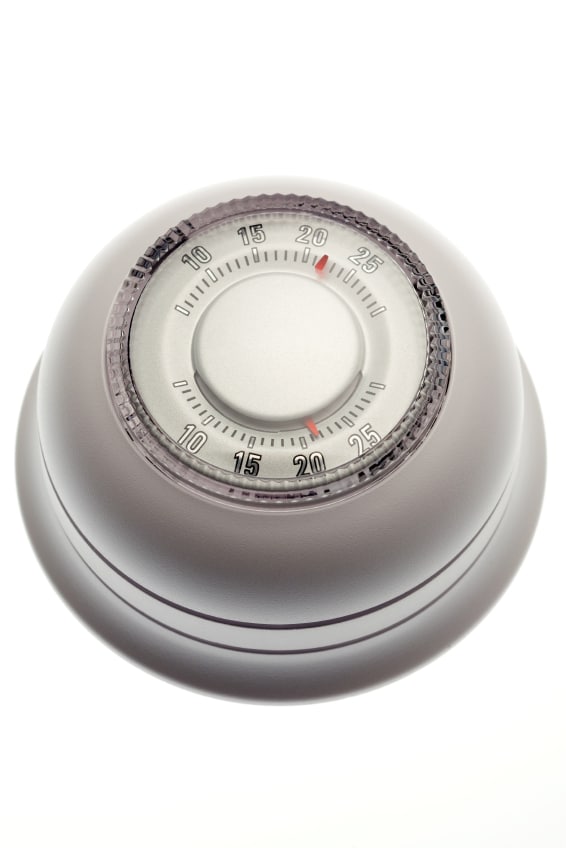
How do you build a successful thermostat collection program in a short period of time?
Public/private partnerships.
That’s exactly how a new initiative was recently launched in Oklahoma. Covanta Tulsa, Locke Supply, the Oklahoma Department Environmental Quality (ODEQ), the Thermostat Recycling Corporation (TRC), and the Product Stewardship Institute (PSI) teamed up to start a new state-wide collection program in a relatively short period of time.
Covanta has a long history of caring about the proper disposal of mercury-containing items, and the need for a collection program in Oklahoma was evident. Using the positive relationships we have built in the many years we have operated in the state, we were pleased to be the catalyst that brought these diverse groups together to provide a convenient way to responsibly recycle mercury-containing thermostats. Thanks to the collaborative work of the five aforementioned organizations, citizens and contractors are now able to deliver intact old thermostats to any Locke Supply location for recycling free of charge.
The thermostat recycling initiative in Oklahoma began with a brief meeting with Fenton Rood of ODEQ to develop a state-wide solution for thermostat recycling that could supplement periodic household hazardous waste collection days that are held in some communities. From there, we decided to look for a retail storefront solution that would allow ubiquitous collection during normal business hours. Locke Supply, with their numerous locations around the state, was the perfect fit.
Thermostat recycling containers are now in place at convenient and accessible locations throughout Oklahoma. When full, containers will be shipped to TRC for proper disposal and recycling. In an attempt to incentivize collection even further, Locke Supply obtained participation from a few of their new thermostat suppliers to offer a “bounty” program: bring in an old thermostat with mercury switches and Locke Supply will provide a $10 coupon for a programmable replacement thermostat.
Mercury thermostat recovery and recycling offers everyone the opportunity to eliminate a toxic material from the waste stream, while incentivizing the purchase of electronic thermostats that allow for more efficient heating and cooling. By identifying a diverse group of organizations with common interests, Covanta has now proudly provided one more way to protect the state’s land, air and water from unnecessary pollution.
Matt Newman joined Covanta Energy in 2008 and has over 25 years experience in the energy industry which includes renewable energy, electricity generation, asset optimization, risk management and fossil fuel management. In his current position, Mr. Newman is responsible for all business aspects for the Covanta Tulsa Renewable Energy, LLC, as well as carrying additional responsibilities for the South Region of Covanta Energy’s extensive fleet of Energy from Waste facilities in the United States. For additional information, Matt may be reached at mnewman@covanta.com.
Looking to start a thermostat collection program like this one in your area? Contact PSI for guidance at suna@productstewardship.us or (617) 671-0616.
By Dave Galvin, Hazardous Waste Program Manager at the King County Local Hazardous Waste Management Program
To flush or not to flush? This is a question many of us have faced over the years. Those who live with on-site septic systems are particularly sensitive to the quandary of what goes down the drain. Anything other than human waste and toilet paper (that is specifically made to break apart almost immediately) should be kept out of such systems, especially if there are small pumps involved along the way, which can easily clog. After you’ve had to clean a clogged pump or pipe by hand, your sensitivity to such matters goes up exponentially.

Some consumer products are labeled as “flushable,” but are they really? Items such as baby wipes and skin cleaners, paper towels, feminine care products, condoms, diapers, and even dental floss, are usually not designed to break apart immediately and are thus not intended to be flushed. Some wipes are marketed as “flushable” while others as “disposable”; they are made by the nonwoven fabric industry and are supposed to meet certain voluntary guidelines developed by this industry.
A group of wastewater and water quality associations is meeting with representatives of the nonwoven fabric industry (via a trade association known as the International Nonwovens and Disposables Association) to explore a “product stewardship approach.” What, you ask? Take-back of leftover wipes? No, let’s not go there. Instead, they have agreed to discuss the challenges that the wastewater agencies face and to tighten the requirements spelled out in the current Guidance Document for Assessing the Flushability of Nonwoven Disposable Products (third edition). A fourth edition is currently in the works.
Here is an instance where the product stewardship dialogue actually addresses design standards! How do you set criteria for flushability such that the product truly breaks down in ways that are compatible with on-site and municipal wastewater systems? How do you ensure that these products are truly acceptable to flush, that they are “biological nutrients” in McDonough and Braungart’s Cradle-to-Cradle sense? How do you establish clear and meaningful labeling and marketing standards for what is flushable and what is not? Interesting questions indeed, and a dialogue sure to blaze new territory in the product stewardship universe.
This discourse illustrates an expanded definition of product stewardship, one that covers the full lifecycle, including design and labeling decisions that affect end-of-life disposition. Who knows – maybe Scott Cassel should be invited to the “World of Wipes” international conference to expand the idea of what it means to affect sustainable product stewardship.
“Hard to handle” takes on new meaning where upstream meets downstream.
Dave Galvin is a Program Manager for the Hazardous Waste Management Unit in King County (Seattle, Washington), part of the multi-agency “Local Hazardous Waste Management Program in King County.” This program addresses household and small business hazardous wastes in the Seattle metropolitan area. Dave began working in this subject area in 1979 and was the one who coined the term “household hazardous waste.” He was the founding president of the North American Hazardous Materials Management Association and was previously the president of the Product Stewardship Institute’s Board of Directors. For additional information, Dave can be reached at Dave.Galvin@kingcounty.gov.
By Resa Dimino, Senior Advisor for Policy and Programs at the Product Stewardship Institute

Extended producer responsibility (EPR) policy was offered as a policy solution to address all of these concerns. Assigning responsibility for recycling to the manufacturers of electronics would ensure that an infrastructure developed to handle this growing, and toxic, waste stream. It would also provide accountability for the way materials are handled – what IT or TV company wants to see its brand name featured in the next e-waste export expose? So, between 2003 and 2010, twenty-five states passed laws requiring e-scrap recycling, with twenty-three of those being EPR laws.
No two e-scrap EPR laws are exactly the same, but they do fall into a few categories. The first program, established in Maine, relies on local governments to collect electronics, and requires manufacturers to pay for any of their branded equipment that comes back through the system. Connecticut followed suit with a similar model years later. Oregon, Washington and Vermont offered variations on that theme by creating statewide programs (that typically operate through a contract with the state) that arrange for the recycling of all of the materials collected through what the state determines is a convenient collection system.
Meanwhile, a number of other states—led by Minnesota, but including Illinois, Indiana, New York, Wisconsin, Pennsylvania, New Jersey and Rhode Island – followed the “set the goal and let industry figure out how to get there” model of EPR. They each established performance goals and allocated responsibility to manufacturers to collect enough e-scrap to meet those goals. The trouble is, it’s hard to figure out where to set those goals to drive aggressive programs. On top of this, the costs of recycling have increased, so manufacturers are not enthusiastic about paying for more than they need to.
In an article recently published in E-Scrap News, PSI lays out the challenges some states are facing with e-scrap laws. As we address these challenges, we learn more about how to implement EPR in the US. We learn about critical issues, including: how much government involvement do we need to ensure a functional system? What policy mechanisms are needed to support an effective market-based recycling system? How should costs be allocated? What is the right balance between regulation and program flexibility?
The answers to these questions vary from state to state, but it is clear that the lessons we are learning now will serve us well as we seek to fix the struggling programs, and design new ones in the future.
Resa Dimino is a Senior Advisor for Policy and Programs at PSI. She works as a consultant with more than 20 years of experience in recycling policy, programs and business development. Prior to launching her consulting practice, Resa was the Director of Legislative Programs at WeRecycle!, an E-Stewards certified electronics recycler headquartered in Mt. Vernon, NY, and worked to develop collection networks in Northeast states that have electronics EPR legislation. For additional information, Resa can be reached at resa@productstewardship.us.
Resa will be speaking about EPR and electronics on a panel at the Institute of Scrap Recycling Industries (ISRI) Convention on Friday, April 24, 2015. She will be presenting in the session titled, “Extended Producer Responsibility (EPR) – Where is it going?”.

Allowing unwanted pharmaceuticals to accumulate in homes increases the likelihood of accidental overdose, illegal diversion, and environmental contamination. It’s time to commit to a solution that works.
The Take Back Solution
Take-back programs provide a safe way for people to remove unwanted medications from their homes.
Existing take-back programs vary widely as to how they are organized and funded. Many happen only a couple days each year. Some local law enforcement agencies have installed permanent drop boxes in their buildings. With the recent withdrawal of federal DEA support, many programs are struggling to find funding to continue this important public service.
A new federal rule for the disposal of unwanted controlled substances allows pharmacies to run their own take-back programs, a convenient option for consumers. However, the new DEA rule does not provide any funding to make participation easier.
Both law enforcement and pharmacy-based take-back programs are severely limited by a lack of consistent funding. While voluntary take-backs are a step in the right direction, these programs simply aren’t enough.
Extended Producer Responsibility (EPR), also known as product stewardship, describes a system where the life cycle costs of a product become part of the cost of manufacturing. EPR is a proven method to sustainably fund the recycling or disposal of fluorescent lights, mercury thermostats, paint, mattresses, household batteries, and other products.
Why, then, is EPR the best solution for pharmaceuticals?
1. Proven
EPR is already being successfully implemented for pharmaceuticals in many European countries as well as some Canadian Provinces. In British Columbia (BC), for instance, 97.5% of pharmacies participate in a drug take-back program due to a solid EPR foundation. These locations collected a total of 112,888 pounds of pharmaceuticals in one year alone, equaling out to 0.02 pounds of meds collected per person. For comparison, Oregon, a state with a similar population but without an EPR program, collected only 0.004 pounds of meds per person in one year, a rate five times lower than British Columbia’s.
2. Economical
A coordinated EPR approach lowers collection and disposal costs per pound. The pharmaceutical EPR program in France, for example, collects an average of 16,237 tons per year, at a cost of just $0.0022 per box. Funded entirely by pharmaceutical manufacturers and run by the non-profit group Cyclamed, this French program is highly effective in collecting unwanted pharmaceuticals. In a recent survey, 77% of French residents claimed to have disposed of unwanted medication via these take-back sites, while 70% said they “always” dispose of pharmaceuticals in this way.
3. Stable
Unlike the current patchwork of funding used by U.S. programs, an EPR program provides secure, long-term funding. The aforementioned program in British Columbia started their mandatory Medications Return Program in 1996 with a program revamp in 2004. The pharmaceutical industry, therefore, has been funding the entire cost of the program for over 19 years.
4. Ready to Go
Momentum is growing: Alameda County, CA; King County, WA; and San Francisco, CA have all adopted EPR laws. Despite having been willing EPR partners in other countries, pharmaceutical manufacturers have challenged the Alameda law in court. Considering the narrow grounds of the appeal and improvements made to subsequent iterations of the law, other communities will soon be passing pharmaceutical EPR laws.
Please consider promoting an EPR bill in your county or state. Each new EPR law brings us one step closer to a national program.
Ed Gottlieb is the Chair of the Coalition for Safe Medication Disposal in Tompkins County, NY. Ed can be contacted at egottlieb@cityofithaca.org.