

Harold Siegel was my favorite conservative. He was also a PSI Advisory Council member…my brother’s father-in-law, and my friend.
Harold passed away at age 89 on March 20 in New York City. He was still working at Excelsior Graphics, the business he built to prosperity. Harold was a Patriotic lover of this country, a great pool player, and someone who always listened to the other side.
We bonded one night years ago after seeing his grandson, my nephew, perform at a college play. At a bar that night over beers, we discussed the need to take action to protect the environment. I learned he was an environmentalist, believing companies should take responsibility for reducing the impacts of the products they put on the market.
Contrary to many conservatives, Harold saw no contradiction in a free market operating under needed regulation, which levels the playing field for all competitors. He gave me advice on how to frame issues so conservatives could support extended producer responsibility laws. I can’t say those strategies always worked, but many people don’t see the world as Harold did.
The last time I spoke to Harold was at his granddaughter’s (my niece’s) wedding only a few weeks ago. He was in the hospital for the week leading up to the wedding, but rallied to be present at the big day. At the brunch the next day, he recounted what PSI was doing from the recent newsletter he read. He read them all, and remembered what he read.
We were very different people. But in his decency, Harold engaged with me and others whose views were different. Through those conversations, we found important issues on which we agreed, and we built a strong relationship around environmental issues, which only strengthened our family ties.
My favorite book as a kid was Harold and the Purple Crayon. It was, aptly, about a kid named Harold who used a purple crayon to draw his way through life. Whatever he needed and wanted, he drew it, and thus made his own reality. I believe Harold Siegel saw his own world in this way. He had a kind approach that others found attractive, and he manifested this approach in the world.
I will miss him greatly, and I hope that his legacy of kindness, compassion, and willingness to engage with those with opposing views can be a lesson for us all.
by Scott Cassel
On Wednesday, December 5, John Waffenschmidt died peacefully, and unexpectedly, in his sleep. As the PSI team struggles with the sudden loss of a close colleague and friend, many fond memories of John have surfaced.
John was passionate about everything – mountain climbing, lifecycle analysis, environmental justice, science, and energy-from-waste technology. He spontaneously sang and danced at our conference, and would correct anyone misusing the term “incineration.”

Photo by Robert Klein. Left to right: Fenton Rood (Oklahoma Department of Environmental Quality), Scott Cassel (PSI), and John Waffenschmidt (Covanta) enjoying PSI’s 2017 Product Stewardship Forum in Boston.
John brought a unique blend of talents and interests to his role as PSI’s point person at Covanta for a decade-long partnership between our organizations. The partnership is, in some ways, an unlikely one between an environmental organization and a waste management company. However, John found multiple ways we could work together, including the time he came to me with the business concept of destroying waste pharmaceuticals left in medicine cabinets, at no cost to government, in Covanta’s municipal waste-to-energy plants.
To determine if our government members would support this concept, PSI convened two technical webinars and a briefing paper. John presented for Covanta and even offered a slot to a competitor that operates hazardous waste facilities. After rigorous questioning from state air quality regulators and others, two PSI state members stuck to their policy of hazardous waste incineration for waste medicines, but many others approved the use of solid waste combustion. This project helped pave the way for Covanta’s Rx4Safety program, which has provided free destruction for residents and governments of over 5 million pounds of waste medications.
John and I worked closely on many other projects through the years, including joint presentations to state officials in support of EPR legislation and a mattress stewardship dialogue in Connecticut we facilitated and Covanta seed funded, which led to three state EPR laws for mattresses.
My last conversation with John was a follow-up call he made immediately after a phone conversation in which he sensed a tinge of concern in my voice. He wanted to make sure that what he had conveyed to me was understood. He wanted to smooth out a minor ripple in our communications. I assured him we were good, and that our relationship was solid. That call left me with a strong feeling of humanity. John sensed something was not quite right, and he acted on it. His follow up call took 30 seconds, but it is the lasting feeling I have of John – of honesty, friendship, and peace.
by Scott Cassel and Kristin Aldred Cheek
 Last fall’s textiles summit was a watershed moment in efforts to address textile waste in the U.S. Organized by the Product Stewardship Institute (PSI), New York Product Stewardship Council (NYPSC), New York State Association for Reduction, Reuse and Recycling (NYSAR3), and New York State Pollution Prevention Institute (NYSP2I), the event brought together more than 200 textile designers, brand owners, used clothing collectors, recyclers, and government officials for the first time. The focus: improving the sustainability of the textile industry throughout the supply chain, including reducing the amount of textiles disposed and keeping millions of dollars in valuable materials circulating in our economy.
One point of general agreement at the summit was the need to move away from a “fast fashion” mentality and, in its place, build a repair-reuse-recycle mindset among businesses and consumers. Unfortunately, nearly one year later, leadership from brand owners and manufacturers remains largely absent.
Upstream, there are voluntary initiatives to reduce the environmental impacts of the textiles industry. Researchers are developing new methods to separate and extract fibers from used textiles, which would enable companies to recover the most valuable material and turn it into new products. Downstream, there are often-cited projects by companies like Patagonia and Eileen Fisher to repair, reuse, and recycle clothing.
Such efforts are examples of the varied possibilities for a more sustainable approach, but they shouldn’t distract us from the reality that the textiles industry as a whole is the second largest polluting industry in the world after oil and gas. While we wait for fiber recovery technology to be refined and brought to scale, or for voluntary efforts to grow to a meaningful level, the amount of textiles disposed continues to climb. A record 13 million tons of textiles went to landfills or combustion facilities in 2015 alone.
The technology to reuse, recycle, and repurpose many textiles already exists. Countless organizations and businesses already understand the value of recovering what’s currently being wasted and are clamoring for more material.
What’s missing is the properly funded infrastructure for collection and processing.
By requiring all textile manufacturers to finance and manage the post-consumer textiles they sell into the market, Extended Producer Responsibility (EPR) policies can achieve the efficient reuse and recycling of a high percentage of scrap textiles. EPR policies create an organized structure for cooperation and communication that is based on financial incentives and social responsibility. These systems create a level playing field among producers so that all players compete equally. At the same time, EPR lifts much of the burden from taxpayers who are currently funding disposal, regardless of their personal textile purchase and disposal habits.
There is a huge opportunity here for brand owners. Over the long haul, economies across the globe are heading toward more transparency, more substantive corporate responsibility, and more circularity. Companies that take responsibility for the lifecycle of their products will have the fewest risks and the greatest likelihood of increasing their market share. Moreover, companies that seize a leadership role today and engage in the process of developing an EPR system will be setting the bar for themselves and their competitors and defining product stewardship in the textiles industry for years to come.
To develop effective policy, there needs to be a facilitator that can develop a consensus on the extent of the problem, the goals sought by those with an interest in the outcome, the barriers to achieving those goals, and the solutions to overcoming those barriers. There is a roadmap for success. Over the past two decades, PSI has facilitated the development of many effective EPR policy models, and today our members are interested in the development of a policy model for textiles.
The Product Stewardship Institute’s Scott Cassel and Megan Byers respond to the New York Times’ August 15th Opinion piece, The Conflict of Interest That Is Killing Recycling.

Recent trade restrictions by China have troubled many U.S. industries, as well as municipal recycling programs that rely on Chinese markets. Shrinking markets for recovered material have raised municipal recycling costs. As a result, some recycling programs have closed, while others have stockpiled or disposed of recyclables the public expects to be turned into new products.
The fluctuation of recycling markets is nothing new. But for 50 years, we have failed to recognize that recycling is stifled by an uneven playing field.
It is time to disrupt the current recycling economic model, which relies on taxpayers and municipal governments to pick up the cost of managing waste products and packaging from which companies reap the profits. To date, U.S. corporations have dodged their responsibility to manage their products after consumers use them.
On the surface, it is often cheaper to dispose of used products and packaging than to recycle them (though landfill tipping fees are rising). However, in doing so, we fail to account for the much costlier externalities. In reality, brand owners and consumers are not paying the full cost of production and consumption, which includes environmental and social damages such as the need to continually mine virgin resources for the manufacture of new products. Instead, we experience these costs in the form of water, air, and land pollution, and greenhouse gas emissions leading to climate change. The cost to clean the water, air, and land is much greater than that to prevent contamination in the first place.
Governments often establish recycling programs to reduce litter and waste to improve quality of life for their citizens. Unfortunately, communities are at a huge disadvantage compared to brand owners that benefit from the throw-away economy while paying none of the waste management costs. Furthermore, most waste management companies like things just the way they are now. The status quo allows them to protect their investments in disposal technologies, and they enjoy powerful contractual leverage against municipalities and individual residents.
The real recycling tragedy is not just that municipalities use different bins and labels. It is that every community collects different materials, educates their residents in different ways, and has separate contracts with garbage and recycling haulers that provide different services and incentives. This inefficiency and lack of municipal cohesion is the basis for the recycling and garbage disposal crisis in the U.S.
There is hope. Countries across the world require brand owners – such as Unilever, Procter & Gamble, SC Johnson, General Mills, Pepsi, Amazon, and Walmart – to fund and manage the recycling of materials they put on the market. These companies, which are the same ones fighting change in the U.S., hire a non-profit to operate a network of collection and processing facilities with lean government oversight. This network leverages existing infrastructure and provides options for municipalities. These “producer responsibility” systems collect the same set of materials in every jurisdiction. They provide the same educational materials and symbols, with appropriate regional nuance. They have the same instructions and standards for municipalities and other collectors to keep contamination low.
And they get results. British Columbia, for example, has achieved a 75 percent recovery rate for packaging and printed paper, as compared to the 55 percent average in the U.S. for the same materials. The Canadian province has also reached an enviable contamination rate of 6.5 percent, compared to an average of about 15 percent in the U.S. These systems are in place in Europe (for over 30 years), across Canada (for up to 15 years), and now in Israel, Japan, South Africa, and an increasing number of other countries.
Well-crafted extended producer responsibility frameworks also reward innovation, especially for companies that use less material, switch to readily-recyclable options, and incorporate a higher percentage of recycled content in packaging.
The time has come to bring producer responsibility for packaging to the United States. Consumer product companies and waste management companies have valid concerns about change. But municipalities and taxpayers can no longer bear the sole financial burden for a problem created by societal consumption and brand owners’ poor packaging choices.
If we listen to one another, we can solve this problem together. We must understand the problems created by waste, share common goals, collectively overcome barriers, and agree on the solutions available.
It takes will, but it is long past time to start.
by Scott Cassel and Kristin Aldred Cheek
In July 2017, China formally announced new import restrictions on recyclables, which came into effect in 2018. U.S. municipalities are now feeling the Sword’s sting. A lack of investment in domestic recycling infrastructure, dependence on other nations to accept contaminated recyclables, and failure to account for the full lifecycle costs of packaging have resulted in significantly increased costs for local governments and taxpayers. China’s policy shift revealed flaws in U.S. recycling systems, which currently rely on voluntary action on the part of packaging producers.
In British Columbia, however, where an extended producer responsibility (EPR) law is in place for packaging and paper products, the effects of the Sword are muted. There is now increasing interest in EPR for packaging in the U.S. – which will only grow as the impacts of China’s policies continue to unfold.
Failure to place responsibility on producers through effective EPR legislation has left many local governments and taxpayers in a difficult bind across the U.S. From Massachusetts to Oregon, municipalities are suspending all or portions of their recycling operations and seeking permission where needed to landfill recyclable items. Twenty-two municipalities in Washington recently granted a waste management company permission to landfill post-consumer paper that had been piling up. In Minnesota, where state law forbids landfilling or burning recyclables, waste managers and regulators are discussing the possibility of a waiver for the first time. In places where recycling contracts are expiring, municipalities suddenly find themselves absorbing enormous costs in their budgets for something that used to generate revenue, or raising residents’ recycling and waste disposal rates.
Meanwhile, BC’s EPR program has transformed the collection and recycling of packaging and paper products into an integrated province-wide system that has achieved one of the lowest contamination rates in North America. Instead of each municipality collecting its own set of recyclables and educating their residents in different ways, BC has developed a cohesive system that spurred investments in local processing capacity, achieving the economies of scale that packaging brand owners need to meet their ambitious recycled content and recyclability goals. Well-functioning European EPR systems – for instance, in Belgium, Spain, and Italy – have achieved similar success.
U.S. municipalities have been doing their best within the limits of their individual jurisdictions, but their efforts are not enough in the face of growing plastics pollution, increasing complexity in packaging, and shrinking export markets for recyclables. Without carefully planned, significant change in product stewardship policies and practices for packaging, U.S. governments, recyclers, and brand owners will not achieve their goals. It is time for U.S. policymakers and businesses to seriously examine how EPR programs can achieve the results they seek. That’s why the Product Stewardship Institute is reconvening packaging EPR strategic calls this fall for our Full Members.
by Megan Byers
 Greenport, NY is a charming seaside village on the North Fork of Long Island.
A few weeks ago, my colleague Vivian Fuhrman and I traveled to the North Fork of Long Island to kick off the Product Stewardship Institute (PSI)’s Trash Free Waters project, a voluntary plastics source reduction initiative funded by the U.S. Environmental Protection Agency, Region 2 and administered by the New England Interstate Water Pollution Control Commission. Through this initiative, PSI is partnering with four local eateries in Greenport, New York – Alices’ Fish Market, Bruce & Son, Lucharitos, and Tikal.1 – to help them voluntarily decrease the disposable plastic items (cups, straws, take-out containers, etc.) that end up on Long Island’s beaches.
When we arrived in the North Fork, gratitude and support for the project appeared from some unexpected sources.
Vivian and I first presented the project to the Southold Town Board – an opportunity made possible thanks to Southold’s Solid Waste Coordinator, Jim Bunchuck. Our goal was to lay the groundwork for developing a model municipal plan to reduce marine debris on a community level. During the discussion, the Board offered a creative idea: they suggested we create a “Trash Free Waters” emblem that the businesses can display in their windows or on their menus to market their marine debris reduction efforts.
Later that day, we met the participating businesses in the Greenport School for our kickoff meeting. Thanks to the meeting location, teachers Stephanie Pawlik and Brady Wilkins were able to join us and eagerly volunteered to have their students design the “Trash Free Waters” emblem as part of an environmental unit in class. A local artist, Cindy Roe, later contacted PSI and offered to advise the students and judge the submissions. We are now finalizing a plan for the emblem and connecting these volunteers.
Within the following week , at least three local news sources (SoutholdLOCAL, Suffolk Times, and North Fork Patch) published articles about the project. Thanks to this press, the project received many positive comments on social media – in fact, several individuals even suggested their own ideas for reducing plastic pollution!
This sort of community collaboration is a key aspect of protecting our planet. The support we are finding in Greenport is a reminder that, no matter who you are, everyone has their own unique ability to stand up to protect our waterways.
Regardless of the product focus, multi-stakeholder collaboration is a key tenet of PSI’s approach to product stewardship and has been critical to our success. For instance, to address economic and environmental problems caused by leftover paint, PSI facilitated a national group of state and local governments, paint industry representatives, retailers, recyclers, non-profits, and others. After years of research and discussion, that national group created a model paint stewardship bill that now serves as the basis for nine paint stewardship laws passed in the U.S., resulting in 16 million gallons of paint being diverted from disposal, saving governments and taxpayers over $69 million, and creating over 200 jobs.
Marine debris is a visible problem in coastal communities like Greenport, and now a wide variety of stakeholders are ready to address it. PSI knows that this fortuitous synergy from multiple stakeholder groups will boost the participating eateries’ visibility, value, and connection to the community, and that their voluntary plastics reduction effort may serve as a starting point for community-wide action to reduce marine debris.
As a complement to PSI’s Marine Debris Reduction Toolkit for Colleges & Universities, PSI’s work with the Greenport eateries will culminate in a Marine Debris Reduction Toolkit for Eateries that will help businesses and municipalities across the country reduce their contribution to marine debris.
Megan Byers is the newest addition to the Product Stewardship Institute (PSI) team. She focuses on packaging, tracking legislation, and communications work at PSI, and coordinates several state product stewardship councils. She’s leading PSI’s Trash Free Waters project.
By Scott Cassel, Chief Executive Officer and Founder, Product Stewardship Institute
The Product Stewardship Institute recently passed a policy statement opposing state legislation that preempts local government action to regulate products and packaging. The policy is intended to help defend local government rights to take action to protect the environment. Here’s why we did it.
 Traditionally, recycling and solid waste management in the U.S. are considered local government responsibilities. Since local governments are responsible for managing waste, they should also have the authority to implement policies that support their local priorities.
The American Legislative Exchange Council (ALEC), a conservative think tank with close to 300 corporations and private foundation members, as well as hundreds of state officials, thinks otherwise. ALEC is pushing legislation in states around the U.S. to restrict local governments from banning “auxiliary containers,” including plastic bags, bottles, cups, and polystyrene to-go boxes – bans that would directly cut into manufacturers’ profits, but also reduce external costs on governments, recycling facilities, and the environment. So far, ALEC’s model legislation, or derivations of it, has passed in Arizona, Wisconsin, Indiana, Idaho, and Missouri and has been introduced in another three states (TX, MI, and GA).
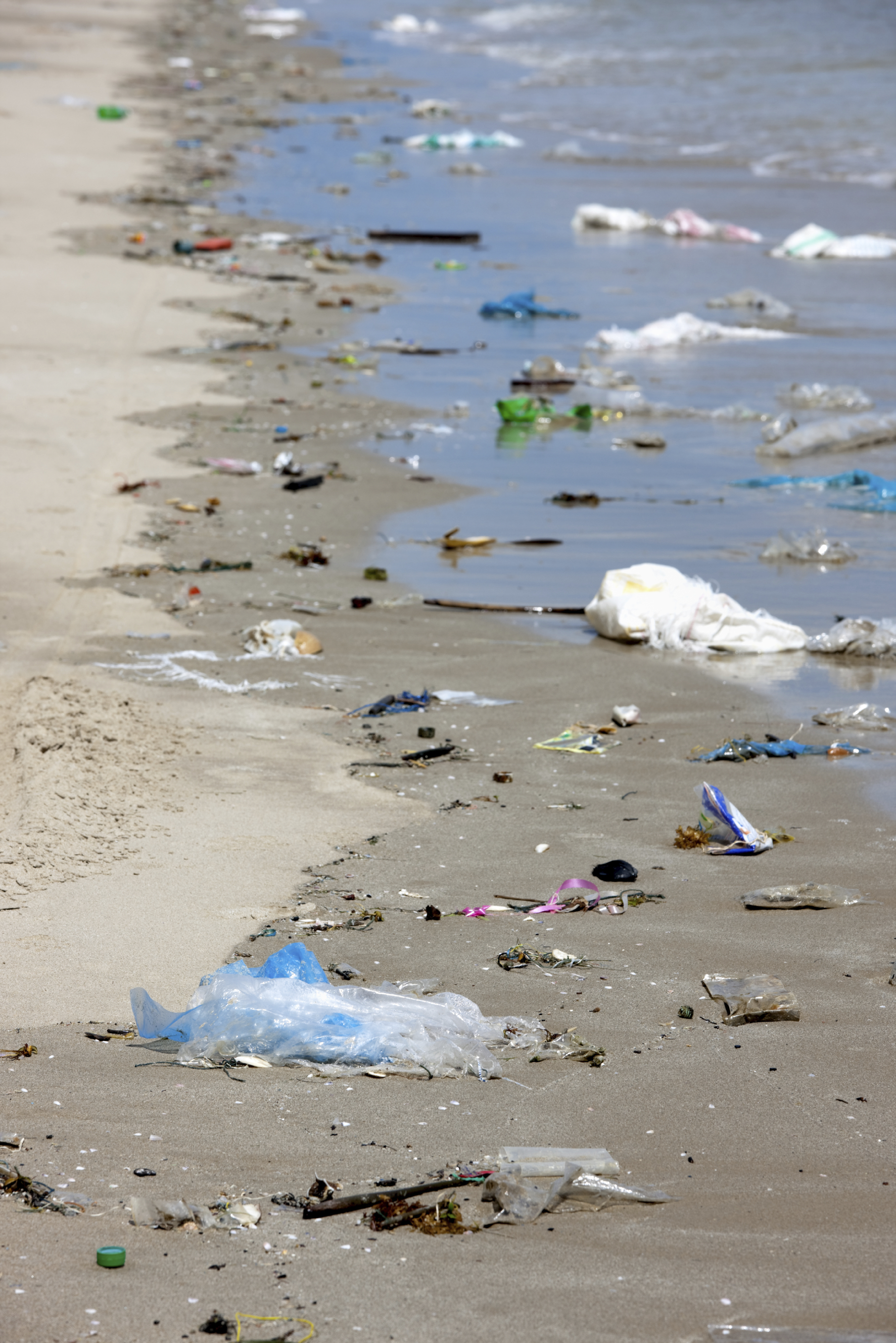
ALEC and its members see local bans as unnecessary restrictions on the free market and consumer choice, but local governments have focused on plastic bags and polystyrene for good reason. These products are often used in take-out food service settings and are disposed outside of the home. The materials are lightweight and easily transported by air or water, adding to the global marine pollution crisis. Plastic bags and polystyrene are recyclable, but neither can be collected at the curb with bottles and cans. Plastic bags are typically considered contaminants in material recovery facilities because they get caught in sorting machinery, costing time and money. All in all, these products wreak economic and environmental havoc the moment they leave a retail establishment.
PSI strongly advocates for the right of local governments to enact laws and rules that ensure efficient and environmentally sound materials management. Even so, there are instances in which a well-conceived statewide program is preferable to multiple local regulations. But that trade off – giving up local authority in exchange for statewide action – should not be taken lightly and should be a decision left to local governments. Local autonomy should only be sacrificed for good reason and with proper cause.
In the case of the ALEC bill and its derivatives, local governments are not being asked to forgo bans in favor of a statewide policy or program to resolve issues with these materials. They’re simply being told they can’t take action to reduce the waste they are obligated to manage and pay for. Policy tools are being stripped from the local government tool box, yet the responsibility on local governments is not relieved. As a result, the manufacturers of these problem products can continue to sell single use items, and local governments have no choice but to foot the bill to manage them as waste and litter.
If producers want to avoid bans, they should step up and offer viable solutions for managing these products, or at least commit to working with governments to find them – at either the state or local level. Restricting governments’ ability to act, while offering no viable alternative, only ensures that these products and packaging will yield profits, while our local economies and environment pay the price.
By Senator John F. Keenan, Massachusetts Senate
On March 16, 2016, Governor Charlie Baker signed into law a comprehensive drug abuse prevention bill that made Massachusetts the first state in the nation to require drug companies to fund and manage a safe disposal program for unwanted medications. Massachusetts Senator John F. Keenan was the first to introduce the drug take-back portion of this bill to the MA legislature, and acted as an influential proponent of its inclusion in the final law. Below, Senator Keenan cautions us to stay vigilant to PhRMA’s attempts to skirt the law’s intended purpose.
You would think that a group that helped create the opioid epidemic, which certainly has profited from it, and which is acknowledging that its products continue to fuel the epidemic, would offer more to help solve the epidemic than a catchy phrase, a website and a complete abrogation of playing any role in cleaning up the mess.
Yet, that’s what a newly formed group called “My Old Meds” has done. The sponsor of this group is the Pharmaceutical Research and Manufacturers of America (PhRMA), made up of representatives of the pharmaceutical industry. Some of these people and the firms they represent are making a lot of money from the sale of prescription painkillers, firms like Purdue Pharma, the people who brought us OxyContin and, more recently, OxyContin for kids.
“My Old Meds” recently brought their message to Massachusetts, advising that unused drugs are often diverted and become fuel for the opioid epidemic, and that old meds should therefore be disposed of at home in the trash or at government sponsored drug disposal sites.
In so advising, the sponsors of “My Old Meds” attempted to wash their hands of any responsibility for the disposal of unused medications, and place it instead on the patient and the taxpayer. Their theory: sell more pills than people need, reap the profits, then make others pay for the cleanup.
Their message was strategically timed, just as Massachusetts was considering legislation to require that pharmaceutical companies themselves become responsible for funding and operating a take-back and disposal program for unused pills. The industry was very comfortable with the arrangement of the past, watching their balance sheets grow in step with the excessive number of pills sold while communities scrambled to address the resulting opioid epidemic. That’s why they introduced their catchy phrase and website. They wanted to appear to be helpful, to convince us that no real change was necessary.
The Massachusetts Legislature was not fooled. We can be proud now of becoming the first state in the nation to require a pharmaceutical product stewardship program.
But now we must expect PhRMA’s campaign for in-home, patient and community funded disposal to continue. They will “educate” the public that they can spend their own money to buy cat litter or other carbon products that make pills “safe” for disposal, or that pills can simply be flushed into our water systems.
We must be vigilant. The new law allows the Massachusetts Department of Public Health to design an alternative stewardship plan, in which manufacturers will be allowed to participate rather than fund and operate their own programs. We must work to prevent the industry from influencing the regulatory process. We cannot let them seek regulations that set a low bar for industry responsibility, and that maximize the share of responsibility falling back onto public systems. We must work to ensure that the Department’s program is robust and effective, not a back door that lets manufacturers again step away from responsibility for safe stewardship of unused medications.
We have taken an important first step, but we must continue to fend off the message that manufacturer responsibility can be satisfied with a slogan and website.
Senator Keenan wrote a follow-up piece related to National Take-Back Day on MassLive. Learn more about Senator Keenan by visiting his website. Please feel free to contact Vivian Futran Fuhrman, PSI’s pharmaceuticals lead, with comments and questions (617-236-4771), or visit the PSI pharmaceuticals webpage for more information.
By Scott Cassel, Chief Executive Officer and Founder, Product Stewardship Institute

In one instant, a decade of advocacy work was rewarded as a principal player stepped forward to help alleviate drug abuse and accidental poisonings in America. In this one move, Walgreens validated those of us who have long promoted take-back as the safest way to manage leftover drugs and remove a health risk from our homes.
It was a long road to this point. It all started for a reason we should not forget – concern over how pharmaceuticals impact water quality and aquatic organisms. The U.S. Geological Survey brought our attention to this issue in 2002 by reporting the prevalence of pharmaceutical compounds in waterways. Studies and photos of aquatic impacts – male fish with female characteristics, infertility in aquatic species, and related environmental concerns – incited our interest in finding a solution.
But it quickly became clear that the nation’s drug abuse issue would drive a solution. When King Pharmaceuticals, an opioid manufacturer, funded PSI’s pharmaceuticals take-back website, along with one of our 2008 national dialogue meetings, we knew we were on the right track. At that meeting, we reached stakeholder consensus: the federal Controlled Substances Act needed to be changed. This law limited the collection of controlled substances to locations where law enforcement staff were present – a costly, impractical, and inconvenient constraint.
In order to change the law, we needed to reach a strong agreement among government agencies, reverse distributors, and other stakeholders on two specific points: how we defined the problem and what specific language we recommended to change the law. We met with the Office of National Drug Control Policy (ONDCP), the Drug Enforcement Administration (DEA), the Department of Transportation, the U.S. Environmental Protection Agency, and the Food and Drug Administration to solidify a unified message, and wrote testimony that synthesized concerns and recommendations. In 2010, the Secure and Responsible Drug Disposal Act was enacted.
But that was only the first step. From there, PSI held multiple stakeholder calls and meetings to provide input into implementing the DEA regulations that would eventually put the new law into action. When DEA finally released its final rule in late 2014, some stakeholders remained skeptical. They questioned whether the rule went far enough, if it created unintended loopholes, and why pharmacies didn’t jump in to start collecting soon after the rule was announced. PSI, therefore, set out to find pioneering pharmacists who were collecting controlled substances under the new rule, like Monty Scheele of Four Star Drug in Nebraska, who enthusiastically explained on one of our national webinars how easy it is to collect old drugs and how beneficial it is for business.
Obviously, Walgreens was listening to pharmacists like Monty Scheele. They responded to the drum beat of requests from an ever-expanding group of take-back advocates, as well as ONDCP and DEA, who made it clear that pharmacy collection was a main goal all along when they changed the regulations.
A decade ago, King County, Washington started an epic pilot program for non-controlled substances at Bartell Drugs, a pharmacy in Seattle. Dave Galvin, one of the County’s pilot program leaders, always said: “Most people don’t go to their police station voluntarily, but they do go to the neighborhood pharmacy.”
It’s been a long journey, one that took perseverance and hope. But simple truths are hard to keep submerged. Customers are neighbors, and they will stay loyal to your pharmacy if you help alleviate a pressing community problem.
It was only a matter of time until a major initiative like this one was bound to occur. A decade isn’t so long, after all.
By Scott Cassel, Chief Executive Officer and Founder, Product Stewardship Institute

We can hardly blame Best Buy or any other collector that stepped up to make recycling easier for consumers. Back in 2004, when not a single retailer was collecting electronics equipment, the Product Stewardship Institute (PSI) teamed with Staples and the U.S. Environmental Protection Agency to start the first computer take-back program in the country. Five years later, motivated by state extended producer responsibility (EPR) laws, Best Buy took Staples’ computer-only program a big step further to collect both computers and TVs, becoming one of the most convenient locations for consumers to return their used electronic equipment nationwide.
But times have changed. Costs increased, electronics recycling programs became more robust, and vast quantities of higher cost e-scrap are now being collected – changes that have revealed a lack of commitment from most electronics manufacturers to assume responsibility for collecting and recycling used electronics.
With its recent announcement, Best Buy stated that it “should not be the sole e-cycling provider in any given area, nor should we assume the entire cost.” To be sure, some manufacturers did voluntarily step up to fill the infrastructure void over the past decade. In 2004, Dell, in partnership with Goodwill, and HP announced free nationwide electronics take-back programs. Samsung and LG followed suit in 2008. Unfortunately, these programs were limited, leaving Best Buy’s program to cover the brunt of the cost.
Isn’t it ironic? For the past 15 years, collectively, we successfully educated our citizens about the dangers of mismanaging electronics – about youth using acids to burn off toxic metals in countries without adequate environmental and health protection; about the millions of tons of resources that are buried or burned when not recycled, and which must be mined again, creating double the environmental impact; about the lost recycling jobs that are desperately needed by working families; and about the hundreds of millions of dollars that taxpayers and governments must pay to manage the waste from a multi-billion dollar industry.
We all thought we were on the right track, with EPR laws passed in half the U.S. states, some passed with manufacturer support. Resources were conserved, jobs created, and money saved. The public truly caught on – and genuinely appreciated our programs.
But those darn markets had to spoil everything. Well-meaning citizens who today know to “do the right thing” are now effectively being told by manufacturers that they don’t really want them to recycle so much after all. The message the manufacturers convey is that recycling is good, but it should slow down. Or someone else needs to pay for it.
Recyclers, local governments, and a few retailers are doing their part to collect and divert massive quantities of valuable commodities from disposal. But many manufacturers are no longer willing to cover the costs associated with the proper management of their products at end of life. Recyclers must choose between losing money indefinitely, significantly cutting costs, or going out of business. Local governments, whose residents rely on them for trash and recycling services, are now faced with increased electronics recycling costs – costs they didn’t budget for. Before, government officials directed residents to Best Buy as a convenient alternative to recycle electronics. What will they tell their residents now?
Best Buy stands out for its importance in the electronics collection infrastructure in the US. They collect more than any other manufacturer-sponsored program, providing a convenience to consumers unsurpassed by other locations. Even in states with EPR laws, which were intended to hold all brand owners responsible for recycling the electronics they produce, Best Buy has borne more than its fair share of recycling costs, consistently collecting far more material than was required. For example, in 2014, Best Buy recycled more than three times the amount of e-scrap it was obligated to collect in Illinois; more than 4 times its obligation in Wisconsin; and in Minnesota, company officials report that they collect one-quarter to one-third of all electronics recycled in the state – well beyond its market share.
One thing is clear – it’s time to revisit the nation’s 25 state e-scrap laws to ensure that all manufacturers are equally responsible for electronics recycling. PSI and our state and local government members understand the complexities and variations in programs nationally, and are working to find fair solutions for all. Since the first electronics recycling law passed in 2004, the dialogue has drifted away from manufacturers taking full responsibility and internalizing the costs of end-of-life materials management. Instead, arguments revolve around how high targets should be, how much manufacturers should pay, and what products they should cover. Past voluntary and legislatively supported commitments made by manufacturers have eroded. They resist attempts to incorporate recycling costs into product price, and instead want to pass these costs on to someone else.
Best Buy’s original program is what we need more of in the US – national, no cost, hassle-free product take-back. Their industry colleagues need to match that commitment; Best Buy can no longer be expected to go it alone.
To PSI, Best Buy’s move represents a call to action. Let’s work to improve these programs so they support responsible actors like Best Buy, raise expectations of other manufacturers, and meet increasing demand for consumer electronics recycling.
Learn more about PSI’s electronics work by visiting our website. Please feel free to contact Waneta Trabert, PSI’s electronics lead, with comments and questions (617-236-4866).