
The Product Stewardship Institute’s Scott Cassel and Megan Byers respond to the New York Times’ August 15th Opinion piece, The Conflict of Interest That Is Killing Recycling.

Recent trade restrictions by China have troubled many U.S. industries, as well as municipal recycling programs that rely on Chinese markets. Shrinking markets for recovered material have raised municipal recycling costs. As a result, some recycling programs have closed, while others have stockpiled or disposed of recyclables the public expects to be turned into new products.
The fluctuation of recycling markets is nothing new. But for 50 years, we have failed to recognize that recycling is stifled by an uneven playing field.
It is time to disrupt the current recycling economic model, which relies on taxpayers and municipal governments to pick up the cost of managing waste products and packaging from which companies reap the profits. To date, U.S. corporations have dodged their responsibility to manage their products after consumers use them.
On the surface, it is often cheaper to dispose of used products and packaging than to recycle them (though landfill tipping fees are rising). However, in doing so, we fail to account for the much costlier externalities. In reality, brand owners and consumers are not paying the full cost of production and consumption, which includes environmental and social damages such as the need to continually mine virgin resources for the manufacture of new products. Instead, we experience these costs in the form of water, air, and land pollution, and greenhouse gas emissions leading to climate change. The cost to clean the water, air, and land is much greater than that to prevent contamination in the first place.
Governments often establish recycling programs to reduce litter and waste to improve quality of life for their citizens. Unfortunately, communities are at a huge disadvantage compared to brand owners that benefit from the throw-away economy while paying none of the waste management costs. Furthermore, most waste management companies like things just the way they are now. The status quo allows them to protect their investments in disposal technologies, and they enjoy powerful contractual leverage against municipalities and individual residents.
The real recycling tragedy is not just that municipalities use different bins and labels. It is that every community collects different materials, educates their residents in different ways, and has separate contracts with garbage and recycling haulers that provide different services and incentives. This inefficiency and lack of municipal cohesion is the basis for the recycling and garbage disposal crisis in the U.S.
There is hope. Countries across the world require brand owners – such as Unilever, Procter & Gamble, SC Johnson, General Mills, Pepsi, Amazon, and Walmart – to fund and manage the recycling of materials they put on the market. These companies, which are the same ones fighting change in the U.S., hire a non-profit to operate a network of collection and processing facilities with lean government oversight. This network leverages existing infrastructure and provides options for municipalities. These “producer responsibility” systems collect the same set of materials in every jurisdiction. They provide the same educational materials and symbols, with appropriate regional nuance. They have the same instructions and standards for municipalities and other collectors to keep contamination low.
And they get results. British Columbia, for example, has achieved a 75 percent recovery rate for packaging and printed paper, as compared to the 55 percent average in the U.S. for the same materials. The Canadian province has also reached an enviable contamination rate of 6.5 percent, compared to an average of about 15 percent in the U.S. These systems are in place in Europe (for over 30 years), across Canada (for up to 15 years), and now in Israel, Japan, South Africa, and an increasing number of other countries.
Well-crafted extended producer responsibility frameworks also reward innovation, especially for companies that use less material, switch to readily-recyclable options, and incorporate a higher percentage of recycled content in packaging.
The time has come to bring producer responsibility for packaging to the United States. Consumer product companies and waste management companies have valid concerns about change. But municipalities and taxpayers can no longer bear the sole financial burden for a problem created by societal consumption and brand owners’ poor packaging choices.
If we listen to one another, we can solve this problem together. We must understand the problems created by waste, share common goals, collectively overcome barriers, and agree on the solutions available.
It takes will, but it is long past time to start.
by Scott Cassel and Kristin Aldred Cheek
In July 2017, China formally announced new import restrictions on recyclables, which came into effect in 2018. U.S. municipalities are now feeling the Sword’s sting. A lack of investment in domestic recycling infrastructure, dependence on other nations to accept contaminated recyclables, and failure to account for the full lifecycle costs of packaging have resulted in significantly increased costs for local governments and taxpayers. China’s policy shift revealed flaws in U.S. recycling systems, which currently rely on voluntary action on the part of packaging producers.
In British Columbia, however, where an extended producer responsibility (EPR) law is in place for packaging and paper products, the effects of the Sword are muted. There is now increasing interest in EPR for packaging in the U.S. – which will only grow as the impacts of China’s policies continue to unfold.
Failure to place responsibility on producers through effective EPR legislation has left many local governments and taxpayers in a difficult bind across the U.S. From Massachusetts to Oregon, municipalities are suspending all or portions of their recycling operations and seeking permission where needed to landfill recyclable items. Twenty-two municipalities in Washington recently granted a waste management company permission to landfill post-consumer paper that had been piling up. In Minnesota, where state law forbids landfilling or burning recyclables, waste managers and regulators are discussing the possibility of a waiver for the first time. In places where recycling contracts are expiring, municipalities suddenly find themselves absorbing enormous costs in their budgets for something that used to generate revenue, or raising residents’ recycling and waste disposal rates.
Meanwhile, BC’s EPR program has transformed the collection and recycling of packaging and paper products into an integrated province-wide system that has achieved one of the lowest contamination rates in North America. Instead of each municipality collecting its own set of recyclables and educating their residents in different ways, BC has developed a cohesive system that spurred investments in local processing capacity, achieving the economies of scale that packaging brand owners need to meet their ambitious recycled content and recyclability goals. Well-functioning European EPR systems – for instance, in Belgium, Spain, and Italy – have achieved similar success.
U.S. municipalities have been doing their best within the limits of their individual jurisdictions, but their efforts are not enough in the face of growing plastics pollution, increasing complexity in packaging, and shrinking export markets for recyclables. Without carefully planned, significant change in product stewardship policies and practices for packaging, U.S. governments, recyclers, and brand owners will not achieve their goals. It is time for U.S. policymakers and businesses to seriously examine how EPR programs can achieve the results they seek. That’s why the Product Stewardship Institute is reconvening packaging EPR strategic calls this fall for our Full Members.
by Megan Byers

In the past year, PSI documented more than 29,000 opt-outs generated through our Phone Book Opt-Out Toolkit, a trove of public outreach materials that makes promoting opt-out as easy as copy-and-paste for governments, environmental organizations, and concerned citizens.
We asked people to rate how easy or difficult it is to opt out on the industry-run opt-out website via an anonymous survey. 74 percent of respondents provided additional feedback to elaborate on their experience. Here’s what we learned:
- 69 percent of respondents found the opt-out website “very easy” or “easy” to use.
PSI commends the industry for creating a website that is easy for many people to use.
“The site was easy to use and the link easy to share so more people could reduce the number of unwanted phone books! Thanks.”
- But over a third of respondents thought the process was too long and confusing. Some even gave up.
The website does not make it clear from the start that opting out is a multi-step process. Counter intuitively, you have to register to unregister from phone book distribution. Common criticisms include that the opt-out process is too time consuming, the website is not mobile friendly, and it is annoying to create an account. Some respondents said that it would be easier to opt in than opt out, and that it felt like the website was intentionally designed to make people feel uncomfortable and confused, thus preventing completed opt-outs.
“You asked for a lot of information and it was time consuming to have to wait for the email so I could complete the opt out.”
“I gave up because it was so complicated. At some point I needed a password to register.”
- One in five respondents who gave additional feedback were wary of giving up personal information like their name, email address, and phone number in addition to their address.
The opt-out website promises that all information required is used only for verification purposes. Still, some survey respondents were skeptical.
“I hate giving out my name, personal phone in order to opt out.”
- 40 percent of respondents who gave additional feedback reported that it didn’t work – they still got phone books after opting out.
It is notable that PSI’s survey did not ask about opt-out outcomes (after all, we merely intended to capture feedback about the opt-out process). Nevertheless, many respondents wrote that phone book deliveries continued after opt-out.
“I opted out – about 5 years ago – yet I continue to get phone books delivered to me (including another one this weekend)! After each incident, I’ve directly emailed my contacts at Local Search Association and reported the unwanted delivery. Each time, they’ve reached out to the specific publisher to “address the issue,” but despite this, I continue to get phone books. Very frustrating. It doesn’t appear to be working due to either publishers not providing their delivery people with opt-out lists or the delivery people just ignoring the lists if they are provided. So 4 years of unwanted deliveries (post-opt-out) and counting…”
PSI applauds the phone book industry for supporting an opt-out website that most people find easy to use. Now, we urge improvements that would make opting out easy, accessible, and comfortable for all. The feedback PSI has gathered is a good place to start.
We fully recognize that delivering directories to some buildings but not others has very real challenges and requires time, effort, investment, technology, and good communication with distributors. But if any other service failed to do what it promised almost half the time, it would quickly be replaced. If the industry’s opt-out system can’t actually honor half of the requests they receive, we must ask: isn’t there a better way?
It is time for the Local Search Association to implement an opt-in system. This way, those who want phone books could easily opt into delivery by signing up online, mailing in a slip, or calling the publisher. Those who don’t use phone books would avoid environmental and economic impacts while keeping their homes clutter-free. Furthermore, local businesses could more accurately assess how to best spend their advertising budget and target their phone book ads to the right audience. To sustain advertising revenue, publishers should expand and improve online offerings to make YellowPages.com the number one stop for consumers in need of local business information.
Phone books should be delivered only to consumers who request them – just like any other product.
Until an opt-in system is available, the best option to stop phone book delivery is to opt out. If you still receive a phone book despite opting out, we encourage you to call both the publisher and Neg Norton, President of the Local Search Association, which runs YellowPagesOptOut.com.
Look in your phone book for a publisher name and find them online, or browse our list of top publishers. Mr. Norton can be reached at (908) 286-2385 or Neg.Norton@localsearchassociation.org.
Questions? Contact PSI’s Megan Byers.
by Megan Byers
 Greenport, NY is a charming seaside village on the North Fork of Long Island.
A few weeks ago, my colleague Vivian Fuhrman and I traveled to the North Fork of Long Island to kick off the Product Stewardship Institute (PSI)’s Trash Free Waters project, a voluntary plastics source reduction initiative funded by the U.S. Environmental Protection Agency, Region 2 and administered by the New England Interstate Water Pollution Control Commission. Through this initiative, PSI is partnering with four local eateries in Greenport, New York – Alices’ Fish Market, Bruce & Son, Lucharitos, and Tikal.1 – to help them voluntarily decrease the disposable plastic items (cups, straws, take-out containers, etc.) that end up on Long Island’s beaches.
When we arrived in the North Fork, gratitude and support for the project appeared from some unexpected sources.
Vivian and I first presented the project to the Southold Town Board – an opportunity made possible thanks to Southold’s Solid Waste Coordinator, Jim Bunchuck. Our goal was to lay the groundwork for developing a model municipal plan to reduce marine debris on a community level. During the discussion, the Board offered a creative idea: they suggested we create a “Trash Free Waters” emblem that the businesses can display in their windows or on their menus to market their marine debris reduction efforts.
Later that day, we met the participating businesses in the Greenport School for our kickoff meeting. Thanks to the meeting location, teachers Stephanie Pawlik and Brady Wilkins were able to join us and eagerly volunteered to have their students design the “Trash Free Waters” emblem as part of an environmental unit in class. A local artist, Cindy Roe, later contacted PSI and offered to advise the students and judge the submissions. We are now finalizing a plan for the emblem and connecting these volunteers.
Within the following week , at least three local news sources (SoutholdLOCAL, Suffolk Times, and North Fork Patch) published articles about the project. Thanks to this press, the project received many positive comments on social media – in fact, several individuals even suggested their own ideas for reducing plastic pollution!
This sort of community collaboration is a key aspect of protecting our planet. The support we are finding in Greenport is a reminder that, no matter who you are, everyone has their own unique ability to stand up to protect our waterways.
Regardless of the product focus, multi-stakeholder collaboration is a key tenet of PSI’s approach to product stewardship and has been critical to our success. For instance, to address economic and environmental problems caused by leftover paint, PSI facilitated a national group of state and local governments, paint industry representatives, retailers, recyclers, non-profits, and others. After years of research and discussion, that national group created a model paint stewardship bill that now serves as the basis for nine paint stewardship laws passed in the U.S., resulting in 16 million gallons of paint being diverted from disposal, saving governments and taxpayers over $69 million, and creating over 200 jobs.
Marine debris is a visible problem in coastal communities like Greenport, and now a wide variety of stakeholders are ready to address it. PSI knows that this fortuitous synergy from multiple stakeholder groups will boost the participating eateries’ visibility, value, and connection to the community, and that their voluntary plastics reduction effort may serve as a starting point for community-wide action to reduce marine debris.
As a complement to PSI’s Marine Debris Reduction Toolkit for Colleges & Universities, PSI’s work with the Greenport eateries will culminate in a Marine Debris Reduction Toolkit for Eateries that will help businesses and municipalities across the country reduce their contribution to marine debris.
Megan Byers is the newest addition to the Product Stewardship Institute (PSI) team. She focuses on packaging, tracking legislation, and communications work at PSI, and coordinates several state product stewardship councils. She’s leading PSI’s Trash Free Waters project.
By Scott Cassel, Chief Executive Officer and Founder, Product Stewardship Institute
The Product Stewardship Institute recently passed a policy statement opposing state legislation that preempts local government action to regulate products and packaging. The policy is intended to help defend local government rights to take action to protect the environment. Here’s why we did it.
 Traditionally, recycling and solid waste management in the U.S. are considered local government responsibilities. Since local governments are responsible for managing waste, they should also have the authority to implement policies that support their local priorities.
The American Legislative Exchange Council (ALEC), a conservative think tank with close to 300 corporations and private foundation members, as well as hundreds of state officials, thinks otherwise. ALEC is pushing legislation in states around the U.S. to restrict local governments from banning “auxiliary containers,” including plastic bags, bottles, cups, and polystyrene to-go boxes – bans that would directly cut into manufacturers’ profits, but also reduce external costs on governments, recycling facilities, and the environment. So far, ALEC’s model legislation, or derivations of it, has passed in Arizona, Wisconsin, Indiana, Idaho, and Missouri and has been introduced in another three states (TX, MI, and GA).
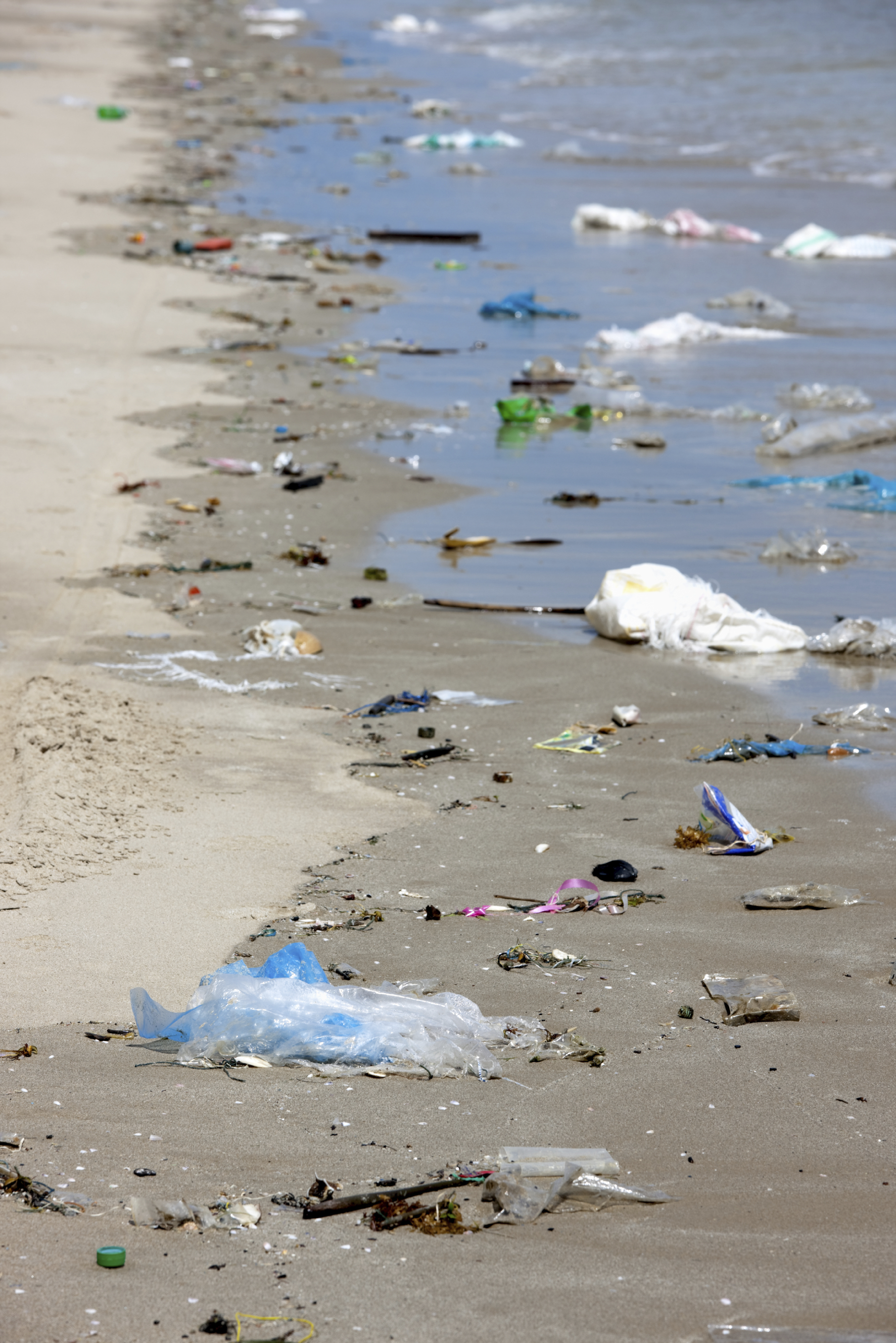
ALEC and its members see local bans as unnecessary restrictions on the free market and consumer choice, but local governments have focused on plastic bags and polystyrene for good reason. These products are often used in take-out food service settings and are disposed outside of the home. The materials are lightweight and easily transported by air or water, adding to the global marine pollution crisis. Plastic bags and polystyrene are recyclable, but neither can be collected at the curb with bottles and cans. Plastic bags are typically considered contaminants in material recovery facilities because they get caught in sorting machinery, costing time and money. All in all, these products wreak economic and environmental havoc the moment they leave a retail establishment.
PSI strongly advocates for the right of local governments to enact laws and rules that ensure efficient and environmentally sound materials management. Even so, there are instances in which a well-conceived statewide program is preferable to multiple local regulations. But that trade off – giving up local authority in exchange for statewide action – should not be taken lightly and should be a decision left to local governments. Local autonomy should only be sacrificed for good reason and with proper cause.
In the case of the ALEC bill and its derivatives, local governments are not being asked to forgo bans in favor of a statewide policy or program to resolve issues with these materials. They’re simply being told they can’t take action to reduce the waste they are obligated to manage and pay for. Policy tools are being stripped from the local government tool box, yet the responsibility on local governments is not relieved. As a result, the manufacturers of these problem products can continue to sell single use items, and local governments have no choice but to foot the bill to manage them as waste and litter.
If producers want to avoid bans, they should step up and offer viable solutions for managing these products, or at least commit to working with governments to find them – at either the state or local level. Restricting governments’ ability to act, while offering no viable alternative, only ensures that these products and packaging will yield profits, while our local economies and environment pay the price.
By Senator John F. Keenan, Massachusetts Senate
On March 16, 2016, Governor Charlie Baker signed into law a comprehensive drug abuse prevention bill that made Massachusetts the first state in the nation to require drug companies to fund and manage a safe disposal program for unwanted medications. Massachusetts Senator John F. Keenan was the first to introduce the drug take-back portion of this bill to the MA legislature, and acted as an influential proponent of its inclusion in the final law. Below, Senator Keenan cautions us to stay vigilant to PhRMA’s attempts to skirt the law’s intended purpose.
You would think that a group that helped create the opioid epidemic, which certainly has profited from it, and which is acknowledging that its products continue to fuel the epidemic, would offer more to help solve the epidemic than a catchy phrase, a website and a complete abrogation of playing any role in cleaning up the mess.
Yet, that’s what a newly formed group called “My Old Meds” has done. The sponsor of this group is the Pharmaceutical Research and Manufacturers of America (PhRMA), made up of representatives of the pharmaceutical industry. Some of these people and the firms they represent are making a lot of money from the sale of prescription painkillers, firms like Purdue Pharma, the people who brought us OxyContin and, more recently, OxyContin for kids.
“My Old Meds” recently brought their message to Massachusetts, advising that unused drugs are often diverted and become fuel for the opioid epidemic, and that old meds should therefore be disposed of at home in the trash or at government sponsored drug disposal sites.
In so advising, the sponsors of “My Old Meds” attempted to wash their hands of any responsibility for the disposal of unused medications, and place it instead on the patient and the taxpayer. Their theory: sell more pills than people need, reap the profits, then make others pay for the cleanup.
Their message was strategically timed, just as Massachusetts was considering legislation to require that pharmaceutical companies themselves become responsible for funding and operating a take-back and disposal program for unused pills. The industry was very comfortable with the arrangement of the past, watching their balance sheets grow in step with the excessive number of pills sold while communities scrambled to address the resulting opioid epidemic. That’s why they introduced their catchy phrase and website. They wanted to appear to be helpful, to convince us that no real change was necessary.
The Massachusetts Legislature was not fooled. We can be proud now of becoming the first state in the nation to require a pharmaceutical product stewardship program.
But now we must expect PhRMA’s campaign for in-home, patient and community funded disposal to continue. They will “educate” the public that they can spend their own money to buy cat litter or other carbon products that make pills “safe” for disposal, or that pills can simply be flushed into our water systems.
We must be vigilant. The new law allows the Massachusetts Department of Public Health to design an alternative stewardship plan, in which manufacturers will be allowed to participate rather than fund and operate their own programs. We must work to prevent the industry from influencing the regulatory process. We cannot let them seek regulations that set a low bar for industry responsibility, and that maximize the share of responsibility falling back onto public systems. We must work to ensure that the Department’s program is robust and effective, not a back door that lets manufacturers again step away from responsibility for safe stewardship of unused medications.
We have taken an important first step, but we must continue to fend off the message that manufacturer responsibility can be satisfied with a slogan and website.
Senator Keenan wrote a follow-up piece related to National Take-Back Day on MassLive. Learn more about Senator Keenan by visiting his website. Please feel free to contact Vivian Futran Fuhrman, PSI’s pharmaceuticals lead, with comments and questions (617-236-4771), or visit the PSI pharmaceuticals webpage for more information.
By Scott Cassel, Chief Executive Officer & Founder, Product Stewardship Institute
Several weeks ago, I ventured out to Indianapolis for the Indiana Recycling Coalition Conference to give a presentation on product stewardship and extended producer responsibility. I then headed over to another area of the conference center to participate in a panel as part of Indiana’s first E-cycle stakeholder meeting. In a room filled with dedicated solid waste managers, recyclers, environmentalists, and government officials, we took a look at Indiana’s current e-scrap recycling law to identify successes, challenges, and potential solutions.

Scott Cassel, Thom Davis, Katie Riley, and two representatives from Solid Waste Management Districts discuss the Indiana e-scrap recycling law. Photo courtesy of Denise Szocka.
Indiana’s electronics recycling law is an EPR law based on a “performance goal” system, meaning that manufacturers must collect a specific tonnage of e-scrap per year (i.e., their goal). In Indiana, manufacturers are responsible for collecting and recycling 60% of the total weight of video display devices that they sell. However, since the formula is based on sales of newer, light-weight electronics, and old bulky TVs are the heaviest and most common item collected, manufacturers reach their performance goals very quickly.
This has become a problem. When manufacturers have collected enough to meet their goal, they cut off payment to recyclers. Recyclers then stop accepting material from collection sites, or charge these sites a fee to take the material.

Four workshop attendees work together to identify problems and solutions.
Photo courtesy of Denise Szocka.
Once the basic problems were understood by the participants at the Indiana e-scrap workshop, they explored possible solutions. The conversation in that room was eerily similar to the stakeholder meetings held in New York and Illinois. Now that we have worked so hard at educating residents about the need to recycle electronics, we certainly don’t want to tell them that we can’t take what they bring us.
In the Indiana workshop, one of the potential solutions – raising performance goals – was suggested. In fact, both Illinois and Minnesota have passed updates to their laws just this year (which go into effect July 1, 2015), setting the performance goal at a specific fixed tonnage rather than at a percentage of yearly sales.
For a long-term, stable solution, however, changes should be made to the program structure. E-scrap programs with the highest collection rates – such as programs in Vermont, Oregon, Washington, and Maine – require manufacturers to meet convenience-based standards to ensure that a majority of residents have easy access to a collection site.
The panel and workgroup discussions at the Indiana e-scrap workshop were a great start to improving Indiana’s e-scrap law. These fixes won’t be easy to apply, and each state is having their own state-based discussions. At the same time, the Product Stewardship Institute is holding our own conversations with e-scrap program managers around the country to better understand the common issues they face so that we can help to instill greater stability in existing programs, and offer states with no e-scrap laws a roadmap for the future. Working together, we can come up with viable solutions that we hope will be implemented in years to come.
To read more about the different types of e-scrap programs and their results, check out the recent article in E-Scrap News, “Struggling State-by-State,” by PSI’s Resa Dimino.
By Scott Cassel, Chief Executive Officer and Founder, Product Stewardship Institute
 It was one of those quiet moments of victory for environmentalists and public health advocates: In 2012, California’s Alameda County Board of Supervisors unanimously adopted the nation’s first ordinance requiring pharmaceutical manufacturers to fund and manage a drug take-back program.
Millions of overprescribed, unused, and expired medications contribute to drug abuse, accidental poisonings, aquatic impacts, and water quality issues. The trash or drain is not a safe method for disposing drugs – which is why King County, Washington; San Mateo County, California; and San Francisco, California followed suit with similar ordinances.
Big Pharma, however, has spent the last three years fighting back in the courts, arguing that the Alameda law interferes with interstate commerce. After two lower court decisions cited no interstate commerce violation, Big Pharma took the case to the U.S. Supreme Court. The high court recently declined to hear the pharmaceutical industry’s case against the Alameda County Safe Drug Disposal Ordinance. Whether Big Pharma will continue to pursue its costly litigation strategy remains to be seen, but one thing is clear: if the industry instead chose to collaborate, it could help shape a long-term, cost-effective solution that protects all interests – economic, health, and environmental.
Drug take-back laws may be new, but laws requiring manufacturers to take responsibility for the safe disposal of their products are not. What’s more is that not all industries continuously push back and fight against such laws. Currently, there are 8 states (and the District of Columbia) that require the paint industry to fund and manage the recycling and safe disposal of leftover paint; all of these laws were developed in collaboration with the American Coatings Association (ACA), which represents over 95 percent of U.S. paint manufacturers.

After initial reluctance, the paint industry agreed to meet with PSI and some of PSI’s state and local government members. After nearly a dozen meetings and multiple calls over four years, PSI and ACA reached an agreement in 2007 on a model state program that would be implemented nationwide. Since then, the nine aforementioned jurisdictions have used that model to adopt laws holding the paint industry responsible for collecting and properly managing all leftover paint in their area; similar bills are pending in another dozen states. As a result, 8 million gallons of paint have been diverted from disposal so far in the first five states in which the paint stewardship program has been implemented, saving local governments over $50 million in transportation and processing costs, according to paint industry estimates.
What can the pharmaceutical industry learn from this?
- Producer responsibility doesn’t hurt the bottom line. Since ACA’s PaintCare program was first adopted in Oregon in 2010, paint sales are still strong, retailers have the opportunity to offer a new service to their consumers, and paint recycling is on the rise. Through its PaintCare program, the paint industry has gotten out in front of the regulations, working with government to shape laws that fit with their business model. ACA representatives are regularly called upon to speak at state recycling conferences in sessions that highlight the industry’s successful demonstration of corporate sustainability and public-private collaboration. The lesson: an industry can take responsibility for its post-consumer products, and not only does it not hurt the bottom line – it often ends up benefitting them overall.
- Producer responsibility programs show immediate results. In just five years, the paint industry has made convenient paint take-backs available to at least 95% of residents in three states, and local governments have saved millions of dollars of taxpayer money. Unlike other recycling programs that funnel collected fees into a government fund and require significant government hours to manage (e.g., scrap tire laws), the paint stewardship program is largely run by the paint industry, alleviating the need for a large bureaucracy to handle day-to-day operations.
- Dialogue doesn’t mean a loss of control. It enables industry to shape policy that is effective and cost efficient. When PSI approached ACA with its request, the industry agreed to begin talks. What resulted was a national multi-stakeholder dialogue that led to joint research to answer key questions, such as “what will this program actually cost?” and “how will paint be collected and recycled?” From the beginning, ACA helped shape the program’s development; when the first bills were drafted, ACA was in the driver’s seat. The solution developed was an innovative funding model that worked for both industry and other stakeholders.
With the number of prescription drug overdoses rising annually, the risk posed by leftover medications raises the stakes, as well as the opportunity, for the pharmaceutical industry to take the lead and create convenient medicine take-back programs for U.S. residents. Such a program is within reach, and would cost the pharmaceutical industry roughly $3.51 per capita annually for the safe collection and disposal of pharmaceuticals, according to estimates from King County, WA. Similar programs have operated for years in Canada and at least a dozen European countries, taking the financial burden off of taxpayers.
This is clear: the pressure on the pharmaceutical industry isn’t going away. The path for industry-funded producer responsibility has been paved; with 88 producer responsibility laws operating in 33 states across the US for 12 different product categories, there is ample proof that take-back legislation can be implemented successfully. The pharmaceutical industry could be poised to become the next big success story – if it is willing.
By Resa Dimino, Senior Advisor for Policy and Programs at the Product Stewardship Institute

Extended producer responsibility (EPR) policy was offered as a policy solution to address all of these concerns. Assigning responsibility for recycling to the manufacturers of electronics would ensure that an infrastructure developed to handle this growing, and toxic, waste stream. It would also provide accountability for the way materials are handled – what IT or TV company wants to see its brand name featured in the next e-waste export expose? So, between 2003 and 2010, twenty-five states passed laws requiring e-scrap recycling, with twenty-three of those being EPR laws.
No two e-scrap EPR laws are exactly the same, but they do fall into a few categories. The first program, established in Maine, relies on local governments to collect electronics, and requires manufacturers to pay for any of their branded equipment that comes back through the system. Connecticut followed suit with a similar model years later. Oregon, Washington and Vermont offered variations on that theme by creating statewide programs (that typically operate through a contract with the state) that arrange for the recycling of all of the materials collected through what the state determines is a convenient collection system.
Meanwhile, a number of other states—led by Minnesota, but including Illinois, Indiana, New York, Wisconsin, Pennsylvania, New Jersey and Rhode Island – followed the “set the goal and let industry figure out how to get there” model of EPR. They each established performance goals and allocated responsibility to manufacturers to collect enough e-scrap to meet those goals. The trouble is, it’s hard to figure out where to set those goals to drive aggressive programs. On top of this, the costs of recycling have increased, so manufacturers are not enthusiastic about paying for more than they need to.
In an article recently published in E-Scrap News, PSI lays out the challenges some states are facing with e-scrap laws. As we address these challenges, we learn more about how to implement EPR in the US. We learn about critical issues, including: how much government involvement do we need to ensure a functional system? What policy mechanisms are needed to support an effective market-based recycling system? How should costs be allocated? What is the right balance between regulation and program flexibility?
The answers to these questions vary from state to state, but it is clear that the lessons we are learning now will serve us well as we seek to fix the struggling programs, and design new ones in the future.
Resa Dimino is a Senior Advisor for Policy and Programs at PSI. She works as a consultant with more than 20 years of experience in recycling policy, programs and business development. Prior to launching her consulting practice, Resa was the Director of Legislative Programs at WeRecycle!, an E-Stewards certified electronics recycler headquartered in Mt. Vernon, NY, and worked to develop collection networks in Northeast states that have electronics EPR legislation. For additional information, Resa can be reached at resa@productstewardship.us.
Resa will be speaking about EPR and electronics on a panel at the Institute of Scrap Recycling Industries (ISRI) Convention on Friday, April 24, 2015. She will be presenting in the session titled, “Extended Producer Responsibility (EPR) – Where is it going?”.

Allowing unwanted pharmaceuticals to accumulate in homes increases the likelihood of accidental overdose, illegal diversion, and environmental contamination. It’s time to commit to a solution that works.
The Take Back Solution
Take-back programs provide a safe way for people to remove unwanted medications from their homes.
Existing take-back programs vary widely as to how they are organized and funded. Many happen only a couple days each year. Some local law enforcement agencies have installed permanent drop boxes in their buildings. With the recent withdrawal of federal DEA support, many programs are struggling to find funding to continue this important public service.
A new federal rule for the disposal of unwanted controlled substances allows pharmacies to run their own take-back programs, a convenient option for consumers. However, the new DEA rule does not provide any funding to make participation easier.
Both law enforcement and pharmacy-based take-back programs are severely limited by a lack of consistent funding. While voluntary take-backs are a step in the right direction, these programs simply aren’t enough.
Extended Producer Responsibility (EPR), also known as product stewardship, describes a system where the life cycle costs of a product become part of the cost of manufacturing. EPR is a proven method to sustainably fund the recycling or disposal of fluorescent lights, mercury thermostats, paint, mattresses, household batteries, and other products.
Why, then, is EPR the best solution for pharmaceuticals?
1. Proven
EPR is already being successfully implemented for pharmaceuticals in many European countries as well as some Canadian Provinces. In British Columbia (BC), for instance, 97.5% of pharmacies participate in a drug take-back program due to a solid EPR foundation. These locations collected a total of 112,888 pounds of pharmaceuticals in one year alone, equaling out to 0.02 pounds of meds collected per person. For comparison, Oregon, a state with a similar population but without an EPR program, collected only 0.004 pounds of meds per person in one year, a rate five times lower than British Columbia’s.
2. Economical
A coordinated EPR approach lowers collection and disposal costs per pound. The pharmaceutical EPR program in France, for example, collects an average of 16,237 tons per year, at a cost of just $0.0022 per box. Funded entirely by pharmaceutical manufacturers and run by the non-profit group Cyclamed, this French program is highly effective in collecting unwanted pharmaceuticals. In a recent survey, 77% of French residents claimed to have disposed of unwanted medication via these take-back sites, while 70% said they “always” dispose of pharmaceuticals in this way.
3. Stable
Unlike the current patchwork of funding used by U.S. programs, an EPR program provides secure, long-term funding. The aforementioned program in British Columbia started their mandatory Medications Return Program in 1996 with a program revamp in 2004. The pharmaceutical industry, therefore, has been funding the entire cost of the program for over 19 years.
4. Ready to Go
Momentum is growing: Alameda County, CA; King County, WA; and San Francisco, CA have all adopted EPR laws. Despite having been willing EPR partners in other countries, pharmaceutical manufacturers have challenged the Alameda law in court. Considering the narrow grounds of the appeal and improvements made to subsequent iterations of the law, other communities will soon be passing pharmaceutical EPR laws.
Please consider promoting an EPR bill in your county or state. Each new EPR law brings us one step closer to a national program.
Ed Gottlieb is the Chair of the Coalition for Safe Medication Disposal in Tompkins County, NY. Ed can be contacted at egottlieb@cityofithaca.org.