
by Brendan Adamcyzk, Associate for Policy & Programs
PSI is a founding member of the International Paint Recycling Association, known as IPRA, and we’re proud of the impact numbers in their recent 2021 Annual Report. Three years ago, we developed the group in collaboration with recycled paint manufacturers and it is amazing to see how much it has accomplished in just two short years.
In 2021, IPRA members recycled or reused over 4.7 million gallons of paint, achieved a 71.4% paint-to-paint recycling rate, and supported more than 3,200 jobs in the recycling industry!
IPRA is the only organization dedicated to the recycled paint industry and works tirelessly to promote the essential role of recycled paint manufacturers in the circular economy. Nine North American recycled paint manufacturers make up the group — representing decades of experience in recycling post-consumer paint into high-quality paint and other recycled products.
Many industries were affected by the COVID-19 pandemic and its impact on supply chains — and the recycled paint industry was no exception. Despite these challenges, member companies have actually expanded North American operations over the past few years, while also devoting time to testify in support of paint stewardship legislation in Maryland, Massachusetts, Missouri, and New Jersey.
In May, the latest paint stewardship program launched in New York, and IPRA joined forces with the paint industry’s American Coatings Association and the industry nonprofit PaintCare to promote the new program. According to Josh Wiwcharyk, President of IPRA and Loop Recycled Products, “IPRA remains proudly committed to advocating for increased recycling of paint and extended producer responsibility initiatives to ensure responsible end-of-life management for leftover paint.”
by Scott Cassel, CEO and Founder
We’re thrilled to announce our partnership with LANDBELL GROUP, which delivers chemical stewardship and risk assessment services in the United States and Canada through its consultancy, H2 Compliance. Established as a packaging compliance scheme in Germany in 1995, LANDBELL GROUP has since evolved into a global platform for EPR and regulatory compliance and is now a leading provider of environmental and chemical compliance solutions with local expertise and global presence. With its comprehensive core services – compliance, consulting and software – LANDBELL GROUP helps companies meet their EPR obligations worldwide. The company’s PROs have collected and treated more than 10 million tonnes of waste batteries, electronics, and packaging.
LANDBELL GROUP is a recognised expert for waste portable battery compliance and takeback, having collected and treated over 100,000 tonnes of waste portable batteries; with an established reverse supply chain in over 40 countries, LANDBELL GROUP also has more than 10 years’ experience managing international takeback activities for lithium batteries. The company will present our forthcoming “Powering Up for Battery EPR” webinar, with panelist Martin Tobin, CEO of European Recycling Platform (ERP) in Ireland. ERP, a LANDBELL GROUP company, is the only multi-national organisation operating producer responsibility organisations (PROs) for batteries, packaging and WEEE in 16 countries for over 38,000 companies, and Martin is a key member of LANDBELL GROUP’s global leadership team. ERP is actively involved in the proposed revision of the European Union’s Battery Directive, contributing its experience and expertise to the ongoing discussions.
Recently, LANDBELL GROUP began a takeback program in the USA and Canada for ICT equipment; it also delivers environmental compliance services, such as registration and reporting, to ensure producers meet their extended producer responsibility (EPR) obligations in the relevant US and Canadian states and provinces. With LANDBELL GROUP’s Knowledge Database (KDB), the company offers a web-based regulatory information service, which provides relevant information on EPR globally. The KDB covers more than 180 jurisdictions, including 28 states in the USA, and all Canadian provinces and territories.
In the United States and Canada, H2 Compliance supports North American and pharmaceutical businesses with chemical services, providing technical and strategic support for global chemical control regulations; for example, TSCA and EU REACH, and hazard communication services such as Safety Data Sheets. Last month, the Resource Productivity and Recovery Authority in Ontario, Canada registered H2 Compliance as a producer responsibility organization, which will provide collection, management and administrative services to help producers meet their regulatory obligations under the EEE and Batteries Regulations.
For more information, please visit: www.landbell-group.com
Written by the team at Flexible Packaging Association, a PSI Partner, this blog examines a flexible packaging through an EPR lens.
Our global society continues to face environmental challenges that are complex and simply too threatening to ignore. Collectively, we’re responsible for undoing—and preventing more of—the damage that lifetimes of pollution and waste mismanagement have caused to our planet, an almost overwhelming task that can feel far out of our grasp. Several methods have been tried—and ultimately failed— leading many of us to wonder if there’s a better way. California is set to try two right now. First, a product ban on plastic e-commerce packaging (AB2026), which is a band-aid that has been tried before (think, plastic bags and straws) and did not solve the problem. Not only do bans not solve the problem, it leads to other negative environmental consequences; in this case increased greenhouse gas emissions from the transport of heavier e-commerce packaging materials and increased waste from breakage and returns of items that were shipped in alternative packaging types that cannot protect the product. Another is SB54, which would be a holistic extended producer responsibility program, covering all packaging types, investing in the modernization of California’s collection, recycling and composting infrastructure, and enabling circularity for packaging. FPA believes the latter is the solution.

Flexible packaging is more durable, light, and protective than many alternative packaging options, which are the hallmarks of sustainability. Flexible packaging is more resource-efficient than many other packaging options because production requires less water and energy, and production and transportation result in less greenhouse gas (GHG) emissions. While other packaging types may be more readily accepted at recycling centers, they offer fewer protections for consumer products, especially food, while ultimately being more expensive and less sustainable to produce. Flexible packaging helps to extend the shelf life of food products—the number one contributor to landfills and GHG emissions—through protection from sunlight, bacteria, odors, moisture, damage from the transportation process, and more. Additionally, flexible packaging optimizes volume and weight to maximize storage and transportation efficiency while reducing the amount of packaging waste in need of end-of-life management. Increasing efficiency and reducing packaging waste results in source reduction—the most effective, environmentally preferred method of addressing excess waste.
Still, there remains a problem—what do we do with flexible packaging waste? A solution does already exist with an Extended Producer Responsibility (EPR) approach, a policy in which producers’ shoulder some of the financial and operational responsibility to modernize our current recycling and composting systems. A well-crafted EPR system would provide the investment needed to expanded curbside recycling options for families looking to act more sustainably and more packaging material would be collected, processed and available for manufacturers use to incorporate post-consumer recycled content into new packaging. Consumers would also benefit from harmonization of programs across the state and region, instead of the myriad of different local recycling programs that currently exist. Finally, everyone would benefit from fewer carbon emissions and the use of natural resources as we work together to reduce packaging and plastic pollution and preserve our planet for future generations.
Many features of a well-crafted EPR plan are set for inclusion in California’s SB54, which will be debated in the state legislature in the coming weeks. Should SB 54 be signed into law by Governor Newsom, it would represent a significant leap towards responsible, effective plastic waste management while allowing producers and consumers to continue using and not ban an important packaging format—flexible packaging.
This blog represents the views of the Flexible Packaging Association, a Product
Stewardship Institute partner.
By Sydney Harris, Senior Policy Associate, Product Stewardship Institute
As states responded to the novel coronavirus (COVID-19) pandemic, municipal recycling programs across the U.S. felt the impacts. Eco-Entreprises Quebec, the PRO for packaging and paper products in Quebec, provided funding for PSI to track the impacts of the virus on U.S. recycling programs. PSI found that, although many states deemed recycling an essential public service or a critical piece of manufacturing for high-demand items such as toilet paper and shipping boxes, dozens of local programs were put on pause due to staffing shortages and health concerns. Furthermore, commercial and bottle deposit materials decreased dramatically, while residentially generated trash and recycling volumes sharply increased, with notable impacts to the recycling supply chain

Though “Essential,” Recycling Suspended in Many Communities
Beginning in March, at least 40 states issued stay-at-home orders that closed all non-essential businesses and directed residents to stay inside for several weeks or more. At least 10 of these states specifically named recycling on lists of essential services, while most others allowed recycling to continue as either public works services or critical manufacturing. Unfortunately, dozens of curbside and drop-off recycling programs were still suspended; many remain on hold as of early June. Residents were frequently instructed to comingle recyclables with trash for curbside collection, while some programs offered the option to store materials at home until services resumed. The largest municipal programs impacted by the pandemic were Miami, FL, where residents were instructed to comingle materials with trash; Los Angeles, CA, where at least half of curbside materials collected were diverted to landfill; and Philadelphia, PA, where curbside collection was suspended for a week and then scaled back to bi-weekly to accommodate staffing shortages. In some jurisdictions, curbside recycling materials were diverted to waste-to-energy plants.
Safety the Priority, but PPE in Short Supply

Consensus emerged within the medical community that handling waste and recyclables does not pose a significant transmission risk to workers, provided employee safety is prioritized with adequate social distancing and personal protective equipment (PPE) such as masks, gloves and sometimes gowns or face shields. The Solid Waste Association of North America (SWANA), the National Waste & Recycling Association (NWRA), ISRI, and the Northeast Resource Recovery Association (NRRA) all issued guidance on best practices for worker safety.
In late March, NWRA wrote to the Director of the Federal Emergency Management Agency (FEMA) requesting that waste and recycling workers receive priority access to PPE, but waste and recycling collectors across the country still experienced PPE shortages. Some programs turned to creative solutions to procure PPE for employees, such as the Chittenden Solid Waste District (CSWD) in Vermont, which purchased washable cloth masks for all staff online. In Swanzey, NH, residents worked together to create cloth masks for sanitation workers.
Residential Volumes Up, Commercial Volumes Down
Haulers experienced significant increases in residential trash and recycling volumes in nearly every state – sometimes up 40% from average amounts. Many operators cited an increase in spring cleaning as a contributing factor, in addition to people simply generating more of their waste at home. With reduced staffing and increased generation, municipal programs struggled to keep up. At the same time, haulers saw an unprecedented decline in commercially generated waste as businesses closed their doors.
Bottle Bill Programs Almost Universally Interrupted

Nine out of the ten U.S. states with bottle deposit bills temporarily suspended their programs to some degree. Most announced periods of non-enforcement, which, combined with a general decrease in people spending time outside, effectively shuttered the programs. Even where programs remained open, grocery stores and drop-off facilities often stopped accepting containers for redemption, and many residents simply began storing bottles and cans at home.
The Result: Major Supply Chain Impacts
Lack of commercial and bottle deposit materials, coupled with the steep increase in residential volumes, caused major shifts in the recycling supply chain. Because commercial materials and deposit containers are typically less contaminated than residential materials, they comprise the primary feedstock for packaging remanufacturing in the U.S. For example, roughly 40% of recycled aluminum and 60% of cullet used to manufacture cans, bottles, and jars in the U.S. comes from deposit programs.
Meanwhile, residential materials tend to be shipped to end markets for durable goods, such as automotive manufacturing. During the height of state shut-downs, demand all but ended for durable goods manufacturing while packaging demand spiked with the increase in packaged food, beverage, and cleaning supply sales. To remain operational, packaging manufacturers began accepting curbside-collected materials as feedstock. For example, CarbonLite, a major bottle-to-bottle recycler that normally relies exclusively on PET recovered through the bottle deposit system for its California facility, reported obtaining 60% of its feedstock from residential curbside sources.

The China Sword and the Pandemic Together Create Financial Woes
Long-term financial impacts of the coronavirus on U.S. recycling programs are uncertain. Municipalities were already facing increased recycling costs due to the lingering impacts of the China Sword policy. Now, these cost increases are exacerbated by potential rate adjustments due to spiking residential volumes and a continued decline in end markets for recycled materials, especially plastics. In a hopeful turn, however, municipal programs began to reopen around the country in late April, and have continued to reopen ever since.
Photos by Karolina Grabowska, Pexels.com

Sydney Harris, PSI
COVID-19 has impacted the recycling industry and product stewardship community in many ways. While some entities are innovating to ensure environmental protection, others are abusing the situation to push single-use plastics.
PSI’s efforts to track the impacts on plastics use has gained the attention of Vice News, and we are also tracking impacts and new best practices for other products, such as electronics, HHW, and more. Share your experience — take our survey to help us better understand the impact of COVID-19 on U.S. product stewardship programs.
While trash and recycling collection are considered essential services during the Coronavirus (COVID-19) pandemic, product take-backs often aren’t included under that umbrella. Unfortunately, interrupted take-back programs mean higher risks for public health and the environment, as people store or even improperly dispose of hazardous materials. Suspending take-back programs also means revenue and job losses in the case of paint, mattresses, carpets, electronics, and other materials that provide valuable feedstock to recyclers.
PSI wants to get people back to work while protecting worker and public health, by sharing collection and processing best practices, so we’re asking you to respond to a quick survey to help us identify program impacts from COVID-19, major trends, and best practices. As nationwide restrictions are relaxed over time, states will open up at different times and will need guidelines for safely getting back to work.
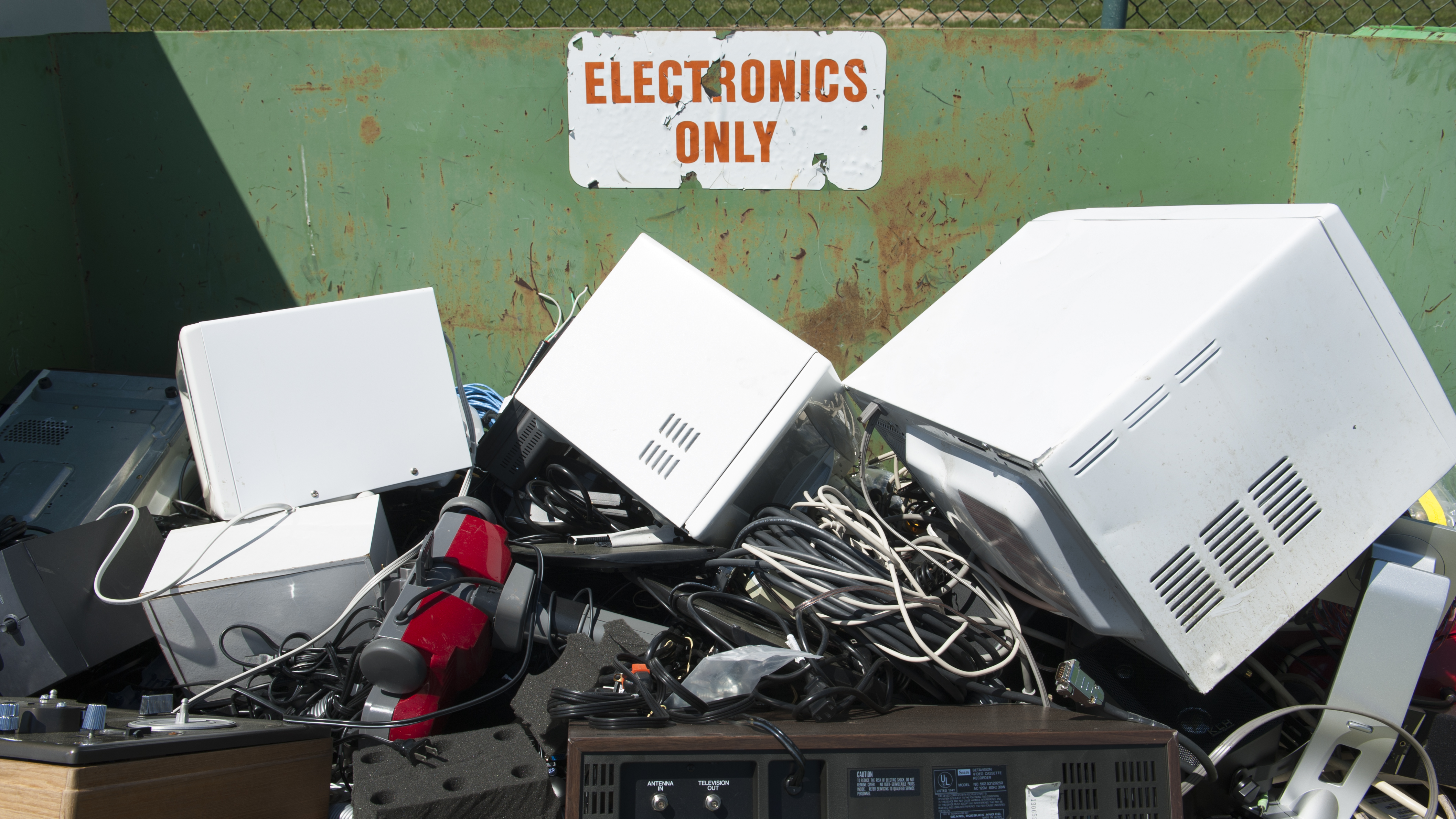 PSI has already learned, for example, that electronics recyclers are experiencing a significant reduction in incoming volumes of material (reported to be as low as 30% of normal levels). Many recyclers are being forced to lay off staff given low material supply from residences, retail stores that serve as collection sites, and nonprofits like Goodwill. Recyclers are adjusting their business practices to include social distancing, staggering shifts, and the use of personal protection equipment. Some are also making the collection process contactless and letting incoming material sit for 24 hours before processing.
The Mattress Recycling Council, which says that it has “activated plans to continue operations and limit service disruptions while also keeping health best practices,” has posted COVID-related guidelines for transporters, collectors, recyclers, and retailers. Members of the International Paint Recycling Association, which PSI helped create, have adopted similar practices to protect their workers while still producing recycled paint. Chittenden County, VT is working on new procedures to re-open its household hazardous waste (HHW) facility, including using a scheduling app to ensure residents can safely drop off materials. As restrictions begin to lift, more communities (like Kane County, IL) are developing “return to service” guidelines to restart collections. PaintCare is advising consumers who are planning to drop off paint for recycling to contact drop-off sites in advance and asking them to follow CDC guidelines to protect themselves and others, and is rescheduling drop-off events planned through June.

With social distancing and other safety measures in place for the foreseeable future, new practices that safely continue take-back programs are vital. PSI will also be working with state product stewardship councils across the country to learn how states are handling impacts of the virus. If you have questions or information to share, please contact Rachel Perlman, PSI Senior Associate.
This question is one we continually challenge ourselves to answer so that we stay on the cutting edge of the U.S. product stewardship movement. As we embark on a new decade full of opportunity for EPR, we want to ensure that the research, projects, legislative models and laws that we craft continue to be relevant.
PSI reflects the strength of the individuals and entities who embody the movement. While we have evolved, we stay close to our inner core. We bring together multiple parties with diverse interests to develop comprehensive plans to solve big waste management challenges. We are problem-solvers who base our policy recommendations on sound science, experience, and peer review. We advocate for product stewardship solutions that are shaped by our long list of members and partners. We are systems thinkers who dissect problems and craft solutions from various angles – environmental, economic, technological, political, and communication with the public. We understand the big picture context as well as the individual parts of resource consumption problems. Above all, we have maintained an ethic of credibility and personal responsibility while leading the U.S. product stewardship movement for the past 20 years.

Like all movements, ours would not have taken hold without the energy, skills, and advocacy of thousands of people, including those government officials in the northwest – Oregon and Washington – who were the early pioneers. The success we have jointly achieved has required policy innovators in state and local governments who risked agency rebuke to forge beyond the status quo. It took corporate talent who leveraged their social capital to look beyond pure profit to engage with others. And it took environmental activists who could share an agenda with other players to achieve joint goals.

At PSI’s inaugural conference in December 2000, more than 100 state and local government officials from 20 states came to Boston to learn about a new concept for holding product manufacturers responsible for financing and managing post-consumer products. That meeting sparked a national movement.
Today, 119 EPR laws have been passed in 33 states on 14 products, and 2019 was a banner year for the U.S. product stewardship movement. A record 50 EPR bills were introduced in 16 state legislatures across the country. Of those bills, 12 passed into law, one committed a legislature to introducing a bill in 2020, and four mandated studies that include EPR as the central solution.
2020 promises to be a critical year for the movement. Packaging bills will be introduced or discussed in at least eight states, and EPR bills on pharmaceuticals, paint, carpet, mattresses, artificial turf, and batteries are already being actively debated. And PSI is right in the middle of it all. We now look forward to the future with renewed passion for progress.
On September 8-10, in Portland, Oregon, PSI will celebrate our 20th Anniversary at the national U.S. Product Stewardship Forum. We are already hearing from colleagues who plan to attend from across the U.S., as well as from Germany, France, England, and Chile. We will acknowledge our roots, assess the growing U.S. and global EPR movements, and plan for the next 20 years of growth. We hope to see you there.

by Scott Cassel
On Wednesday, December 5, John Waffenschmidt died peacefully, and unexpectedly, in his sleep. As the PSI team struggles with the sudden loss of a close colleague and friend, many fond memories of John have surfaced.
John was passionate about everything – mountain climbing, lifecycle analysis, environmental justice, science, and energy-from-waste technology. He spontaneously sang and danced at our conference, and would correct anyone misusing the term “incineration.”

Photo by Robert Klein. Left to right: Fenton Rood (Oklahoma Department of Environmental Quality), Scott Cassel (PSI), and John Waffenschmidt (Covanta) enjoying PSI’s 2017 Product Stewardship Forum in Boston.
John brought a unique blend of talents and interests to his role as PSI’s point person at Covanta for a decade-long partnership between our organizations. The partnership is, in some ways, an unlikely one between an environmental organization and a waste management company. However, John found multiple ways we could work together, including the time he came to me with the business concept of destroying waste pharmaceuticals left in medicine cabinets, at no cost to government, in Covanta’s municipal waste-to-energy plants.
To determine if our government members would support this concept, PSI convened two technical webinars and a briefing paper. John presented for Covanta and even offered a slot to a competitor that operates hazardous waste facilities. After rigorous questioning from state air quality regulators and others, two PSI state members stuck to their policy of hazardous waste incineration for waste medicines, but many others approved the use of solid waste combustion. This project helped pave the way for Covanta’s Rx4Safety program, which has provided free destruction for residents and governments of over 5 million pounds of waste medications.
John and I worked closely on many other projects through the years, including joint presentations to state officials in support of EPR legislation and a mattress stewardship dialogue in Connecticut we facilitated and Covanta seed funded, which led to three state EPR laws for mattresses.
My last conversation with John was a follow-up call he made immediately after a phone conversation in which he sensed a tinge of concern in my voice. He wanted to make sure that what he had conveyed to me was understood. He wanted to smooth out a minor ripple in our communications. I assured him we were good, and that our relationship was solid. That call left me with a strong feeling of humanity. John sensed something was not quite right, and he acted on it. His follow up call took 30 seconds, but it is the lasting feeling I have of John – of honesty, friendship, and peace.

How do you build a successful thermostat collection program in a short period of time?
Public/private partnerships.
That’s exactly how a new initiative was recently launched in Oklahoma. Covanta Tulsa, Locke Supply, the Oklahoma Department Environmental Quality (ODEQ), the Thermostat Recycling Corporation (TRC), and the Product Stewardship Institute (PSI) teamed up to start a new state-wide collection program in a relatively short period of time.
Covanta has a long history of caring about the proper disposal of mercury-containing items, and the need for a collection program in Oklahoma was evident. Using the positive relationships we have built in the many years we have operated in the state, we were pleased to be the catalyst that brought these diverse groups together to provide a convenient way to responsibly recycle mercury-containing thermostats. Thanks to the collaborative work of the five aforementioned organizations, citizens and contractors are now able to deliver intact old thermostats to any Locke Supply location for recycling free of charge.
The thermostat recycling initiative in Oklahoma began with a brief meeting with Fenton Rood of ODEQ to develop a state-wide solution for thermostat recycling that could supplement periodic household hazardous waste collection days that are held in some communities. From there, we decided to look for a retail storefront solution that would allow ubiquitous collection during normal business hours. Locke Supply, with their numerous locations around the state, was the perfect fit.
Thermostat recycling containers are now in place at convenient and accessible locations throughout Oklahoma. When full, containers will be shipped to TRC for proper disposal and recycling. In an attempt to incentivize collection even further, Locke Supply obtained participation from a few of their new thermostat suppliers to offer a “bounty” program: bring in an old thermostat with mercury switches and Locke Supply will provide a $10 coupon for a programmable replacement thermostat.
Mercury thermostat recovery and recycling offers everyone the opportunity to eliminate a toxic material from the waste stream, while incentivizing the purchase of electronic thermostats that allow for more efficient heating and cooling. By identifying a diverse group of organizations with common interests, Covanta has now proudly provided one more way to protect the state’s land, air and water from unnecessary pollution.
Matt Newman joined Covanta Energy in 2008 and has over 25 years experience in the energy industry which includes renewable energy, electricity generation, asset optimization, risk management and fossil fuel management. In his current position, Mr. Newman is responsible for all business aspects for the Covanta Tulsa Renewable Energy, LLC, as well as carrying additional responsibilities for the South Region of Covanta Energy’s extensive fleet of Energy from Waste facilities in the United States. For additional information, Matt may be reached at mnewman@covanta.com.
Looking to start a thermostat collection program like this one in your area? Contact PSI for guidance at suna@productstewardship.us or (617) 671-0616.
For those of us in the environmental movement, it might seem as if we are on a long hike, which keeps going and going and going, from peak to peak, and valley to valley. The landscape looks familiar, the challenges commonplace. There are times to rest, and times to move, times to seek shelter, and times to book it across wide open fields. And then there are times when you sit back and notice that you have come a long way, and that the process was enjoyable, and that the long days of trudging in mud got you to a place of beauty, and that the view is nothing like you could have imagined.
On July 1, I attended an event at a Sherwin Williams paint store in Branford, Connecticut, to mark the start of Connecticut’s paint stewardship program. Before Governor Dannel Malloy placed the first gallon of paint into the collection container, he spoke of the importance of keeping paint out of our storm drains and the Long Island Sound, and praised the industry for their product stewardship efforts. Dan Esty, Commissioner of the Department of Energy and Environmental Protection, talked about the “new world of product stewardship” and how the paint program kick off represents the “next step in Connecticut’s move to building the waste management system of the 21st Century.”
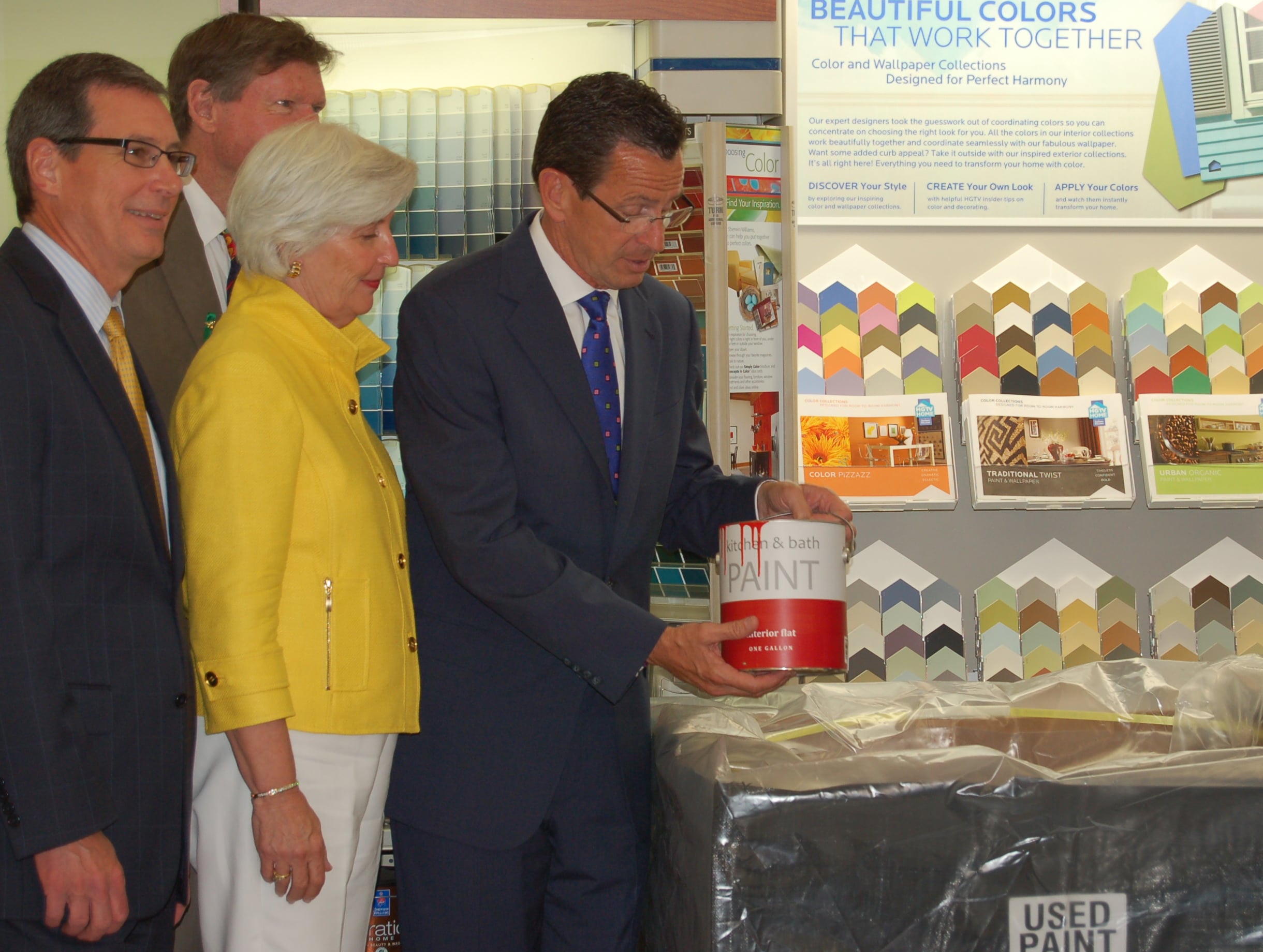
Connecticut Gov. Dannel Malloy places a can of paint in a recycling bin in a symbolic kick-off to the PaintCare Program. (L to R: American Coatings Association President Andy Doyle; Connecticut State Sen. Ed Meyer; Connecticut State Rep. Pat Widlitz; and Gov. Dannel Malloy.)
One after the other, speakers walked to the makeshift podium at the corner of the paint store, amidst the colored strips of lavender and mauve, and praised the new paint program and its ability to save resources, save money, and create jobs.
There was a good feeling, and rolling out right in front of me, like a video documentary, was a paradigm shift of immense proportions, as Important People, from the Governor and his Administration, to key legislators, retailers, and paint manufacturers, praised the collaborative nature of this innovative program.
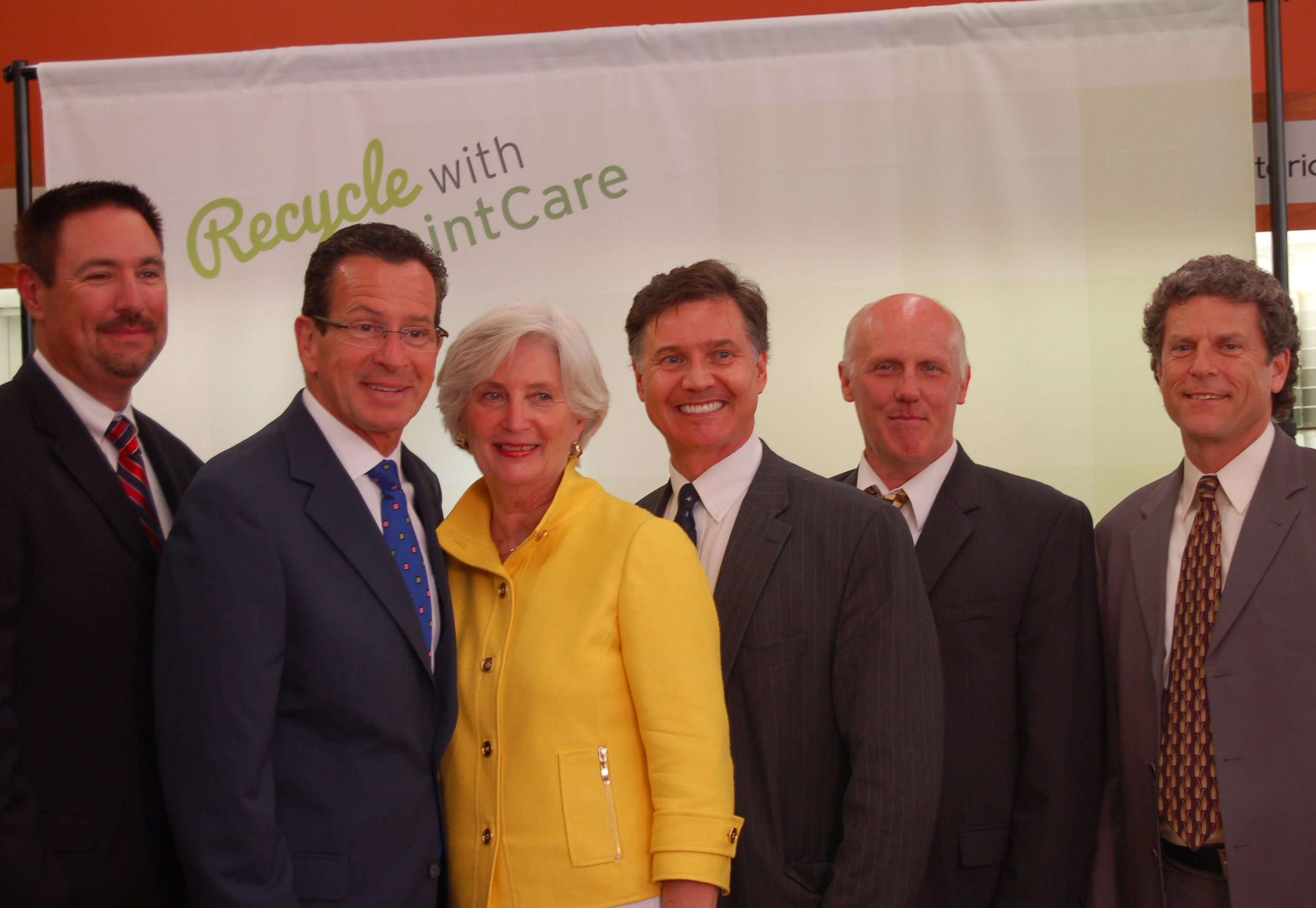
(L to R: Sherwin-Williams District Manager Tom Kelly; Connecticut Gov. Dannel Malloy; Connecticut State Rep. Pat Widlitz; Connecticut Dept. of Energy and Environmental Protection Commissioner Dan Etsy; Connecticut Dept. of Energy and Environmental Protection Environmental Analyst Tom Metzner; Product Stewardship Institute Chief Executive Officer Scott Cassel)
Tom Kelly, Sherwin Williams District Manager, mentioned the calls he already received on the first day of the program from residents seeking a place to bring leftover paint. “They come in just to drop off paint, but then see a clean store, and that we have what they need, and they leave a customer,” he said. Andy Doyle, President of the American Coatings Association, pledged the “support and backing of America’s paint industry” to recycle all the state’s leftover paint. The two chief bill sponsors – Sen. Ed Meyer and Rep. Patricia Widlitz – applauded the Governor and his team, as well as the industry, for their collaborative approach to finding a solution to a significant environmental problem, calling it “something really special.” They talked about the “terrific concept of producer responsibility” in which “paint manufacturers come up with their own plan to recycle.” State Rep. Lonnie Reed said that “…building in recycling and end-of-life elements into all of our products is important, and a sign of things to come.”

(L to R: American Coatings Association President Andy Doyle; Product Stewardship Institute Chief Executive Officer Scott Cassel)
As I stood there listening, it struck me that product stewardship has become commonplace in Connecticut. PSI laid the groundwork for paint product stewardship in Connecticut and across the nation by convening paint manufacturers, retailers, state and local governments, and others in national meetings to hash out the agreements that led to this very moment. But the paint program in Connecticut would not have happened if each of the local stakeholders at that press event did not seize on the opportunity they were presented. The paint industry has now transformed itself from an industry that once saw consumers as the reason for leftover paint to one that has taken a leadership role to make sure leftover paint is recycled.
As our nation debates immigration reform, marriage equality, and voting rights, we can all sense shifts in public opinion that represent sea changes of immense proportion. This year marks a watershed moment in the product stewardship movement. To date, eight producer responsibility laws have passed this past year on four products in eight states: pharmaceuticals (Alameda County, CA; King County, WA); paint (Maine, Minnesota, and Vermont); mattresses (Connecticut and Rhode Island); and thermostats (New York). No, the entire country has not embraced producer responsibility; that will take decades. But we now have Governors and Commissioners speaking about an industry’s responsibility to manage its own waste, and an industry speaking glowingly about its partnership with regulatory agencies that allow it to assume its rightful responsibility.
This is the paradigm shift that many of us predicted in 2000 when the Product Stewardship Institute was created on that cold December day in Boston when over 100 government officials assembled to talk about a little known concept called product stewardship.
The times have changed. Sometimes it is nice to sit back and enjoy the show, and revel in the enjoyment that your hard work has provided to others. For many of us, now is that time.
Last weekend I had the joy and good fortune to watch my daughter graduate from college. Few of my previous life experiences have matched that prideful day.
At Wesleyan University, on commencement day, a commitment to social justice dripped from each graduate’s gown. A stream of red and black marched by the round-topped star-gazing observatory as African drummers pounded soulful renderings under a tent. Professors and other dignitaries mingled around lawn chairs, and flags whipped in the cold wind.
Receiving an honorary degree was former Wesleyan graduate, Majora Carter, whose efforts to economically revitalize poor urban areas are profoundly “Wes.” So was her speech. Her message: Get ready to be uncomfortable. That’s right! Anyone who wants to shake up the status quo will have enemies, even brutal opposition. You will know who your friends aren’t, she said.
As someone who wears product stewardship lenses inside his gl
Over the past 13 years, this space has yielded dividends. In the past two weeks, three new producer responsibility laws have passed – Connecticut’s first-in-the-nation mattress law, and paint laws in Minnesota and Vermont (the 5th and 6th states to pass paint stewardship legislation so far). These laws do not pass solely because of PSI. In many ways, they would never pass if it was all up to us, or up to any one stakeholder. It takes a strong coalition that gets built over time. Starting and maintaining those coalitions is what PSI does – and it often starts in a very uncomfortable place, where we need to convince all stakeholders that the heavy lifting needed to change the status quo is worth the effort.
Thanks to all of our partners for great success these past two weeks, and we hope for many more victories that result in resource savings, job creation, and taxpayer savings. I am starting to like this feeling of being a little less uncomfortable.